


Incubation of conditioning-specific reflex modification: implications for Post Traumatic Stress Disorder
- PMID: 21803372
- PMCID: PMC3195987
- DOI: 10.1016/j.jpsychires.2011.07.003
Incubation of conditioning-specific reflex modification: implications for Post Traumatic Stress Disorder
Abstract
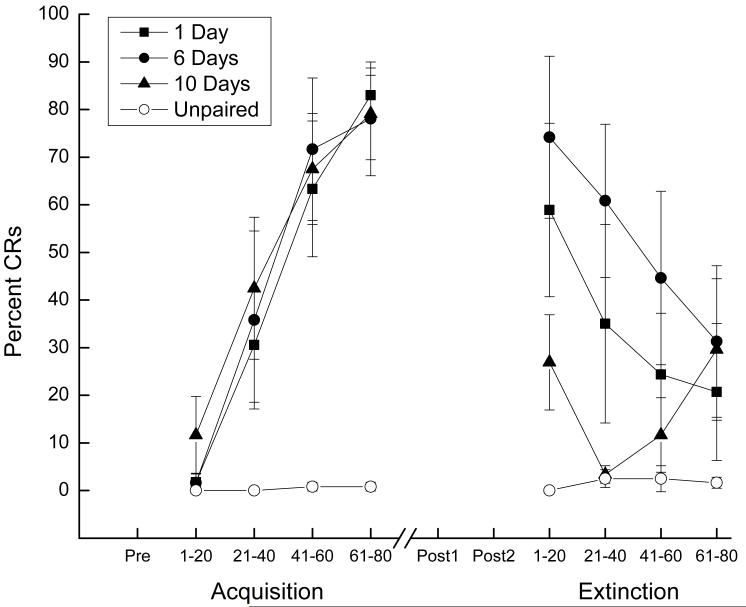
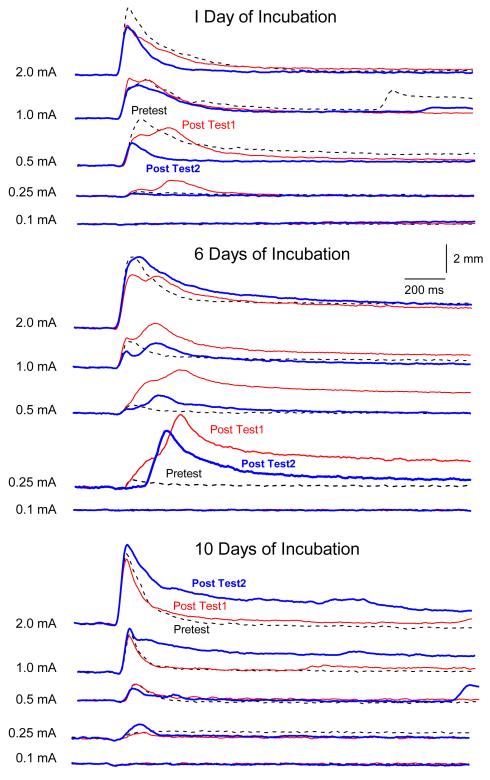
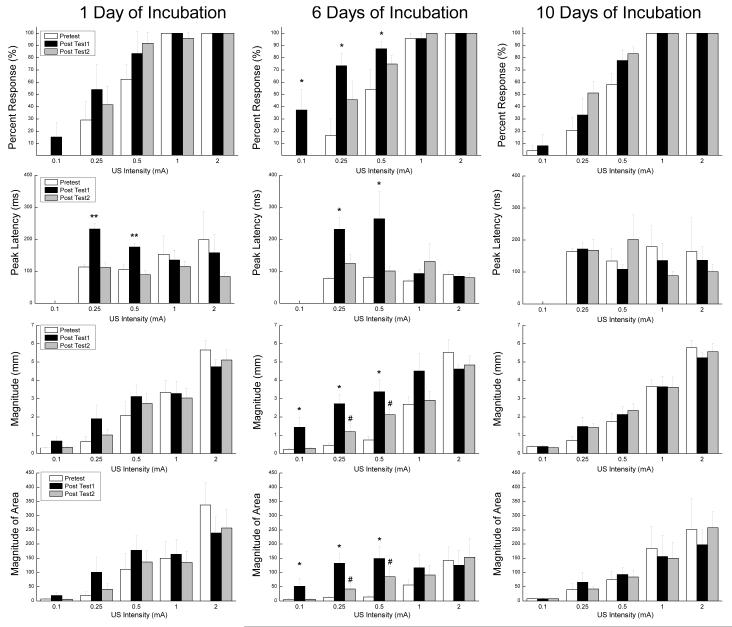
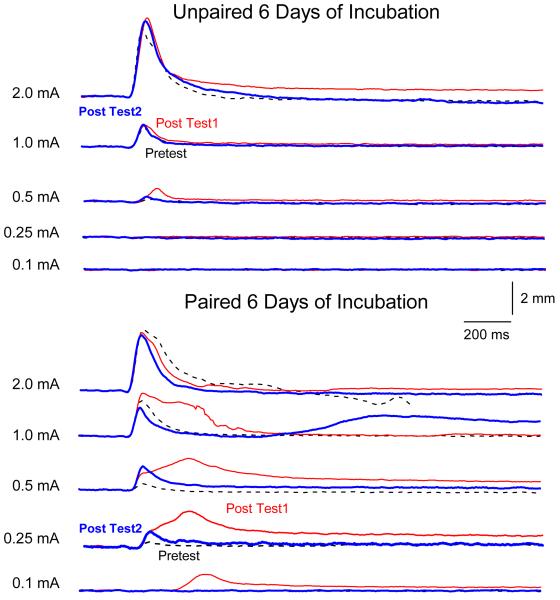
Incubation of fear has been used to account for the delayed manifestation of symptoms of fear and anxiety including the delayed onset of Post Traumatic Stress Disorder (PTSD). We have shown the utility of classical conditioning-specific modification of the rabbit nictitating membrane response (NMR) as a model of PTSD. This modification includes an exaggeration in the size and a change in the timing of the unconditioned NMR after several days of classical conditioning. To assess the effects of incubation on conditioning-specific modification, we measured changes in responding as a function of the time between classical conditioning and NMR testing. After just one day of classical conditioning resulting in modest levels of learning, increases in response size were an inverted-U shaped function of days of incubation with little if any change occurring one and ten days after training but significant change occurring after six days. The incubation effect persisted for a week. An unpaired control group showed no change in the size of the response confirming the incubation effect was associative. The results bear a striking resemblance to symptoms of PTSD that do not always occur immediately after trauma and become exacerbated over time and then persist. They point to a window when incubation can exacerbate symptoms and speak to the vulnerability of re-experiencing trauma too soon. This could be a serious problem for military or emergency personnel recalled to combat or a disaster site without sufficient time to deal with the effects of their initial experiences.
Copyright © 2011 Elsevier Ltd. All rights reserved.
Figures
References
-
- Andrews B, Brewin CR, Philpott R, Stewart L. Delayed-onset posttraumatic stress disorder: a systematic review of the evidence. American Journal of Psychiatry. 2007;164:1319–1326. - PubMed
-
- Andrews B, Brewin CR, Stewart L, Philpott R, Hejdenberg J. Comparision of immediate-onset and delayed-onset posttraumatic stress disorder in military veterans. Journal of Abnormal Psychology. 2009;118:767–777. - PubMed
-
- Buck DL, Seager MA, Schreurs BG. Conditioning-specific reflex modification of the rabbit (Oryctolagus cuniculus) nictitating membrane response: generality and nature of the phenomenon. Behavioral Neuroscience. 2001;115:1039–1047. - PubMed
-
- Burhans LB, Schreurs BG. Inactivation of the central nucleus of the amygdala abolishes conditioning-specific reflex modification of the rabbit nictitating membrane response and delays classical conditioning. Behavioral Neuroscience. 2008;122:75–88. - PubMed
-
- Burhans LB, Smith-Bell CA, Schreurs BG. Conditioning-specific reflex modification of the rabbit’s nictitating membrane response and heart rate: behavioral rules, neural substrates, and potential applications to posttraumatic stress disorder. Behavioral Neuroscience. 2008;122:1191–1206. - PubMed
Publication types
MeSH terms
Grants and funding
LinkOut - more resources
Full Text Sources
Medical
