


Viral weapons of membrane destruction: variable modes of membrane penetration by non-enveloped viruses
- PMID: 21804909
- PMCID: PMC3144554
- DOI: 10.1016/j.coviro.2011.05.002
Viral weapons of membrane destruction: variable modes of membrane penetration by non-enveloped viruses
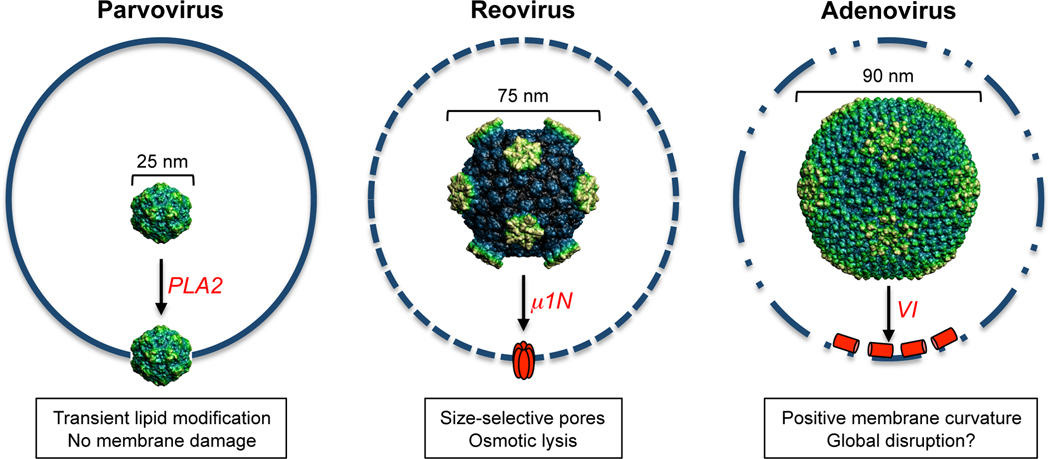
Abstract
Significant progress has recently been obtained in our understanding of cellular entry by nonenveloped viruses (NEVs). A key step in the entry process involves the disruption or remodeling of the limiting cell membrane allowing the virus to gain access to the cellular replication machinery. Biochemical, genetic and structural data from diverse virus groups have shed light on the process of membrane penetration thereby revealing both the conservation and divergence of the mechanisms and principles governing this process. In general, membrane breach is achieved via the highly regulated spatiotemporal exposure of a virally encoded membrane lytic factor, resulting in the transfer of the viral genome or nucleocapsid into the cytosol.
Figures
References
-
- Bong DT, Steinem C, Janshoff A, Johnson JE, Reza Ghadiri M. A highly membrane-active peptide in flock house virus: Implications for the mechanism of nodavirus infection. Chem Biol. 1999;6:473–481. - PubMed
-
- Gastaldelli M, Imelli N, Boucke K, Amstutz B, Meier O, Greber UF. Infectious adenovirus type 2 transport through early but not late endosomes. Traffic. 2008;9:2265–2278. - PubMed
Publication types
MeSH terms
Substances
Grants and funding
LinkOut - more resources
Full Text Sources
Medical
