


The Basal Ganglia as a Substrate for the Multiple Actions of Amphetamines
- PMID: 21804952
- PMCID: PMC3144568
- DOI: 10.1016/j.baga.2011.05.003
The Basal Ganglia as a Substrate for the Multiple Actions of Amphetamines
Abstract
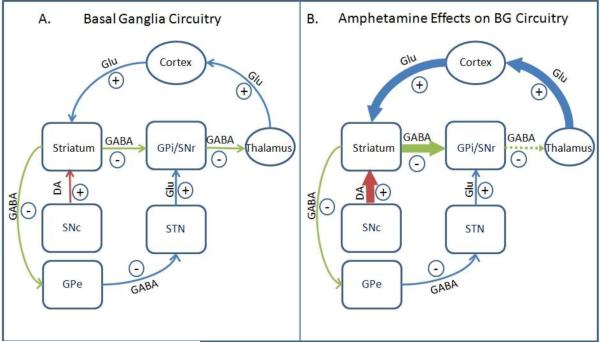
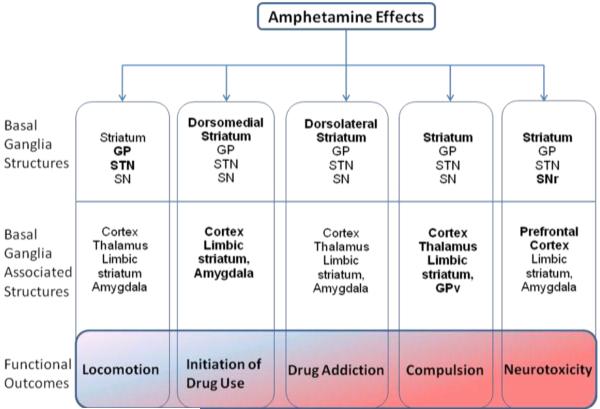
Amphetamines are psychostimulant drugs with high abuse potential. Acute and chronic doses of amphetamines affect dopamine (DA) neurotransmission in the basal ganglia. The basal ganglia are a group of subcortical nuclei that are anatomically positioned to integrate cognitive, motor and sensorimotor inputs from the cortex. Amphetamines can differentially alter the functioning of specific BG circuits to produce neurochemical changes that affect cognition, movement, and drug seeking behavior through their effects on DA neurotransmission. This review focuses on how alterations in dopaminergic neurotransmission within distinct basal ganglia pathways can modify their functional output to predict and explain the acute and long term behavioral consequences of amphetamine exposure.
Figures
References
-
- Winslow BT, Voorhees KI, Pehl KA. Methamphetamine abuse. Am Fam Physician. 2007;76:1169–74. - PubMed
-
- Liechti ME, Vollenweider FX. Acute psychological and physiological effects of MDMA (“Ecstasy”) after haloperidol pretreatment in healthy humans. Eur Neuropsychopharmacol. 2000;10:289–95. - PubMed
-
- Volkow ND, Wang GJ, Fowler JS, Logan J, Gatley SJ, Wong C, et al. Reinforcing effects of psychostimulants in humans are associated with increases in brain dopamine and occupancy of D(2) receptors. J Pharmacol Exp Ther. 1999;291:409–15. - PubMed
-
- Giancola PR, Moss HB. Executive cognitive functioning in alcohol use disorders. Recent Dev Alcohol. 1998;14:227–51. - PubMed
Grants and funding
LinkOut - more resources
Full Text Sources