


Role of mercury toxicity in hypertension, cardiovascular disease, and stroke
- PMID: 21806773
- PMCID: PMC8108748
- DOI: 10.1111/j.1751-7176.2011.00489.x
Role of mercury toxicity in hypertension, cardiovascular disease, and stroke
Abstract
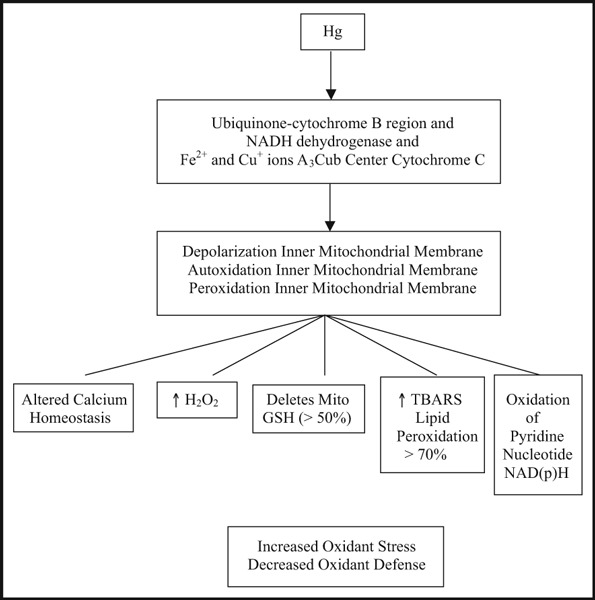
Mercury has a high affinity for sulfhydryl groups, inactivating numerous enzymatic reactions, amino acids, and sulfur-containing antioxidants (N-acetyl-L-cysteine, alpha-lipoic acid, L-glutathione), with subsequent decreased oxidant defense and increased oxidative stress. Mercury binds to metallothionein and substitute for zinc, copper, and other trace metals, reducing the effectiveness of metalloenzymes. Mercury induces mitochondrial dysfunction with reduction in adenosine triphosphate, depletion of glutathione, and increased lipid peroxidation. Increased oxidative stress and reduced oxidative defense are common. Selenium and fish containing omega-3 fatty acids antagonize mercury toxicity. The overall vascular effects of mercury include increased oxidative stress and inflammation, reduced oxidative defense, thrombosis, vascular smooth muscle dysfunction, endothelial dysfunction, dyslipidemia, and immune and mitochondrial dysfunction. The clinical consequences of mercury toxicity include hypertension, coronary heart disease, myocardial infarction, cardiac arrhythmias, reduced heart rate variability, increased carotid intima-media thickness and carotid artery obstruction, cerebrovascular accident, generalized atherosclerosis, and renal dysfunction, insufficiency, and proteinuria. Pathological, biochemical, and functional medicine correlations are significant and logical. Mercury diminishes the protective effect of fish and omega-3 fatty acids. Mercury inactivates catecholaminei-0-methyl transferase, which increases serum and urinary epinephrine, norepinephrine, and dopamine. This effect will increase blood pressure and may be a clinical clue to mercury-induced heavy metal toxicity. Mercury toxicity should be evaluated in any patient with hypertension, coronary heart disease, cerebral vascular disease, cerebrovascular accident, or other vascular disease. Specific testing for acute and chronic toxicity and total body burden using hair, toenail, urine, and serum should be performed.
© 2011 Wiley Periodicals, Inc.
Figures
References
-
- Keating MH, Mahaffey KR, Schoemy R, et al. Mercury Study Report to Congress. Vol. I. Executive Summary. EPA‐452/R‐97‐003. Washington, D.C.: Environmental Protection Agency, December 1997.
-
- Committee on the Toxicological Effects of Methylmercury, Board on Environmental Studies and Toxicology, Commission on Life Sciences . Toxicological Effects of Methylmercury. Washington, D.C.: National Research Council, 2000.
-
- Magos L. Physiology and toxicology of mercury. Met Ions Biol Syst. 1997;34:321–370. - PubMed
-
- Clarkson TW, Magos L, Myers GJ. The toxicology of mercury – current exposures and clinical manifestations. N Engl J Med. 2003;349:1731–1737. - PubMed
-
- Guallar E, Sanz‐Gallardo MI, van’t Veer P, et al. Mercury, fish oils, and the risk of myocardial infarction. N Engl J Med. 2002;347:1747–1754. - PubMed
Publication types
MeSH terms
Substances
LinkOut - more resources
Full Text Sources
Medical
