


Cocaine locomotor activation, sensitization and place preference in six inbred strains of mice
- PMID: 21806802
- PMCID: PMC3160884
- DOI: 10.1186/1744-9081-7-29
Cocaine locomotor activation, sensitization and place preference in six inbred strains of mice
Abstract
Background: The expanding set of genomics tools available for inbred mouse strains has renewed interest in phenotyping larger sets of strains. The present study aims to explore phenotypic variability among six commonly-used inbred mouse strains to both the rewarding and locomotor stimulating effects of cocaine in a place conditioning task, including several strains or substrains that have not yet been characterized for some or all of these behaviors.
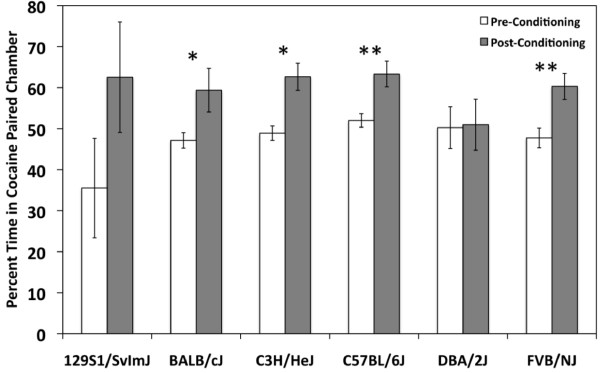
Methods: C57BL/6J (B6), BALB/cJ (BALB), C3H/HeJ (C3H), DBA/2J (D2), FVB/NJ (FVB) and 129S1/SvImJ (129) mice were tested for conditioned place preference to 20 mg/kg cocaine.
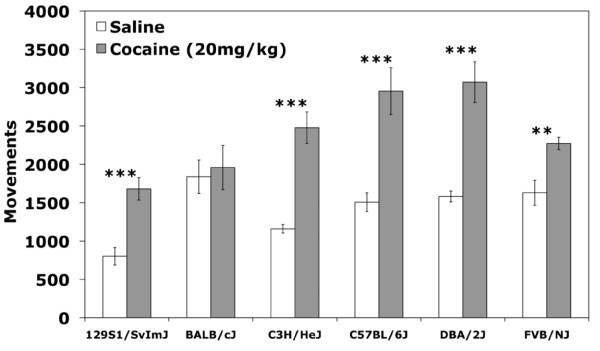
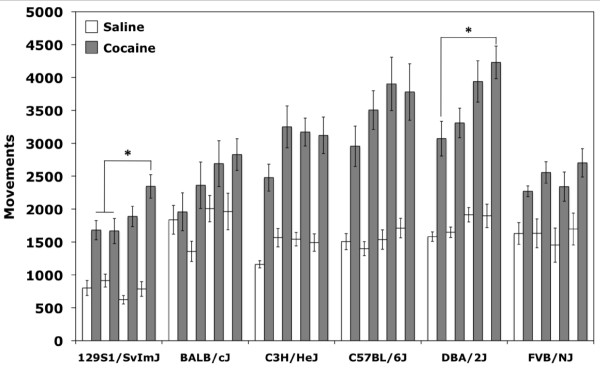
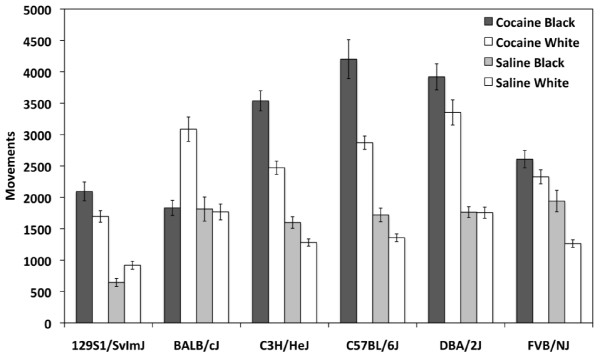
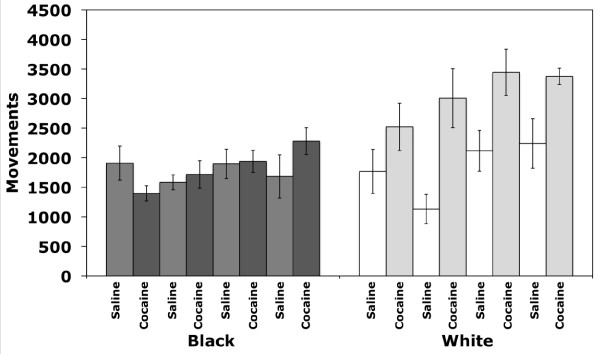
Results: Place preference was observed in most strains with the exception of D2 and 129. All strains showed a marked increase in locomotor activity in response to cocaine. In BALB mice, however, locomotor activation was context-dependent. Locomotor sensitization to repeated exposure to cocaine was most significant in 129 and D2 mice but was absent in FVB mice.
Conclusions: Genetic correlations suggest that no significant correlation between conditioned place preference, acute locomotor activation, and locomotor sensitization exists among these strains indicating that separate mechanisms underlie the psychomotor and rewarding effects of cocaine.
Figures

References
-
- Uhl GR, Elmer GI, LaBuda MC, Pickens RW. In: Psychopharmacology: The fourth generation of progress. Bloom FE, Kupfer DJ, editor. New York: Raven Press; 1995. Genetic Influences in Drug Abuse; pp. 1793–1806.
Publication types
MeSH terms
Substances
Grants and funding
LinkOut - more resources
Full Text Sources
