. 2011 Nov;141(5):1749-61.e1.
doi: 10.1053/j.gastro.2011.07.038. Epub 2011 Jul 30.

Neurotensin signaling activates microRNAs-21 and -155 and Akt, promotes tumor growth in mice, and is increased in human colon tumors

Affiliations

Neurotensin signaling activates microRNAs-21 and -155 and Akt, promotes tumor growth in mice, and is increased in human colon tumors

Kyriaki Bakirtzi et al. Gastroenterology. 2011 Nov.

Abstract

Background & aims: Neurotensin promotes inflammation and colon cancer via the neurotensin-1 receptor (NTR1). MicroRNAs (miR) regulate protein synthesis by degrading or preventing translation of mRNAs. We analyzed expression of 365 different microRNAs by human colonic epithelial cells (NCM460) after activation of NTR1.

Methods: We performed microarray analysis of mRNA expression by neurotensin-stimulated NCM460 cells that overexpressed NTR1. Nuclear factor-κB (NF-κB) binding sites were identified and tumorigenesis was assessed using soft agar assays and xenograft analysis of severe combined immunodeficiency mice. Targets of neurotensin-regulated microRNAs were identified via bioinformatic, real-time polymerase chain reaction, and immunoblot analyses. We analyzed RNA samples from human normal colon and tumor samples.

Results: Neurotensin stimulated differential expression of 38 microRNAs, including miR-21 and miR-155, which have been associated with tumor growth and contain NF-κB binding sites. Neurotensin expression increased colony formation by HCT-116 cells. Blocking miR-21 and/or miR-155 prevented colony formation (P < .001). In mice, intraperitoneal administration of neurotensin increased the growth rate of HCT-116 xenograft tumors; blocking miR-21 and/or miR-155 slowed this tumor growth. Neurotensin activated Akt in HCT-116 cells; this effect was inhibited by blocking miR-21 and/or miR-155 (P < .001). Neurotensin activated AKT through miR-155-mediated suppression of the phosphatase protein phosphatase 2A catalytic subunit alpha (PPP2CA). Levels of phosphatase and tensin homolog (PTEN) and suppressor of cytokine signaling 1 (SOCS1) mRNA, potential targets of miR-21 and miR-155, respectively, were down-regulated by these miRs. Levels of NTR1, miR-21, and miR-155 increased significantly in human colon tumor samples, compared with normal tissues, whereas PPP2CA, SOCS1, and PTEN mRNAs were reduced significantly.

Conclusions: NTR1 activation stimulates expression of miR-21 and miR-155 in colonocytes, via Akt and NF-κB, to down-regulate PTEN and SOCS1 and promote growth of tumors in mice. Levels of NTR1, miR-21, and miR-155 increase in human colon tumor samples and correlate with tumor stage.


Figures

Figure 1
Figure 1. Neurotensin-regulated microRNAs in colon epithelial cells
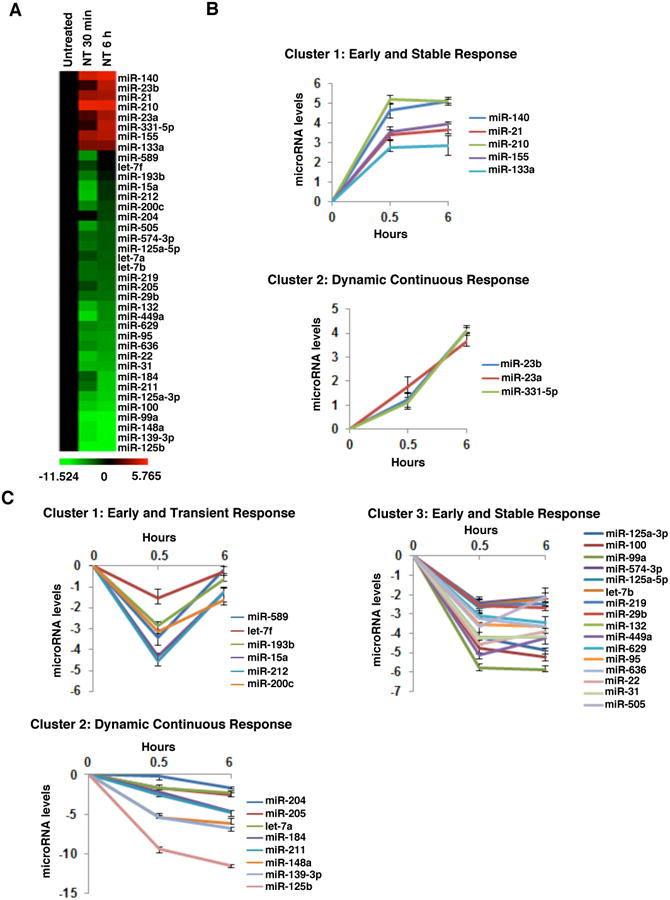
(A) Heatmap representation of differentially expressed microRNAs after NT treatment (0.5, 6h) of NCM460-NTR1 cells. Red: up-regulated microRNAs, green: down-regulated microRNAs. Clustering of NT-induced (B) and NT-suppressed microRNAs (C) according to their response dynamics.
Figure 2
Figure 2. Neurotensin regulates microRNA expression through NTR1 in colon cancer cells
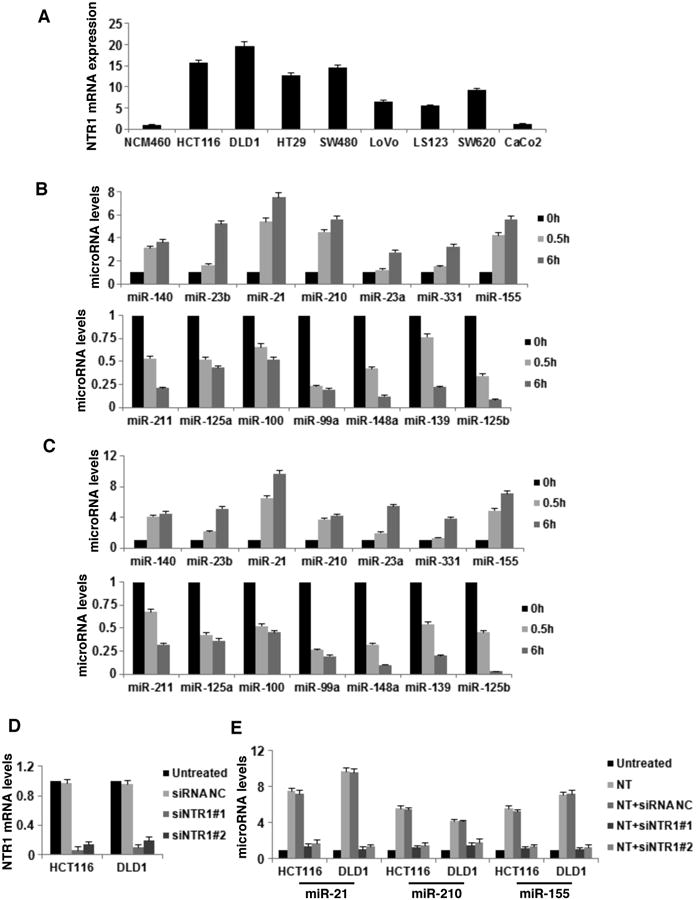
(A) NTR1 mRNA expression levels in non-transformed (NCM460) and cancer cell lines. (B) MicroRNA expression levels in HCT-116 and (C) DLD1 colon cancer cells treated with NT (0.5, 6h), assessed by real-time PCR analysis for the top seven NT up- and down-regulated microRNAs in NCM460-NTR1 cells. (D) NTR1 mRNA expression levels, assessed by real-time PCR analysis, in HCT116 and DLD1 colon cancer cells post siRNA treatment (48h) against NTR1 (siNTR1#1 or siNTR1#2, 100 nM) and negative control (siRNA NC, 100 nM). (E) NTR1 expression was inhibited in HCT116 and DLD1 colon cancer cells by siRNA treatments (siNTR1#1 or siNTR1#2, 100 nM, 48h); cells were treated with NT (6h, 100 nM) and expression levels of miR-21, miR-210 and miR-155 were assessed by real-time PCR analysis. Data show mean ± SD of three independent experiments.
Figure 3
Figure 3. Neurotensin controls microRNA expression through NF-κB activation in colon cancer cells
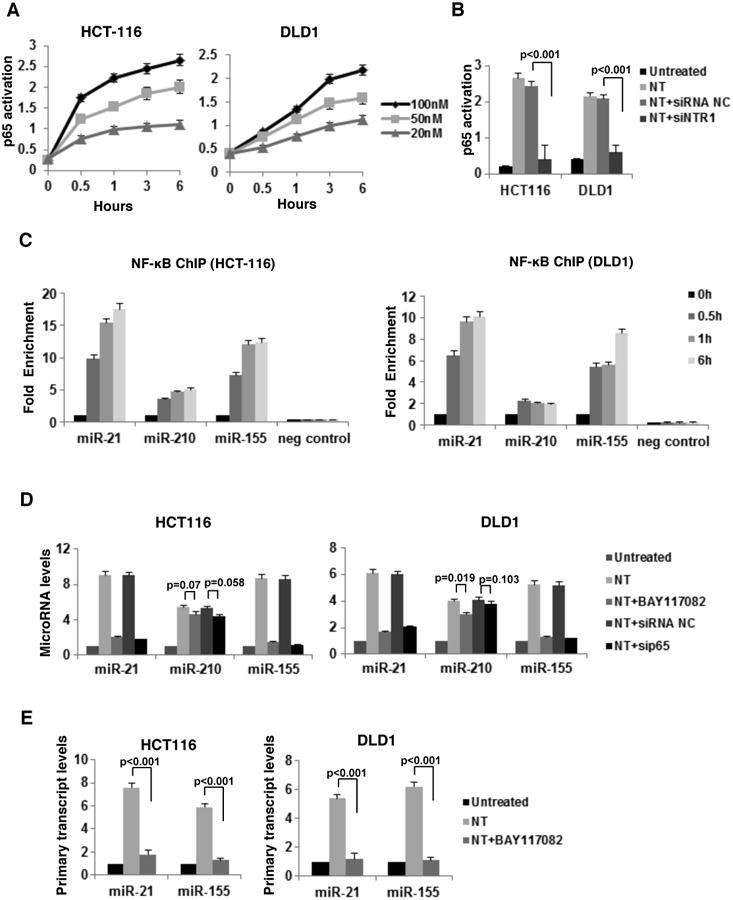
(A) NF-κB phosphorylation assessed by ELISA, after time course treatment of HCT116 and DLD1 cells with NT (20, 50, 100nM). (B) NTR1 expression was suppressed by siRNA in HCT116 and DLD1 cells (48h), cells were treated with NT (100nM, 6h) and NF-κB phosphorylation was assessed by ELISA. (C) ChIP detected enrichment of NF-κB transcription factor in the promoters of miR-21, miR-210, miR-155 and HNRPA2 (negative control) after NT treatment (0.5, 1, 6h) in HCT116 and DLD1 cells. D) Expression levels of miR-21, miR-210 and miR-155 and E) their primary transcripts, assessed by real-time PCR, in HCT116 and DLD cells treated with a pharmacological inhibitor of NF-KB pathway (BAY-117082, 5uM) or an siRNA negative control (siRNA NC, 100nM) or an siRNA against p65 (sip65, 100nM) for 48h and treated with NT (100nM, 6h).
Figure 4
Figure 4. Neurotensin regulates miR-21 and miR-155 signaling pathways in colon cancer cells
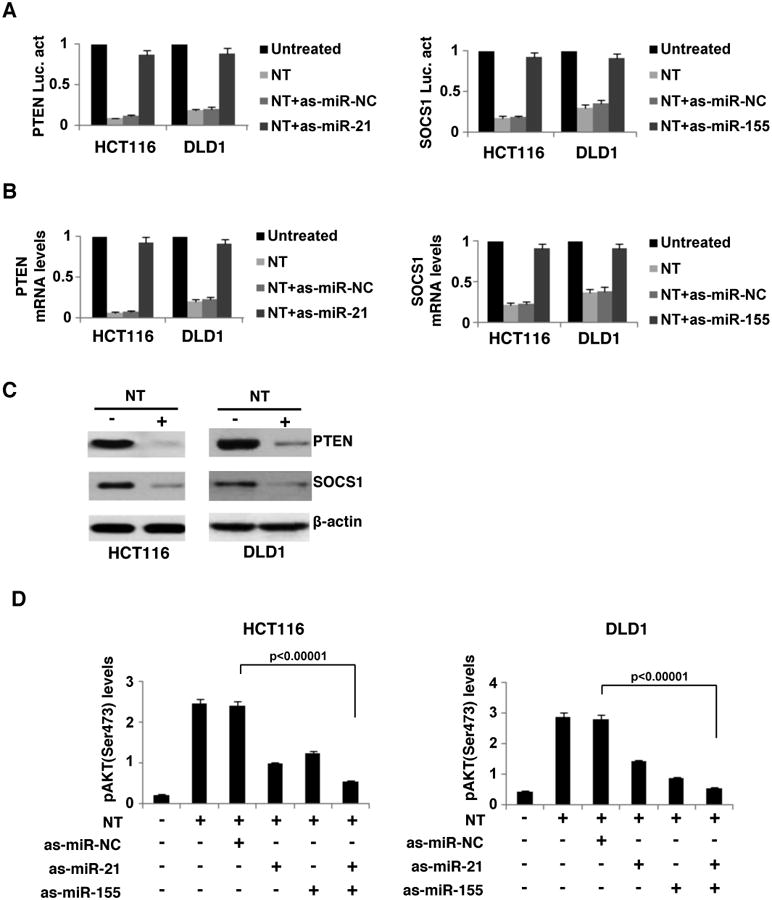
(A) Luciferase activity of the PTEN and SOCS1 3′UTRs after NT treatment (100nM) for 24h in HCT116 and DLD1 cells (untreated or as-miR-NC treated or as-miR-21-treated or as-miR-155-treated). (B) PTEN and SOCS1 mRNA levels, assessed by real-time PCR, in NT-treated (100nM, 6h) HCT116 and DLD1 cells (untreated or as-miR-NC treated or as-miR-21-treated or as-miR-155-treated). (C) PTEN, SOCS1 and β-actin protein levels, assessed by western blot, in NT-treated (100nM, 6h) HCT116 and DLD1 cells. (D) AKT phosphorylation (S473) levels, assessed by ELISA, in HCT116 and DLD1 cells transfected with as-miR-NC (100nM) or as-miR-21 (100nM) and/or as-miR-155 (100nM) for 24h and treated with NT (100nM) for 24h.
Figure 5
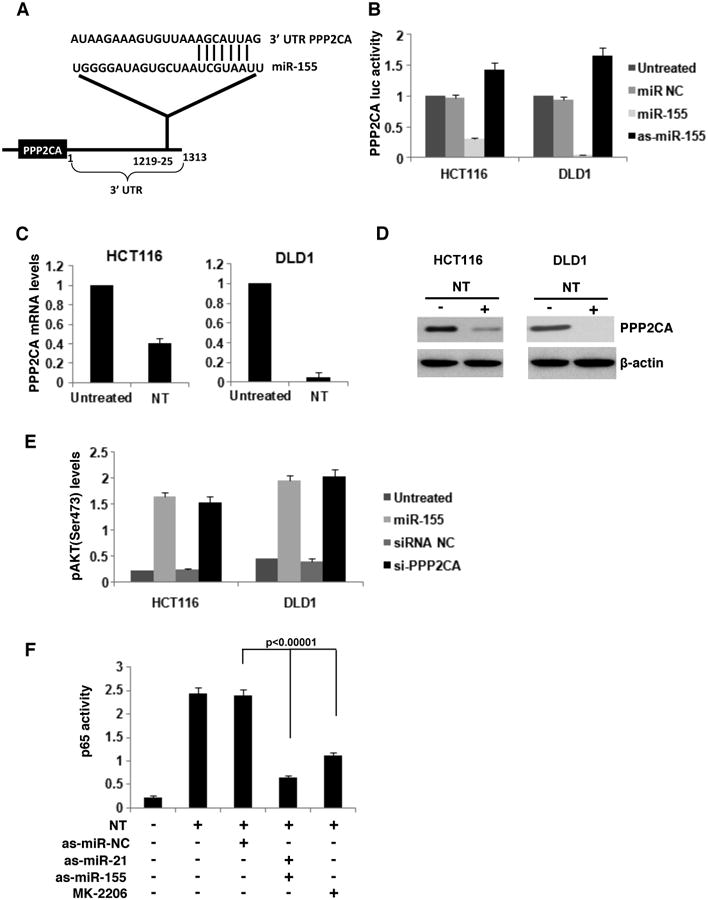
Figure 5. Neurotensin activates AKT through suppression of PPP2CA by direct interaction with miR-155
(A) miR-155 binding sites in 3′UTRs of PPP2CA predicted by Lever algorithm analysis. (B) Luciferase activity of the PPP2CA 3′UTRs in HCT116 and DLD1 cells transfected with as-miR-155 (100nM) or as-miR-155 (100nM) for 24h. (C) Luciferase activity of the PPP2CA 3′UTRs in HCT116 and DLD1 cells treated with NT (100nM). (D) PPP2CA and β-actin protein levels, assessed by western blot, in NT-treated (100nM, 6h) HCT116 and DLD1 cells. (E) AKT phosphorylation (S473) levels, assessed by ELISA, in HCT116 and DLD1 cells transfected with miR-155 (100nM) or si-PPP2CA (100nM) for 24h. (F) NF-κB/p65 activity, assessed by ELISA, in HCT cells transfected with NT (100nM) and as-miR-NC (100nM), as-miR-21 (100nM), as-miR-155 (100nM) or with 10nM of an AKT pharmacological inhibitor (MK-2206).
Figure 6
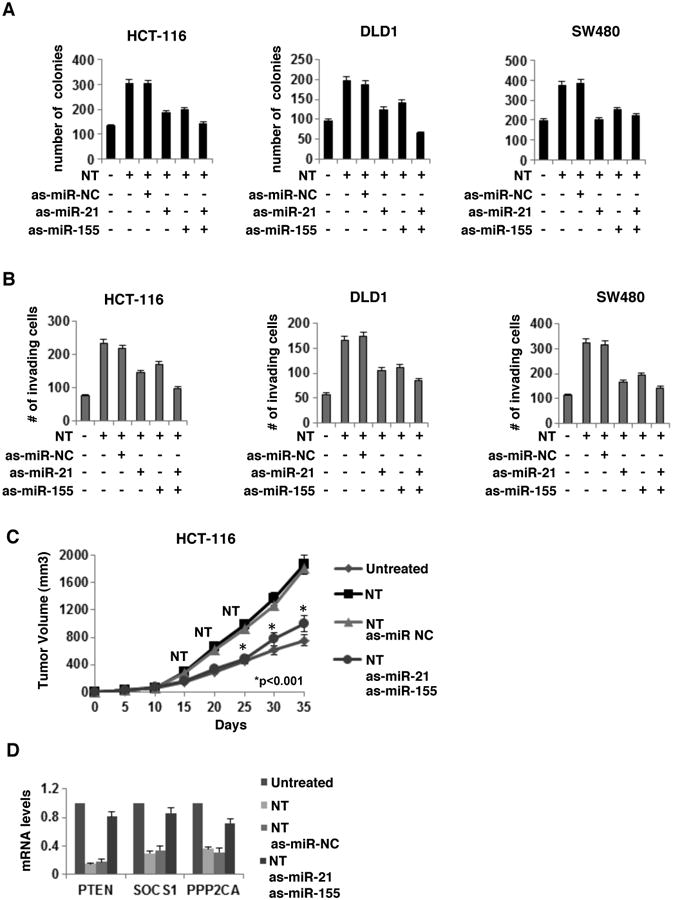
Figure 6. Neurotensin affects the tumorigenicity and invasiveness of colon cancer cells through regulation of miR-21 and miR-155 pathways
(A) Number of colonies and (B) invading cells in NT-treated HCT116, DLD1 and SW480 cells where miR-21 and/or miR-155 were knocked-down. (C) NT effects on tumor volume in a HCT116-xenograft model described in the Materials and Methods. P value indicates differences between NT/as-miR-NC treated mice vs NT/as-miR-21/as-miR-155 treated mice. (D) PTEN, SOCS1 and PPP2CA mRNA levels in NT-treated HCT-116-xenograft tumors (day 35).
Figure 7
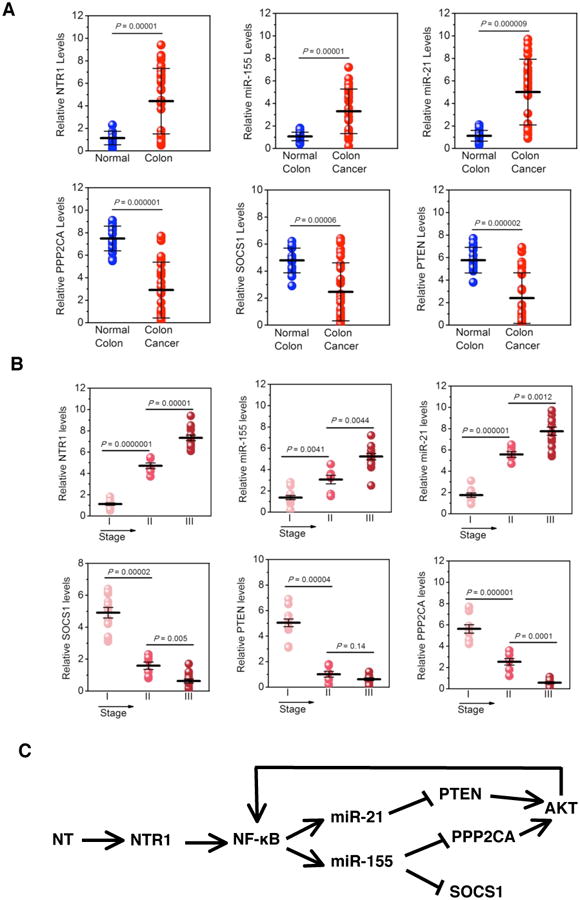
Figure 7. Neurotensin-microRNA signaling pathway in human colon cancers
(A) NTR1, PTEN, SOCS1, miR-21 and miR-155 expression levels assessed by real-time PCR in 18 normal and 34 (13 stage I, 7 stage II and 14 stage III) colon cancer tissues. (B) Correlation between NTR1, PTEN, SOCS1 mRNA levels and miR-21, miR-155 expression levels and colon tumor stage. (C) NT-microRNA signaling pathway in colon cancer.

References

    1. Lagos-Quintana M, Rauhut R, Lendeckel W, Tuschl T. Identification of novel genes coding for small expressed RNAs. Science. 2001;294:853–8. - PubMed
    1. McKenna LB, Schug J, Vourekas A, McKenna JB, Bramswig NC, Friedman JR, Kaestner KH. MicroRNAs control intestinal epithelial differentiation, architecture, and barrier function. Gastroenterology. 139:1654–64, 1664 e1. - PMC - PubMed
    1. Bartel DP. MicroRNAs: target recognition and regulatory functions. Cell. 2009;136:215–33. - PMC - PubMed
    1. Lewis BP, Burge CB, Bartel DP. Conserved seed pairing, often flanked by adenosines, indicates that thousands of human genes are microRNA targets. Cell. 2005;120:15–20. - PubMed
    1. Akao Y, Nakagawa Y, Naoe T. let-7 microRNA functions as a potential growth suppressor in human colon cancer cells. Biol Pharm Bull. 2006;29:903–6. - PubMed

Publication types

MeSH terms