Telephone-based cognitive-behavioral therapy for Latino patients living in rural areas: a randomized pilot study
- PMID: 21807834
- PMCID: PMC5515371
- DOI: 10.1176/ps.62.8.pss6208_0936
Telephone-based cognitive-behavioral therapy for Latino patients living in rural areas: a randomized pilot study
Abstract
Objective: This pilot study tested the effectiveness of culturally tailored, telephone-based cognitive-behavioral therapy (CBT) for improving depression outcomes among Latino primary care patients living in rural settings.
Methods: A total of 101 Latino patients at a rural family medical center who met criteria for probable major depression were randomly assigned to enhanced usual care or eight sessions of CBT delivered by phone by trained bilingual therapists from the community. Blinded study assistants assessed depression symptom severity, using the Hopkins Symptom Checklist (SCL) depression items and the Patient Health Questionnaire-9, and patient satisfaction after six weeks, three months, and six months. Mixed-effects models were used to estimate intervention effects over time. For cross-sectional analyses, attrition weights were used to account for missing data.
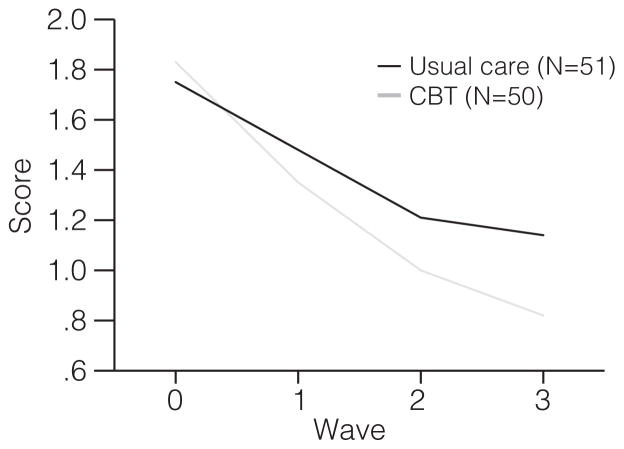
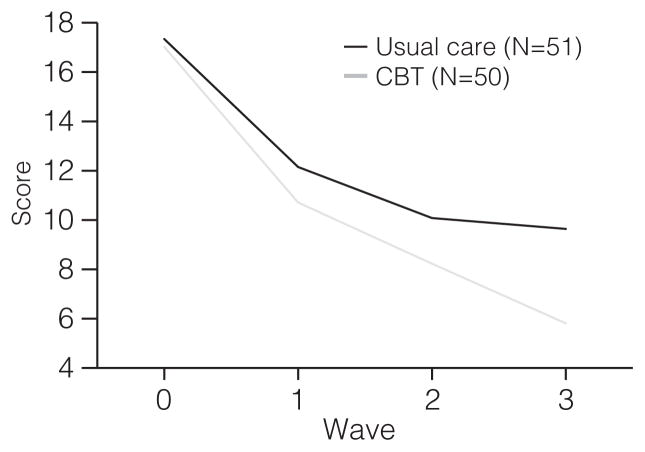
Results: In intent-to-treat analyses, patients who received CBT by phone were more likely to experience improvement in depression scores over the six-month follow-up period compared with patients who received enhanced usual care (β=-.41, t=-2.36, df=219, p=.018, for the SCL; and β=-3.51, t=-2.49, df=221, p=.013, for the PHQ-9). A greater proportion of patients in the CBT group than in the group that received enhanced usual care achieved treatment response at three months (p=.017), as indicated by a 50% improvement in SCL depression score or a score <.75, and reported high satisfaction with treatment (p=.013).
Conclusions: Although limited by small sample size, pilot results suggest culturally tailored, telephone-based CBT has the potential to enhance access to psychotherapy in an underserved Latino population with little access to mental health services.
Conflict of interest statement
The authors report no competing interests.
Figures
References
-
- Mental Health: Culture, Race, and Ethnicity: A Supplement to Mental Health: A Report of the Surgeon General. Rockville, Md: US Department of Health and Human Services, Substance Abuse and Mental Health Services Administration, Center for Mental Health Services; 2001. - PubMed
-
- Vega WA, Kolody B, Aguilar-Gaxiola S, et al. Gaps in service utilization by Mexican Americans with mental health problems. American Journal of Psychiatry. 1999;156:928–934. - PubMed
-
- Annual Resident Population Estimates of the United States by Age, Race, and Hispanic or Latino Origin: April 1, 2000, to July 1, 2003. Hyattsville, Md: US Census Bureau; 2003.
Publication types
MeSH terms
Grants and funding
LinkOut - more resources
Full Text Sources
Medical
Research Materials
Miscellaneous