


Characterization of transgenic mice with overexpression of spermidine synthase
- PMID: 21809077
- PMCID: PMC3245749
- DOI: 10.1007/s00726-011-1028-6
Characterization of transgenic mice with overexpression of spermidine synthase
Abstract
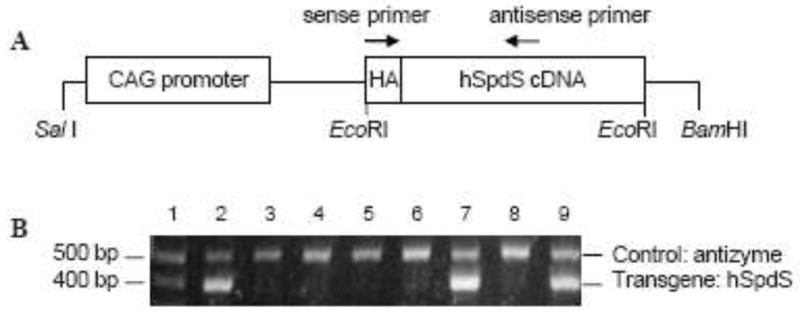
A composite cytomegalovirus-immediate early gene enhancer/chicken β-actin promoter (CAG) was utilized to generate transgenic mice that overexpress human spermidine synthase (SpdS) to determine the impact of elevated spermidine synthase activity on murine development and physiology. CAG-SpdS mice were viable and fertile and tissue SpdS activity was increased up to ninefold. This increased SpdS activity did not result in a dramatic elevation of spermidine or spermine levels but did lead to a 1.5- to 2-fold reduction in tissue spermine:spermidine ratio in heart, muscle and liver tissues with the highest levels of SpdS activity. This new mouse model enabled simultaneous overexpression of SpdS and other polyamine biosynthetic enzymes by combining transgenic animals. The combined overexpression of both SpdS and spermine synthase (SpmS) in CAG-SpdS/CAG-SpmS bitransgenic mice did not impair viability or lead to overt developmental abnormalities but instead normalized the elevated tissue spermine:spermidine ratios of CAG-SpmS mice. The CAG-SpdS mice were bred to MHC-AdoMetDC mice with a >100-fold increase in cardiac S-adenosylmethionine decarboxylase (AdoMetDC) activity to determine if elevated dcAdoMet would facilitate greater spermidine accumulation in mice with SpdS overexpression. CAG-SpdS/MHC-AdoMetDC bitransgenic animals were produced at the expected frequency and exhibited cardiac polyamine levels comparable to MHC-AdoMetDC littermates. Taken together these results indicate that SpdS levels are not rate limiting in vivo for polyamine biosynthesis and are unlikely to exert significant regulatory effects on cellular polyamine content and function.
Conflict of interest statement
The authors declare that they have no conflict of interest.
Figures

References
-
- Basuroy UK, Gerner EW. Emerging concepts in targeting the polyamine metabolic pathway in epithelial cancer chemoprevention and chemotherapy. J Biochem. 2006;139 (1):27–33. - PubMed
-
- Casero RA, Jr, Marton LJ. Targeting polyamine metabolism and function in cancer and other hyperproliferative diseases. Nat Rev Drug Discov. 2007;6 (5):373–390. - PubMed
-
- Cason AL, Ikeguchi Y, Skinner C, Wood TC, Holden KR, Lubs HA, Martinez F, Simensen RJ, Stevenson RE, Pegg AE, Schwartz CE. X-linked spermine synthase gene (SMS) defect: the first polyamine deficiency syndrome. Eur J Hum Genet. 2003;11 (12):937–944. - PubMed
Publication types
MeSH terms
Substances
Grants and funding
LinkOut - more resources
Full Text Sources
Molecular Biology Databases
Research Materials
