


The H6D variant of NAG-1/GDF15 inhibits prostate xenograft growth in vivo
- PMID: 21809352
- PMCID: PMC3209492
- DOI: 10.1002/pros.21471
The H6D variant of NAG-1/GDF15 inhibits prostate xenograft growth in vivo
Abstract
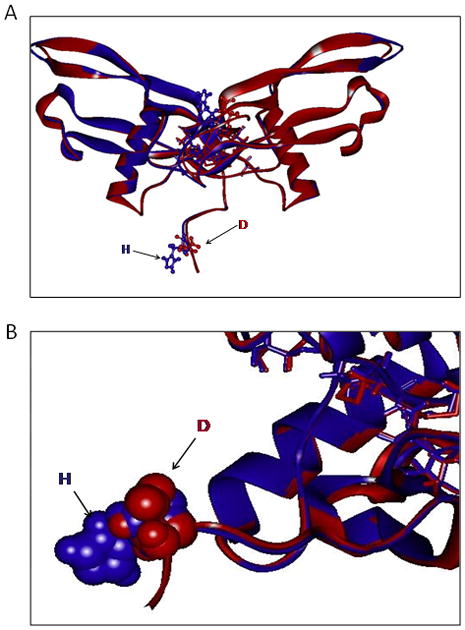
Background: Non-steroidal anti-inflammatory drug-activated gene (NAG-1), a divergent member of the transforming growth factor-beta superfamily, has been implicated in many cellular processes, including inflammation, early bone formation, apoptosis, and tumorigenesis. Recent clinical studies suggests that a C to G single nucleotide polymorphism at position 6 (histidine to aspartic acid substitution, or H6D) of the NAG-1 protein is associated with lower human prostate cancer incidence. The objective of the current study is to investigate the activity of NAG-1 H6D variant in prostate cancer tumorigenesis in vivo.
Methods: Human prostate cancer DU145 cells expressing the H6D NAG-1 or wild-type (WT) NAG-1 were injected subcutaneously into nude mice and tumor growth was monitored. Serum and tumor samples were collected for subsequent analysis.
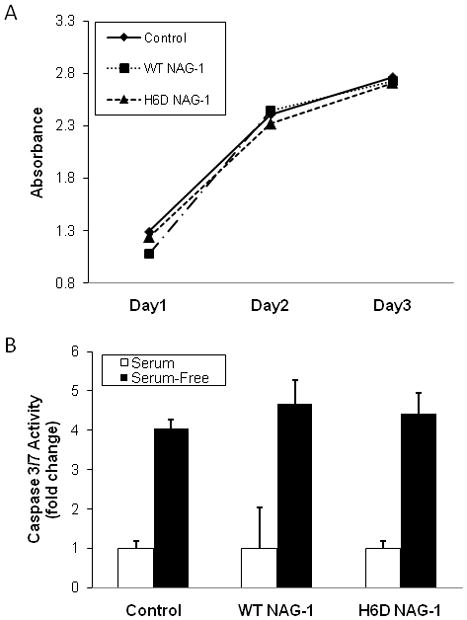
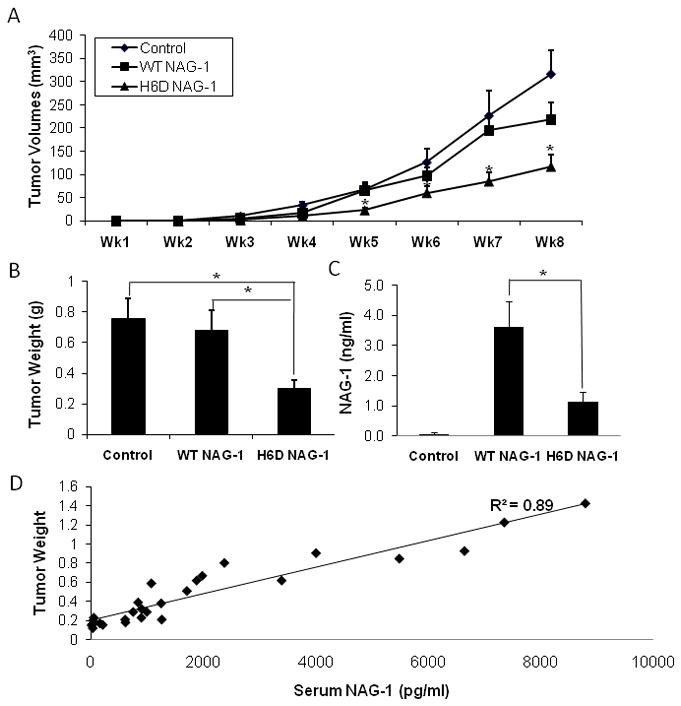
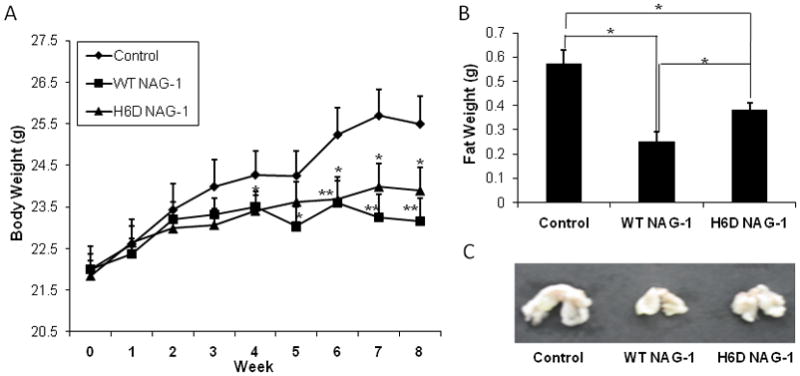
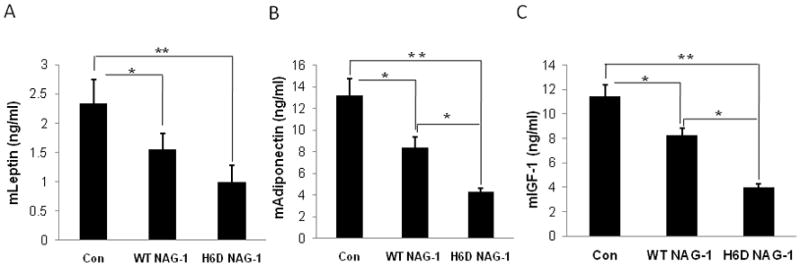
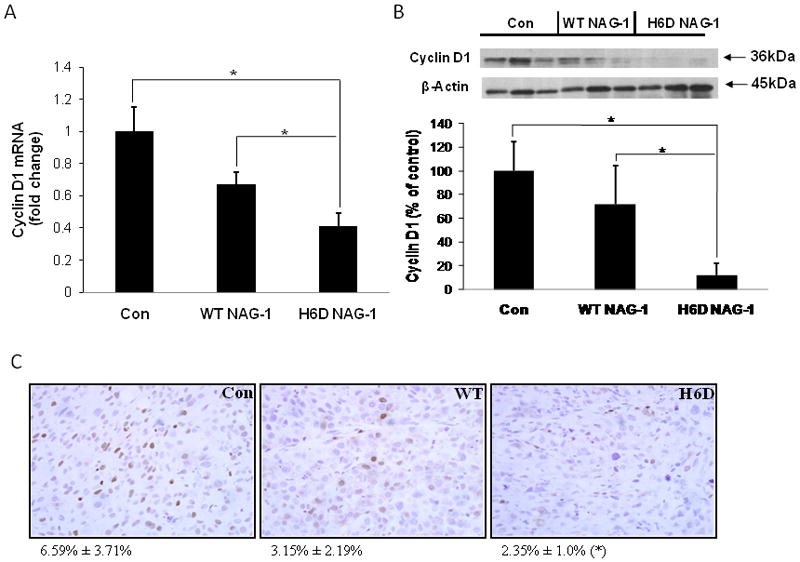
Results: The H6D variant was more potent than the WT NAG-1 and inhibited tumor growth significantly compared to control mice. Mice with tumors expressing the WT NAG-1 have greater reduced both body weight and abdominal fat than mice with H6D variant tumors suggesting different activities of the WT NAG-1 and the H6D NAG-1. A significant reduction in adiponectin, leptin, and IGF-1 serum levels was observed in the tumor-bearing mice with a more profound reduction observed with expression of H6D variant. Cyclin D1 expression was suppressed in the tumors with a dramatic reduction observed in the tumor expressing the H6D variant.
Conclusion: Our data suggest that the H6D variant of NAG-1 inhibits prostate tumorigenesis by suppressing IGF-1 and cyclin D1 expression but likely additional mechanisms are operative.
Copyright © 2011 Wiley Periodicals, Inc.
Figures
References
-
- Cancer Facts and Figures. 2010.
-
- Piek E, Heldin CH, Ten Dijke P. Specificity, diversity, and regulation in TGF-beta superfamily signaling. Faseb J. 1999;13(15):2105–2124. - PubMed
-
- Eling TE, Baek SJ, Shim M, Lee CH. NSAID activated gene (NAG-1), a modulator of tumorigenesis. J Biochem Mol Biol. 2006;39(6):649–655. - PubMed
-
- Bauskin AR, Zhang HP, Fairlie WD, He XY, Russell PK, Moore AG, Brown DA, Stanley KK, Breit SN. The propeptide of macrophage inhibitory cytokine (MIC-1), a TGF-beta superfamily member, acts as a quality control determinant for correctly folded MIC-1. The EMBO journal. 2000;19(10):2212–2220. - PMC - PubMed
Publication types
MeSH terms
Substances
Grants and funding
LinkOut - more resources
Full Text Sources
Medical
Research Materials
Miscellaneous
