


Pediatric sagittal alignment
- PMID: 21811824
- PMCID: PMC3175924
- DOI: 10.1007/s00586-011-1925-0
Pediatric sagittal alignment
Abstract
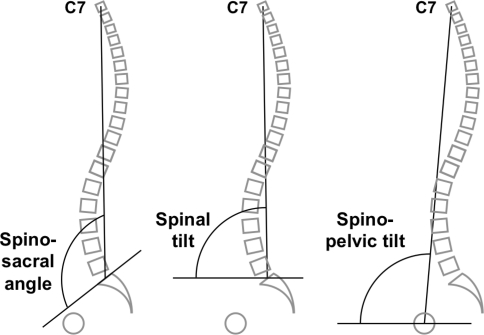
There is a wide variation in the regional parameters used to describe the spine and sacro-pelvis in children and adolescents. There is a slight tendency for thoracic kyphosis and lumbar lordosis to increase with age. Pelvic incidence and pelvic tilt also tend to increase during growth, while sacral slope remains relatively stable. Strong knowledge of the close relationships between adjacent anatomical regions of the spine and sacro-pelvis is the key when evaluating and interpreting sagittal spino-pelvic alignment. The scheme of correlations between adjacent regional parameters needs to be preserved in order to maintain a balanced posture. The net resultant from these relationships between adjacent anatomical regions is best represented by parameters of sagittal global balance. C7 plumbline tends to move backwards from childhood to adulthood, where it stabilizes or slightly moves forward secondary to degenerative changes. C7 plumbline in front of both hip axis and center of the upper sacral endplate occurs in 29% of subjects aged 3-10 years, 12% of subjects aged between 10 and 18 years, and 14% of subjects aged 18 years or older. Therefore, although most normal subjects stand with a C7 plumbline behind the hip axis, a C7 plumbline in front of both hip axis and sacrum can be seen in normal individuals. However, progressive forward displacement of C7 plumbline should raise a suspicion for the risk of developing spinal pathology.
Figures



References
-
- Kuntz C, 4th, Shaffrey CI, Ondra SL, Durrani AA, Mummaneni PV, Levin LS, Pettigrew DB. Spinal deformity: a new classification derived from neutral upright spinal alignment measurements in asymptomatic juvenile, adolescent, adult, and geriatric individuals. Neurosurgery. 2008;63:A25–A39. - PubMed
-
- Voutsinas SA, MacEwen GD. Sagittal profiles of the spine. Clin Orthop. 1986;210:235–242. - PubMed
-
- Cil A, Yazici M, Uzumcugil A, Kandemir U, Alanay A, Alanay Y, Acaroglu RE, Surat A. The evolution of sagittal segmental alignment of the spine during childhood. Spine. 2005;30:93–100. - PubMed
Publication types
MeSH terms
LinkOut - more resources
Full Text Sources
Miscellaneous
