


Growth cones as soft and weak force generators
- PMID: 21813757
- PMCID: PMC3158236
- DOI: 10.1073/pnas.1106145108
Growth cones as soft and weak force generators
Abstract
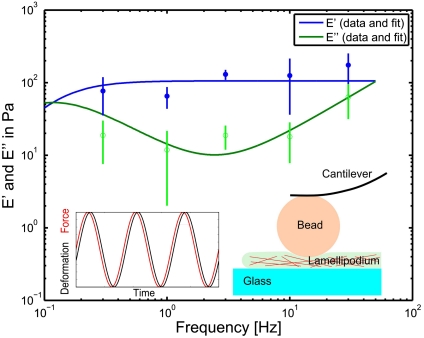
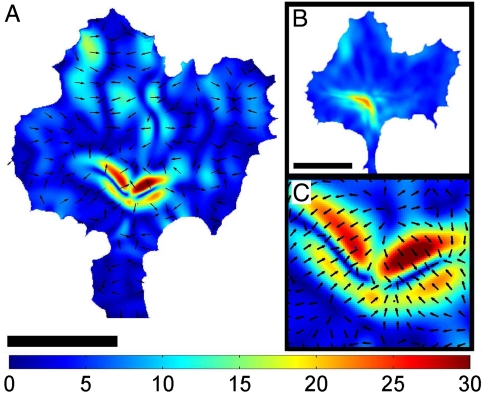
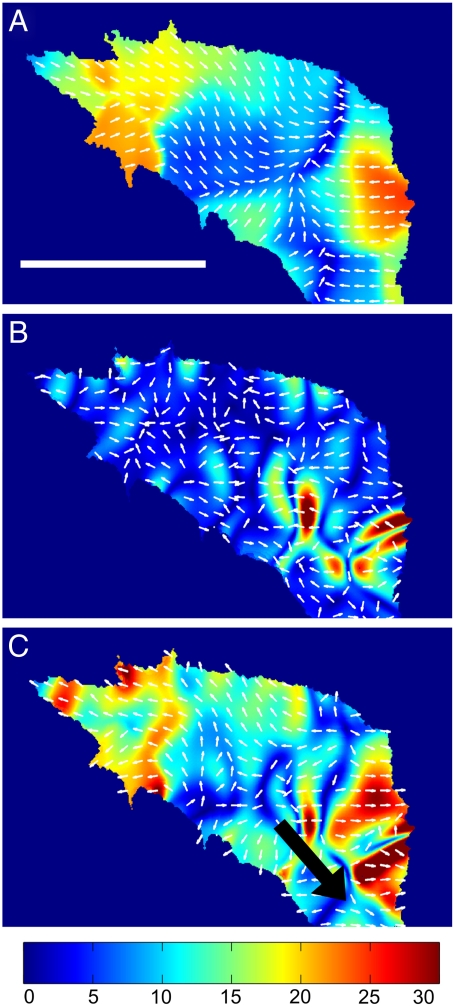
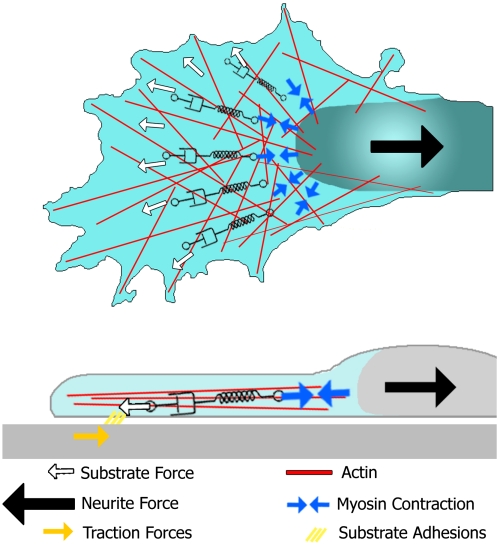
Many biochemical processes in the growth cone finally target its biomechanical properties, such as stiffness and force generation, and thus permit and control growth cone movement. Despite the immense progress in our understanding of biochemical processes regulating neuronal growth, growth cone biomechanics remains poorly understood. Here, we combine different experimental approaches to measure the structural and mechanical properties of a growth cone and to simultaneously determine its actin dynamics and traction force generation. Using fundamental physical relations, we exploited these measurements to determine the internal forces generated by the actin cytoskeleton in the lamellipodium. We found that, at timescales longer than the viscoelastic relaxation time of τ = 8.5 ± 0.5 sec, growth cones show liquid-like characteristics, whereas at shorter time scales they behaved elastically with a surprisingly low elastic modulus of E = 106 ± 21 Pa. Considering the growth cone's mechanical properties and retrograde actin flow, we determined the internal stress to be on the order of 30 pN per μm(2). Traction force measurements confirmed these values. Hence, our results indicate that growth cones are particularly soft and weak structures that may be very sensitive to the mechanical properties of their environment.
Conflict of interest statement
The authors declare no conflict of interest.
Figures
References
-
- Chilton JK. Molecular mechanisms of axon guidance. Dev Biol. 2006;292:13–24. - PubMed
-
- Franze K, Guck J. The biophysics of neuronal growth. Rep Prog Phys. 2010;73:094601–094619.
-
- Lin CH, Espreafico EM, Mooseker MS, Forscher P. Myosin drives retrograde F-actin flow in neuronal growth cones. Neuron. 1996;16:769–782. - PubMed
Publication types
MeSH terms
Substances
LinkOut - more resources
Full Text Sources
