


Additive effects of exogenous IL-12 supplementation and antibiotic treatment in infection prophylaxis
- PMID: 21815205
- PMCID: PMC3699881
- DOI: 10.1002/jor.21520
Additive effects of exogenous IL-12 supplementation and antibiotic treatment in infection prophylaxis
Abstract
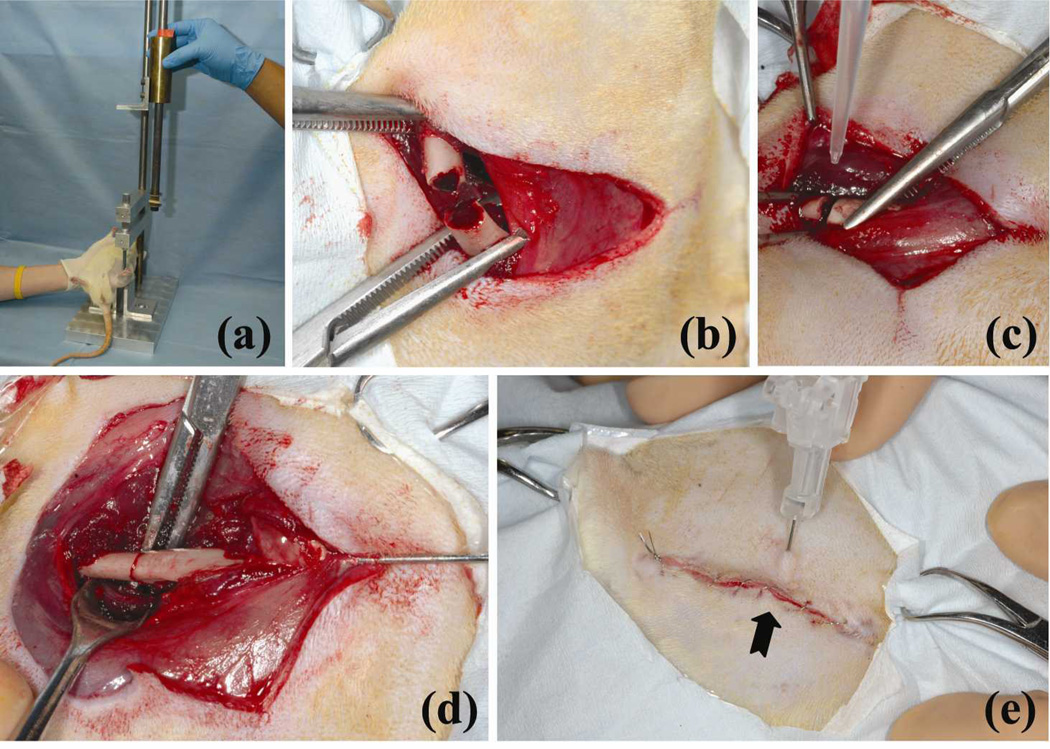
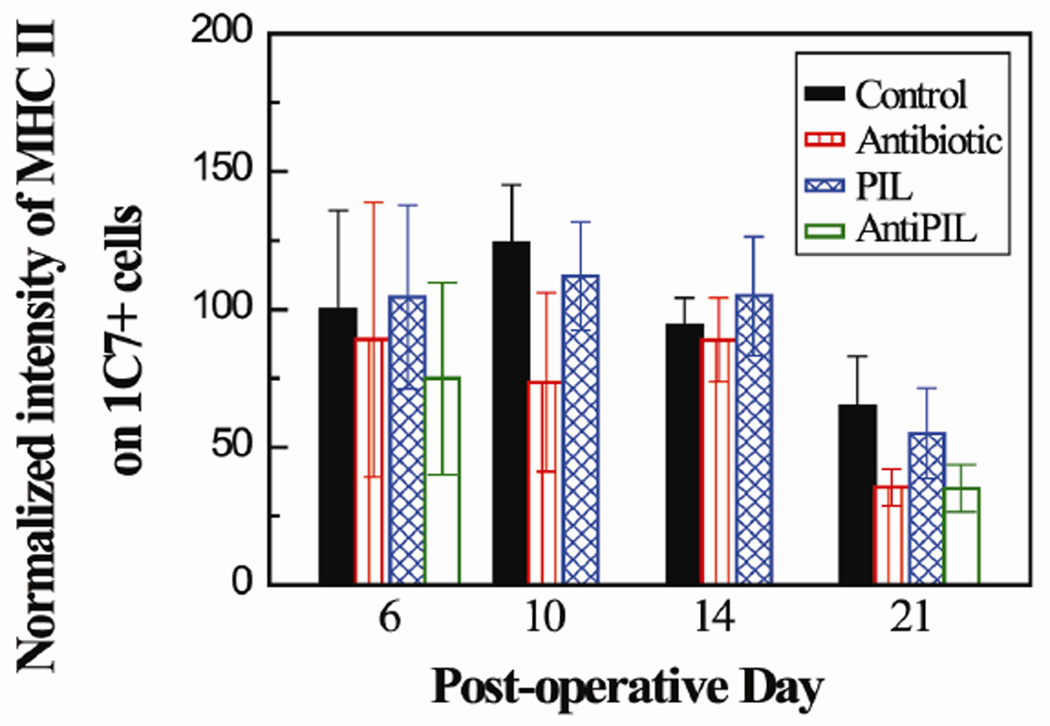
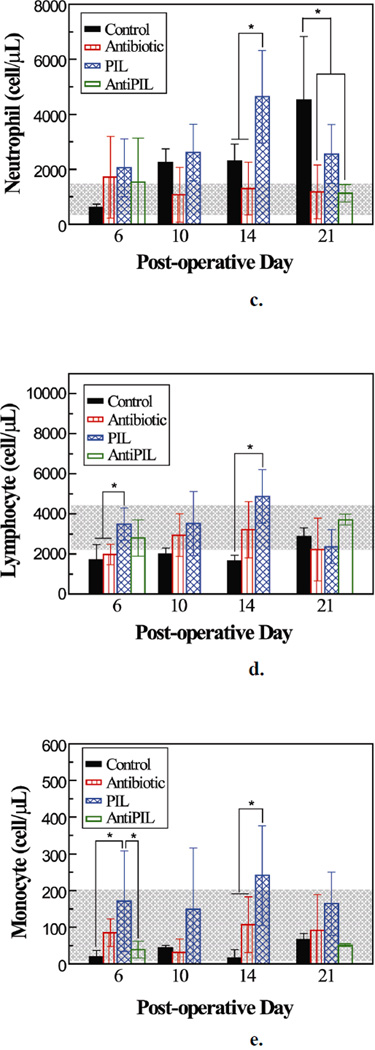
The increasing clinical incidence and host risk of open fracture-associated infections, as well as the reduced effectiveness of conventional antibiotics to treat such infections, have driven the development of new therapies for the prophylaxis of open fracture-associated infections. We investigated percutaneous supplementation of a natural cytokine (i.e., interleukin 12p70 or IL-12) at an open fracture site to reduce open fracture-associated infections. We also determined the efficacy of the combination therapy of IL-12 and conventional antibiotic therapy in the prophylaxis of open fracture-associated infections. An open femur fracture infection model was produced by direct inoculation of a clinical isolate of Staphylococcus aureus after creating a femur fracture using rats. The animals were assigned to one of four groups: no drug administration, percutaneous supplementation of IL-12, intraperitoneal administration of the antibiotic ampicillin, or percutaneous IL-12 in combination with intraperitoneal ampicillin. Animals were euthanized at postoperative days 6, 10, 14, and 21. Percutaneous IL-12 led to a reduction in infection at postoperative days 6 and 10. For the first time, exogenous IL-12 was found to have additive effects in the prevention of infection when combined with conventional treatment (i.e., antibiotic therapy). Combination therapy of ampicillin and IL-12 substantially reduced the infection rate at postoperative day 6 and also decreased the time needed for complete inhibition of infection. Therefore, exogenous IL-12, providing a mechanism of protection independent of antibiotic resistance, complements the routine use of antibiotics.
Copyright © 2011 Orthopaedic Research Society.
Figures


References
-
- Darouiche RO. Treatment of infections associated with surgical implants. N Engl J Med. 2004;350:1422–1429. - PubMed
-
- Zalavras CG, Patzakis MJ. Open fractures: evaluation and management. J Amer Acad Orthop Surg. 2003;11(3):212–219. - PubMed
-
- Schmidmaier G, Lucke M, Wildemann B, et al. Prophylaxis and treatment of implant-related infections by antibiotic-coated implants. Injury. 2006;37(S2):S105–S112. - PubMed
-
- Facts about antibiotic resistance (CDC) [Accessed on November 20, 2010]; http://www.cdc.gov/getsmart/antibiotic-use/fast-facts.html.
-
- Heseltine P. Has resistance spread to the community? Clin Microbiol Infect. 2000;6(S2):11–16. - PubMed
Publication types
MeSH terms
Substances
Grants and funding
LinkOut - more resources
Full Text Sources
Medical
