. 2011 Oct;28(10):2079-90.
doi: 10.1089/neu.2011.1910. Epub 2011 Sep 21.

No evidence for a cumulative impact effect on concussion injury threshold

Affiliations

No evidence for a cumulative impact effect on concussion injury threshold

James T Eckner et al. J Neurotrauma. 2011 Oct.

Abstract

Recent studies using a helmet-based accelerometer system (Head Impact Telemetry System [HITS]) have demonstrated that concussions result from a wide range of head impact magnitudes. Variability in concussion thresholds has been proposed to result from the cumulative effect of non-concussive head impacts prior to injury. We used the HITS to collect biomechanical data representing >100,000 head impacts in 95 high school football players over 4 years. The cumulative impact histories prior to 20 concussive impacts in 19 athletes were compared to the cumulative impact histories prior to the three largest magnitude non-concussive head impacts in the same athletes. No differences were present in any impact history variable between the concussive and non-concussive high magnitude impacts. These analyses included the number of head impacts, cumulative HIT severity profile value, cumulative linear acceleration, and cumulative rotational acceleration during the same practice or game session, as well as over the 30 min and 1 week preceding these impacts. Our data do not support the proposal that impact volume or intensity influence concussion threshold in high school football athletes.


Figures
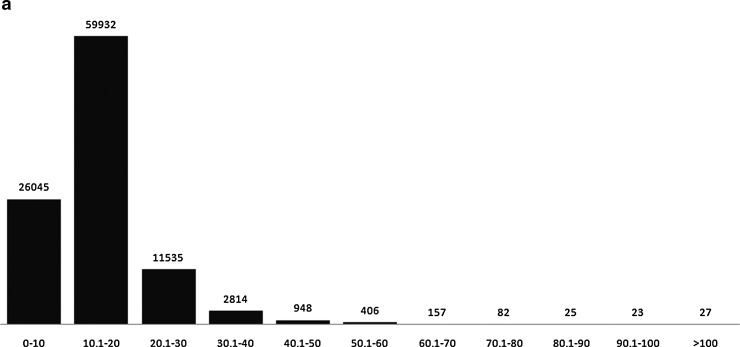
FIG. 1.
FIG. 1.
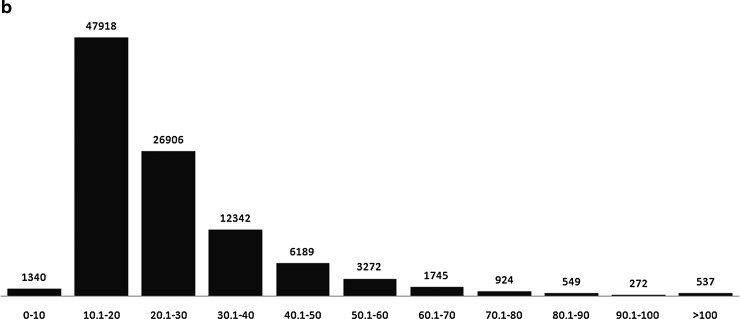
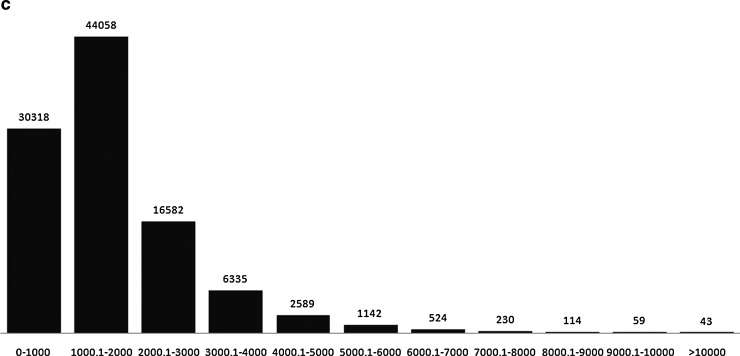
Frequency histograms of the Head Impact Telemetry severity profile (HITsp) (a), peak linear acceleration (b), and peak rotational acceleration (c) values for all head impacts sustained by the source group of all 95 athletes who participated in the study. The values above each bar represent the number of impacts falling within that impact magnitude bin.
FIG. 1.
FIG. 1.
Frequency histograms of the Head Impact Telemetry severity profile (HITsp) (a), peak linear acceleration (b), and peak rotational acceleration (c) values for all head impacts sustained by the source group of all 95 athletes who participated in the study. The values above each bar represent the number of impacts falling within that impact magnitude bin.
FIG. 1.
FIG. 1.
Frequency histograms of the Head Impact Telemetry severity profile (HITsp) (a), peak linear acceleration (b), and peak rotational acceleration (c) values for all head impacts sustained by the source group of all 95 athletes who participated in the study. The values above each bar represent the number of impacts falling within that impact magnitude bin.
FIG. 2.
FIG. 2.
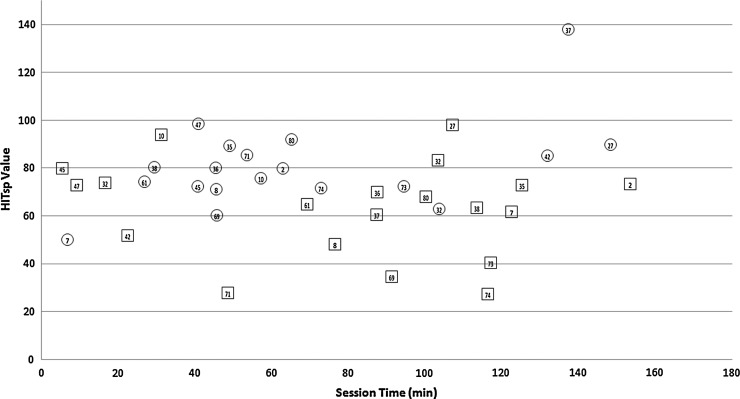
Summary plot illustrating the elapsed time from the start of the session and the Head Impact Telemetry severity profile (HITsp) value of the concussive impact and the mean elapsed time and HITsp value of the 3 non-concussive high magnitude head impacts for each athlete. Concussive impacts are depicted with the athlete's ID enclosed in a square; non-concussive impacts are depicted with a circle.
FIG. 3.
FIG. 3.
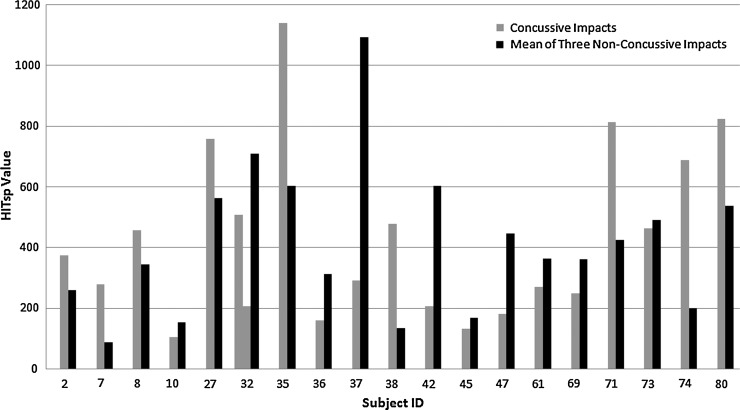
Cumulative Head Impact Telemetry severity profile (HITsp) burden sustained by each athlete on the day of injury prior to concussive impacts (gray) and non-concussive impacts (black). Non-concussive impact values represent the mean of the three non-concussive impacts for each athlete.
FIG. 4.
FIG. 4.
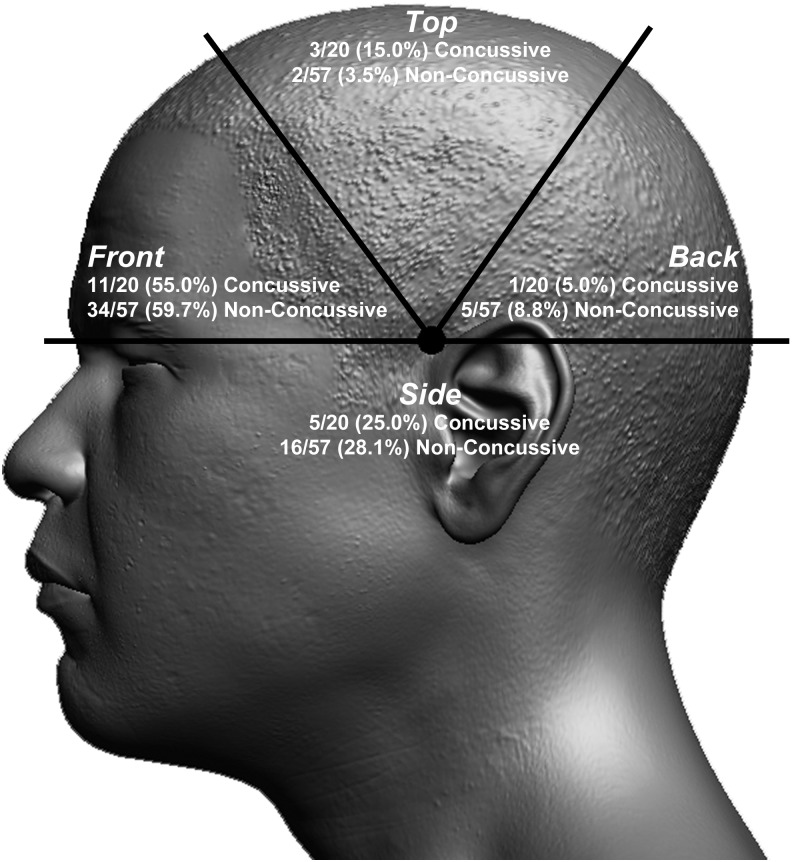
Impact location distribution for the 20 concussive and 57 non-concussive high magnitude head impacts.

References

    1. Broglio S.P. Schnebel B. Sosnoff J.J. Shin S. Fend X. He X. Zimmerman J. Biomechanical properties of concussions in high school football. Med. Sci. Sports Exerc. 2010;42:2064–2071. - PMC - PubMed
    1. Broglio S.P. Sosnoff J.J. Shin S. He X. Alcaraz C. Zimmerman J. Head impacts during high school football: a biomechanical assessment. J. Athl. Train. 2009;44:342–349. - PMC - PubMed
    1. Brolinson P.G. Manoogian S. McNeely D. Goforth M. Greenwald R. Duma S. Analysis of linear head accelerations from collegiate football impacts. Curr. Sports Med. Rep. 2006;5:23–28. - PubMed
    1. Collins M.W. Lovell M.R. McKeag D.B. Current issues in managing sports-related concussion. JAMA. 1999;282:2283–2285. - PubMed
    1. Crisco J.J. Chu J.J. Greenwald R.M. An algorithm for estimating acceleration magnitude and impact location using multiple nonorthogonal single-axis accelerometers. J. Biomech. Eng. 2004;126:849–854. - PubMed

Publication types