


Alzheimer's disease - a neurospirochetosis. Analysis of the evidence following Koch's and Hill's criteria
- PMID: 21816039
- PMCID: PMC3171359
- DOI: 10.1186/1742-2094-8-90
Alzheimer's disease - a neurospirochetosis. Analysis of the evidence following Koch's and Hill's criteria
Abstract
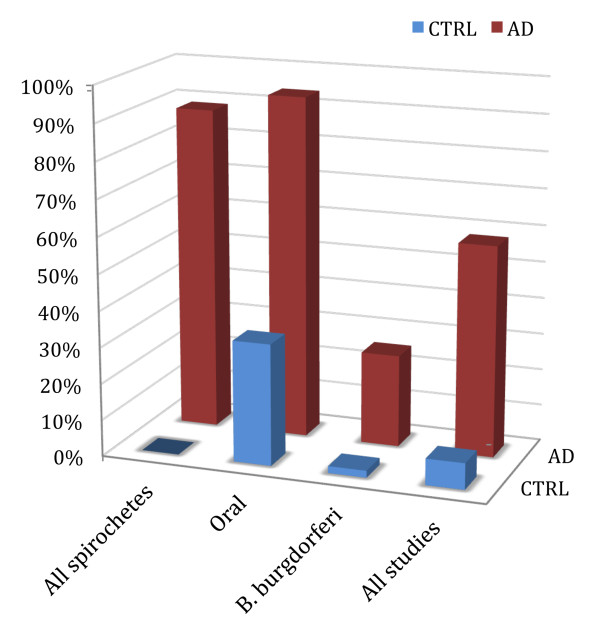
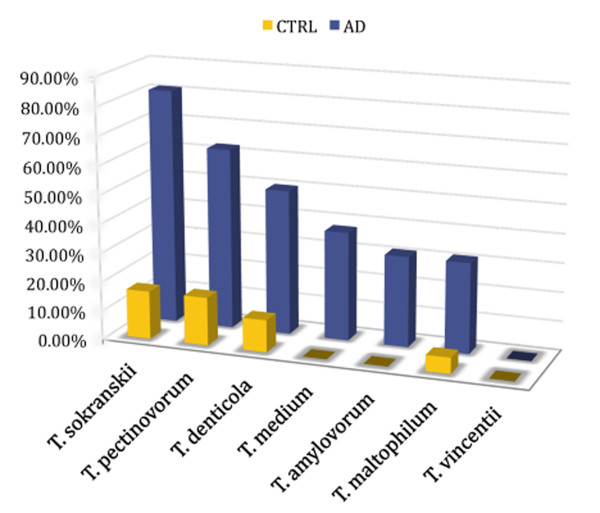
It is established that chronic spirochetal infection can cause slowly progressive dementia, brain atrophy and amyloid deposition in late neurosyphilis. Recently it has been suggested that various types of spirochetes, in an analogous way to Treponema pallidum, could cause dementia and may be involved in the pathogenesis of Alzheimer's disease (AD). Here, we review all data available in the literature on the detection of spirochetes in AD and critically analyze the association and causal relationship between spirochetes and AD following established criteria of Koch and Hill. The results show a statistically significant association between spirochetes and AD (P = 1.5 × 10⁻¹⁷, OR = 20, 95% CI = 8-60, N = 247). When neutral techniques recognizing all types of spirochetes were used, or the highly prevalent periodontal pathogen Treponemas were analyzed, spirochetes were observed in the brain in more than 90% of AD cases. Borrelia burgdorferi was detected in the brain in 25.3% of AD cases analyzed and was 13 times more frequent in AD compared to controls. Periodontal pathogen Treponemas (T. pectinovorum, T. amylovorum, T. lecithinolyticum, T. maltophilum, T. medium, T. socranskii) and Borrelia burgdorferi were detected using species specific PCR and antibodies. Importantly, co-infection with several spirochetes occurs in AD. The pathological and biological hallmarks of AD were reproduced in vitro by exposure of mammalian cells to spirochetes. The analysis of reviewed data following Koch's and Hill's postulates shows a probable causal relationship between neurospirochetosis and AD. Persisting inflammation and amyloid deposition initiated and sustained by chronic spirochetal infection form together with the various hypotheses suggested to play a role in the pathogenesis of AD a comprehensive entity. As suggested by Hill, once the probability of a causal relationship is established prompt action is needed. Support and attention should be given to this field of AD research. Spirochetal infection occurs years or decades before the manifestation of dementia. As adequate antibiotic and anti-inflammatory therapies are available, as in syphilis, one might prevent and eradicate dementia.
Figures
References
-
- Marshall BJ, Warren JR. Unidentified curved bacilli in the stomach of patients with gastritis and peptic ulceration. Lancet. 1984;1:1311–1315. - PubMed
-
- Saikku P. Epidemiology of Chlamydia pneumoniae in atherosclerosis. Am Heart J. 1999;S138:500–503. - PubMed
-
- Martîn-de-Argila C, Boixeda D, Cantón R, Gisbert JP, Fuertes A. High seroprevalence of Helicobacter pylori infection in coronary heart disease. Lancet. 1995;346:310. - PubMed
Publication types
MeSH terms
LinkOut - more resources
Full Text Sources
Other Literature Sources
Medical
Research Materials
