


Sex and type 2 diabetes: obesity-independent effects on left ventricular substrate metabolism and relaxation in humans
- PMID: 21818149
- PMCID: PMC3314727
- DOI: 10.1038/oby.2011.208
Sex and type 2 diabetes: obesity-independent effects on left ventricular substrate metabolism and relaxation in humans
Abstract
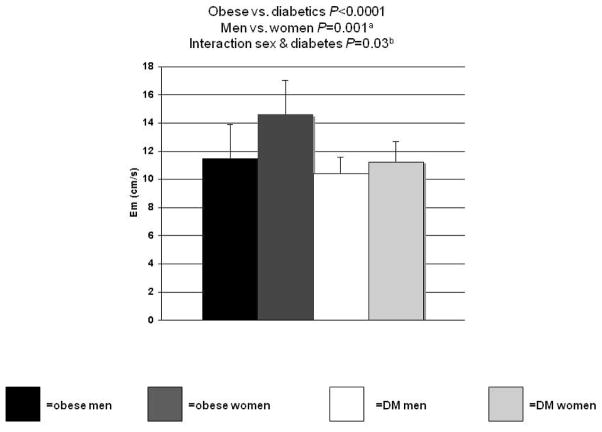
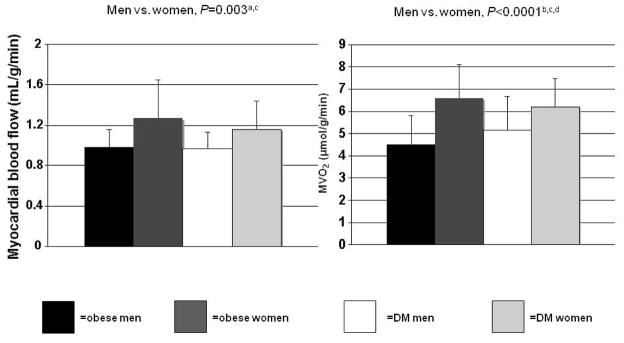
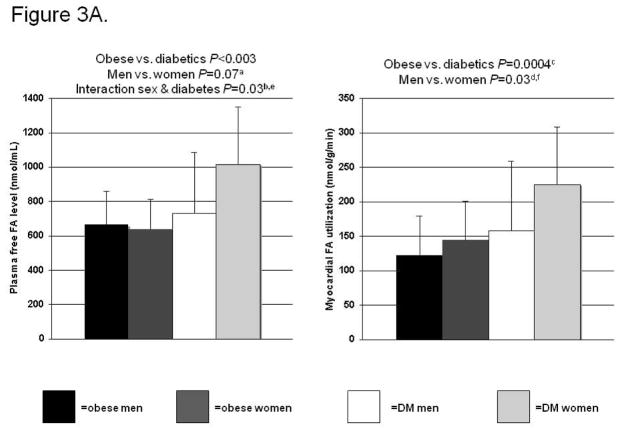
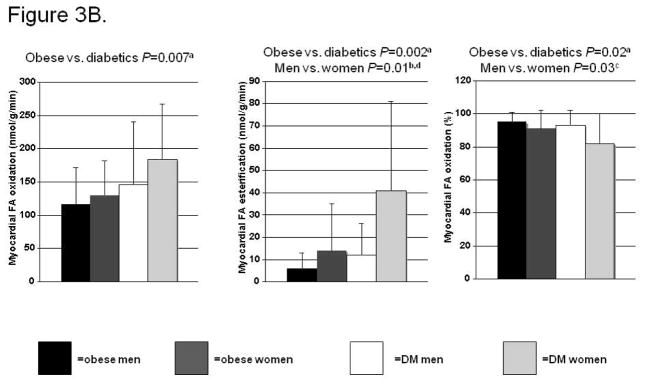
Patients with type 2 diabetes (T2DM), particularly women, are at risk for heart failure. Myocardial substrate metabolism derangements contribute to cardiac dysfunction in diabetic animal models. The purpose of this study was to determine the effects of diabetes and sex on myocardial metabolism and diastolic function in humans, separate from those of obesity. Thirty-six diabetic subjects (22 women) and 36 nondiabetic, BMI-matched subjects (21 women) underwent positron emission tomography (myocardial metabolism) and echocardiography (structure, function). Myocardial blood flow and oxygen consumption (MVO(2)) were higher in women than men (P = 0.003 and <0.0001, respectively). Plasma fatty acid (FA) levels were higher in diabetics (vs. obese, P < 0.003) and sex and diabetes status interacted in its prediction (P = 0.03). Myocardial FA utilization, oxidation, and esterification were higher and percent FA oxidation lower in diabetics (vs. obese, P = 0.0004, P = 0.007, P = 0.002, P = 0.02). FA utilization and esterification were higher and percent FA oxidation lower in women (vs. men, P = 0.03, P = 0.01, P = 0.03). Diabetes and sex did not affect myocardial glucose utilization, but myocardial glucose uptake/plasma insulin was lower in the diabetics (P = 0.04). Left ventricular relaxation was lower in diabetics (P < 0.0001) and in men (P = 0.001), and diabetes and sex interacted in its prediction (P = 0.03). Sex, T2DM, or their interaction affect myocardial blood flow, MVO(2), FA metabolism, and relaxation separate from obesity's effects. Sexually dimorphic myocardial metabolic and relaxation responses to diabetes may play a role in the known cardiovascular differences between men and women with diabetes.
Trial registration: ClinicalTrials.gov NCT00572624 NCT00577590.
Conflict of interest statement
DISCLOSURES
The authors have no conflicts to disclose.
Figures
References
-
- Grundy SM, Cleeman JI, Daniels SR, et al. Diagnosis and management of the metabolic syndrome. An American Heart Association/National Heart, Lung, and Blood Institute Scientific Statement. Executive summary. Cardiol Rev. 2005;13:322–327. - PubMed
-
- Harris MI, Flegal KM, Cowie CC, et al. Prevalence of diabetes, impaired fasting glucose, and impaired glucose tolerance in U.S. adults. The Third National Health and Nutrition Examination Survey, 1988–1994. Diabetes Care. 1998;21:518–524. - PubMed
-
- Mokdad AH, Ford ES, Bowman BA, et al. Prevalence of obesity, diabetes, and obesity-related health risk factors, 2001. JAMA. 2003;289:76–79. - PubMed
-
- Kannel WB, McGee DL. Diabetes and cardiovascular disease. The Framingham study. JAMA. 1979;241:2035–2038. - PubMed
-
- Kannel WB, Hjortland M, Castelli WP. Role of diabetes in congestive heart failure: the Framingham study. Am J Cardiol. 1974;34:29–34. - PubMed
Publication types
MeSH terms
Substances
Associated data
Grants and funding
LinkOut - more resources
Full Text Sources
Medical
