. 2011;6(7):e22665.
doi: 10.1371/journal.pone.0022665. Epub 2011 Jul 27.

Transmitters and pathways mediating inhibition of spinal itch-signaling neurons by scratching and other counterstimuli

Affiliations

Transmitters and pathways mediating inhibition of spinal itch-signaling neurons by scratching and other counterstimuli

Tasuku Akiyama et al. PLoS One. 2011.

Abstract

Scratching relieves itch, but the underlying neural mechanisms are poorly understood. We presently investigated a role for the inhibitory neurotransmitters GABA and glycine in scratch-evoked inhibition of spinal itch-signaling neurons in a mouse model of chronic dry skin itch. Superficial dorsal horn neurons ipsilateral to hindpaw dry skin treatment exhibited a high level of spontaneous firing that was significantly attenuated by cutaneous scratching, pinch and noxious heat. Scratch-evoked inhibition was nearly abolished by spinal delivery of the glycine antagonist, strychnine, and was markedly attenuated by respective GABA(A) and GABA(B) antagonists bicuculline and saclofen. Scratch-evoked inhibition was also significantly attenuated (but not abolished) by interruption of the upper cervical spinal cord, indicating the involvement of both segmental and suprasegmental circuits that engage glycine- and GABA-mediated inhibition of spinal itch-signaling neurons by noxious counterstimuli.


Conflict of interest statement

Competing Interests: The authors have declared that no competing interests exist.

Figures

Figure 1
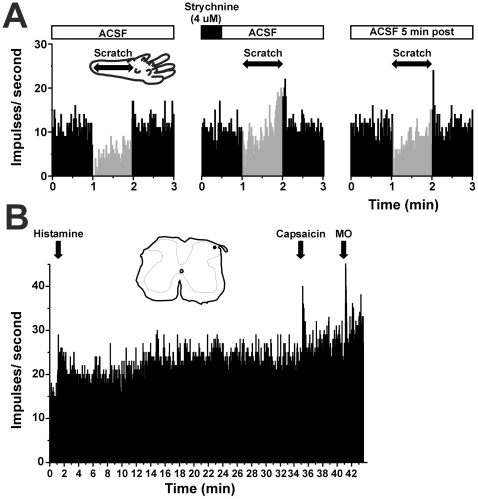
Figure 1. Scratch-evoked inhibition of spinal neuronal firing is blocked by strychnine.
A: Shown are peristimulus-time histograms (PSTHs; bins: 1 sec) of a superficial dorsal horn unit's ongoing firing. The gray portion of the PSTH indicates the time that the scratch stimuli were applied. The left-hand PSTH shows that under control conditions of spinal superfusion with artificial cerebrospinal fluid (ACSF; upper bar), repetitive back-andforth scratch movements across the ventral hindpaw markedly depressed firing. The inset shows the 60-sec duration of scratching (arrows) on a drawing of the hindpaw indicating the direction of scratch motions. When strychnine was delivered by spinal superfusion for 30 sec (middle PSTH; black bar above), scratching was much less effective in reducing neuronal firing. The right-hand PSTH shows partial recovery of scratch-evoked inhibition 5 min post-strychnine. B: PSTH showing response of same unit in A to intradermal injection of histamine (arrow; 50 µg/µl). Note the rapid and sustained increase in firing rate. The unit also responded phasically to intradermal injection of capsaicin (35 µg/µl) and topical application of mustard oil (MO). Inset shows a spinal cord section with the histologically recovered recording site (•) in lamina I.
Figure 2
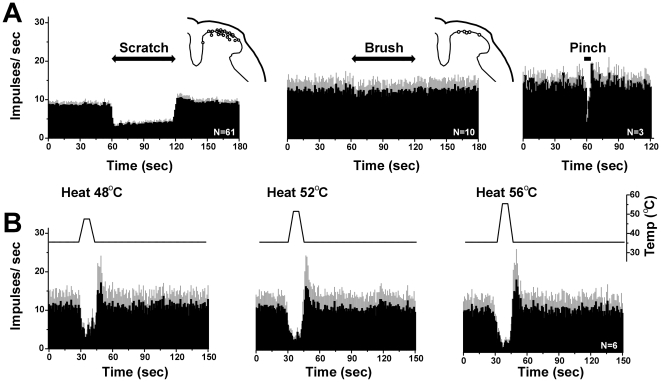
Figure 2. Effects of scratching and other stimuli on spontaneous activity.
A: Averaged PSTHs (bins: 1 sec) show, from left to right, unit responses to scratch (n = 61), brush (n = 10) and pinch (n = 3). Gray error bars: SEM. The 60-sec duration of scratching, but not brush, markedly depressed firing. The 5-sec duration of pinch also markedly depressed firing. B: Averaged PSTHs (bins: 1 sec) show, from left to right, unit responses to 48°C, 52°C and 56°C heat stimuli (n = 6). Gray error bars: SEM. Upper trace shows skin temperature. Heat stimuli markedly depressed firing in a temperature-dependent manner, followed by rebound.
Figure 3
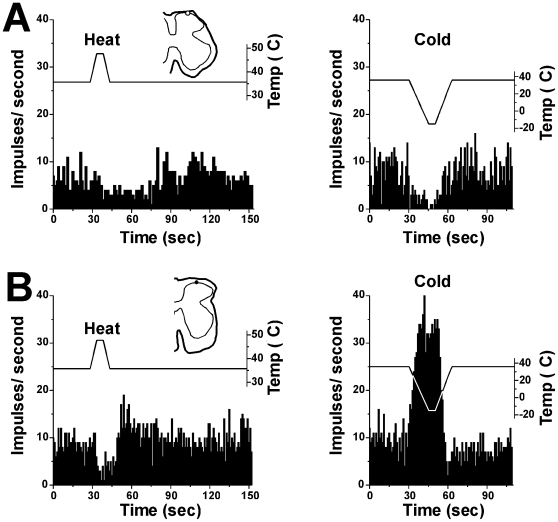
Figure 3. Effects of heat and cooling on spinal neuronal firing.
A: PSTHs (bins: 1 sec) showing response of a superficial dorsal horn unit to thermal stimulus. Left top panel shows 48°C heat-evoked depression of firing. Right top panel shows −5°C cold-evoked depression of firing. Bottom graph shows temperature. B: PSTH showing response of different unit in A to thermal stimuli. Left panel: 48°C heat stimulus depressed firing. Right panel shows −5°C cold-evoked enhancement of firing. Traces above PSTHs show temperature.
Figure 4
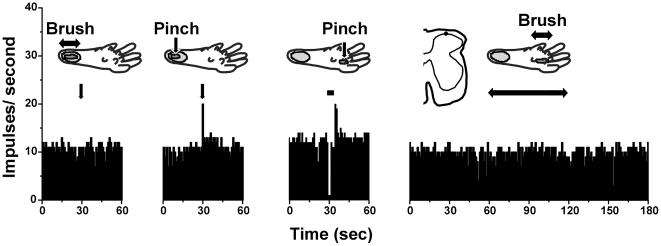
Figure 4. Pinch-evoked inhibition of spinal neuronal firing.
PSTHs (bins: 1 sec) show responses of a superficial dorsal horn unit to brush and pinch stimuli delivered either within (2 left-hand PSTHs) or outside (2 right-hand PSTHs) the receptive field on the heel (gray area). The unit was excited by pinch but not brush within the receptive field, and was inhibited by pinch but not brush stimulus to outside receptive field.
Figure 5
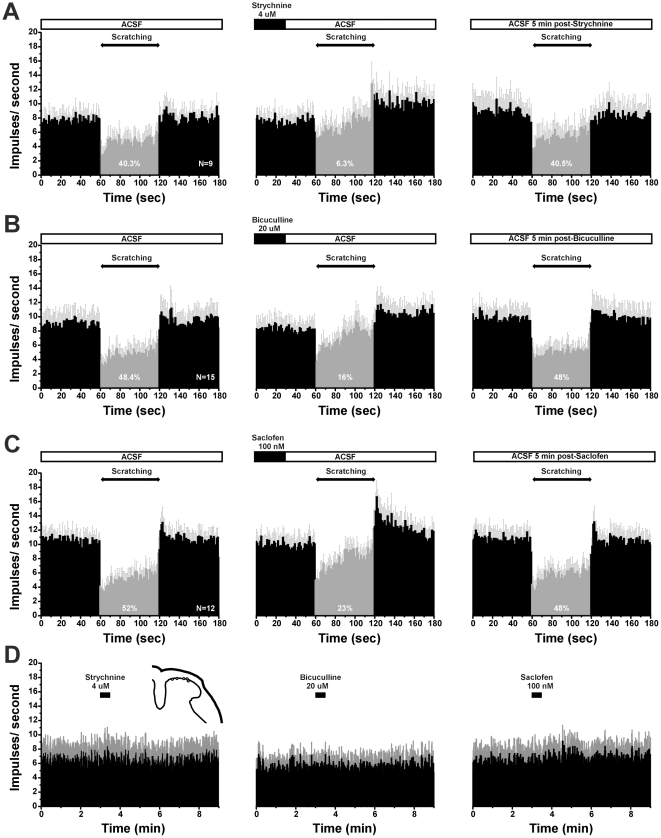
Figure 5. Glycine and GABA antagonists reduce scratch-evoked inhibition.
A: PSTHs (bins: 1 sec) of averaged firing of 9 superficial dorsal horn units. Gray error bars: SEM. Left panel shows scratch-evoked depression of firing during ACSF superfusion. The gray portion of the PSTH highlights the scratch-evoked reduction in firing. Middle panel shows reduced inhibition following superfusion with glycine antagonist strychnine, and right panel shows recovery of scratch-evoked inhibition 5 min later. Percentages indicate the degree of suppression of firing during scratching, relative to pre-scratch baseline. B: Mean activity of 15 units before, during and after spinal superfusion with GABAA antagonist bicuculline (format as in A). C: Mean activity of 12 units with GABAB antagonist saclofen (format as in A, B). D: PSTHs (bins: 1 sec) of averaged firing of superficial dorsal horn units. Gray error bars: SEM. Left panel shows ongoing firing after strychnine superfusion (n = 8). Middle panel shows ongoing firing following superfusion with bicuculin (n = 8). Right panel shows ongoing firing following superfusion with saclofen (n = 8). None of the drugs affected ongoing firing.
Figure 6
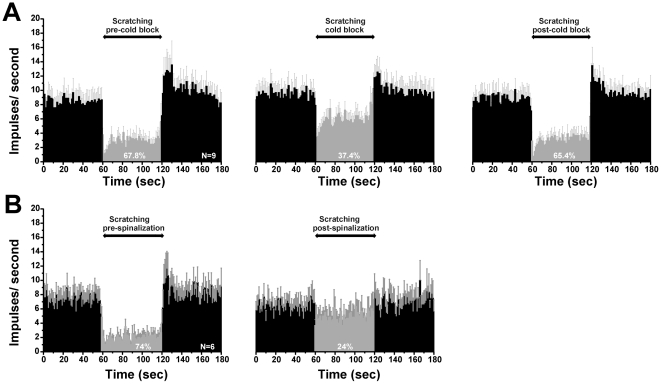
Figure 6. Disruption of upper cervical spinal cord reduces scratch-evoked inhibition.
A: cold block. Left-hand PSTH shows averaged firing of 9 units before and during scratching under control conditions. Middle PSTH shows reduction in the degree of scratch-evoked inhibition during cold-block of upper cervical cord. Right-hand PSTH shows recovery of scratch-evoked inhibition after rewarming the cervical cord. B: Spinalization. Shown are mean PSTHs of 6 units from separate animals, before (lefthand PSTH) and after (right-hand PSTH) complete transection of the upper cervical spinal cord.
Figure 7
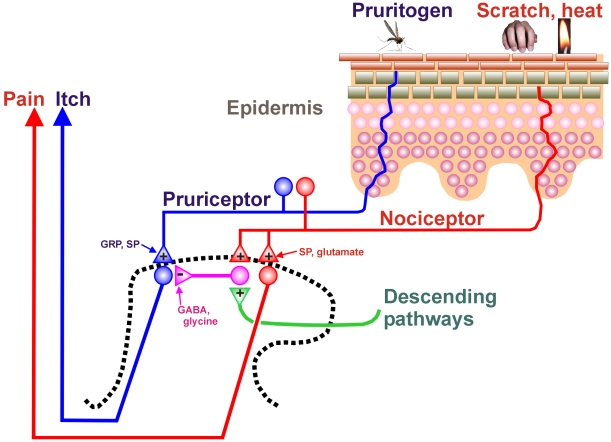
Figure 7. Schematic diagram showing epidermis (upper right) and an outline of the spinal dorsal horn (dashed line, lower left).
+: excitatory synapse; -: inhibitory synapse. See text for further discussion.

References

    1. Ward L, Wright E, McMahon SB. A comparison of the effects of noxious and innocuous counterstimuli on experimentally induced itch and pain. Pain. 1996;64:129–138. - PubMed
    1. Murray FS, Weaver MM. Effects of ipsilateral and contralateral counterirritation on experimentally produced itch in human beings. J Comp Physiol Psychol. 1975;89:819–826. - PubMed
    1. Davidson S, Zhang X, Khasabov SG, Simone DA, Giesler GJ., Jr Relief of itch by scratching: state-dependent inhibition of primate spinothalamic tract neurons. Nat Neurosci. 2009;12:544–546. - PMC - PubMed
    1. White JC, Sweet WH. New York: Thomas; 1969. Pain and the Neurosurgeon: A Forty Year Experience.
    1. Akiyama T, Merrill AW, Zanotto K, Carstens MI, Carstens E. Scratching behavior and Fos expression in superficial dorsal horn elicited by protease-activated receptor agonists and other itch mediators in mice. J Pharmacol Exp Ther. 2009;329:945–951. - PMC - PubMed

Publication types

MeSH terms