


CIT in context: the impact of mental health resource availability and district saturation on call dispositions
- PMID: 21820177
- PMCID: PMC3171588
- DOI: 10.1016/j.ijlp.2011.07.008
CIT in context: the impact of mental health resource availability and district saturation on call dispositions
Abstract
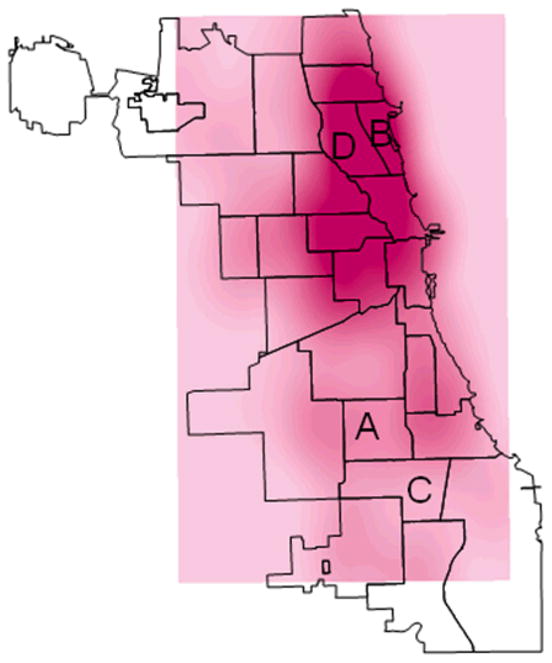
The goals of Crisis Intervention Team (CIT) programs include improving safety during encounters between police and persons with mental illnesses, diverting persons with mental illnesses away from the criminal justice system, and increasing referral and access to mental health services. CIT is a systemic intervention, and as such, its implementation and effectiveness are influenced by existing practices and infrastructures. However, little research has considered the context in which CIT programs are implemented. In this paper, we present research on CIT in four Chicago police districts that vary in terms of two contextual factors hypothesized to influence the impact of CIT training on how calls involving persons with mental illnesses are resolved. Using data from 112 patrol officers in four Chicago police districts, we consider the impact of mental health services availability and CIT saturation (the percentage of district personnel that are CIT certified). Findings indicate that CIT training increased direction to mental health services primarily in districts with greater availability of mental health services. In districts with low service availability, higher CIT saturation increased direction to mental services. The opposite pattern emerged for contact only or informal call resolution. No effects were found for arrest as a call outcome.
Copyright © 2011 Elsevier Ltd. All rights reserved.
Figures
References
-
- Bittner E. The police on skid-row: a study of peace keeping. American Sociological Review. 1967;32:699–715.
-
- Broner N, Borum R, Gawley K. Criminal justice diversion of individuals with co-occurring mental illness and substance use disorders: An overview. In: Landsberg G, Rock M, Berg L, Smiley A, editors. Serving mentally ill offenders and their victims: Challenges and opportunities for mental health professionals. New York: Springer; 2002. pp. 83–106.
-
- Broner N, Lattimore PK, Cowell AJ, Schlenger WE. Effects of diversion on adults with co-occurring mental illness and substance use: Outcomes for a national multi-site study. Behavioral Sciences and the Law. 2004;22:519–541. - PubMed
-
- Chicago Department of Public Health. Profile of Chicago’s Mental Health System 2003. 2006 retrieved on October 17, 2007. http://www.cchsd.org/reports.html.
-
- Chicago Police Department. Use of Force Model GO-02-08-01A. 2003.
Publication types
MeSH terms
Grants and funding
LinkOut - more resources
Full Text Sources
Medical
Miscellaneous
