


Furthering the link between the sarcomere and primary cardiomyopathies: restrictive cardiomyopathy associated with multiple mutations in genes previously associated with hypertrophic or dilated cardiomyopathy
- PMID: 21823217
- PMCID: PMC3158811
- DOI: 10.1002/ajmg.a.34097
Furthering the link between the sarcomere and primary cardiomyopathies: restrictive cardiomyopathy associated with multiple mutations in genes previously associated with hypertrophic or dilated cardiomyopathy
Abstract
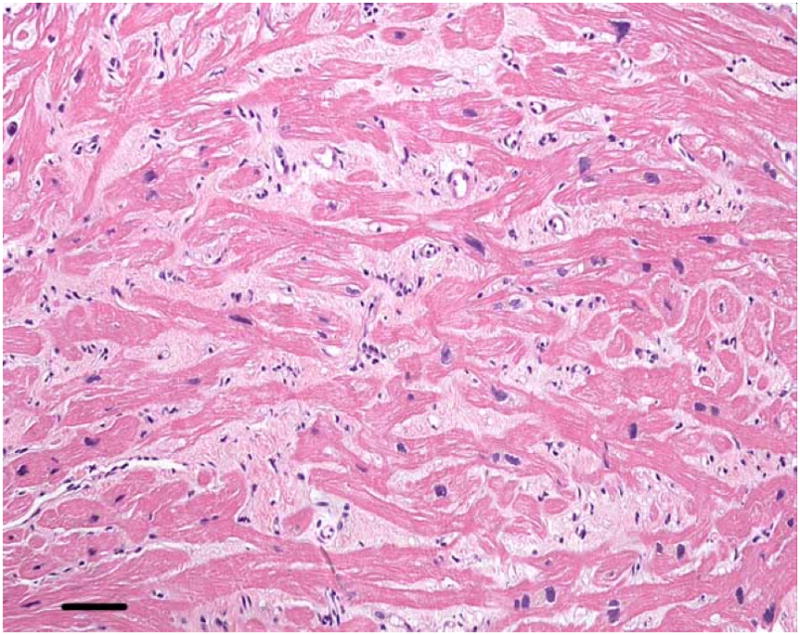
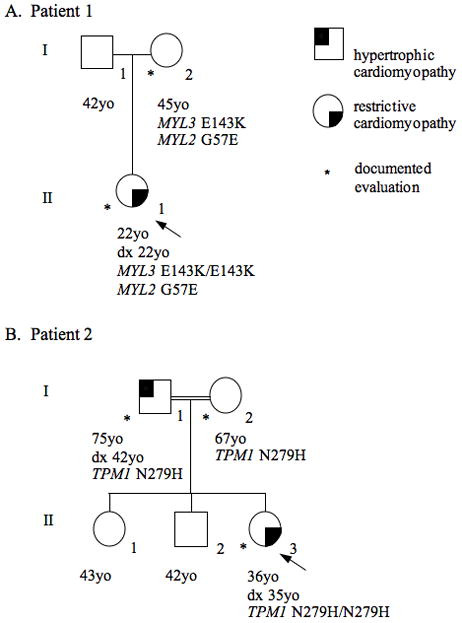
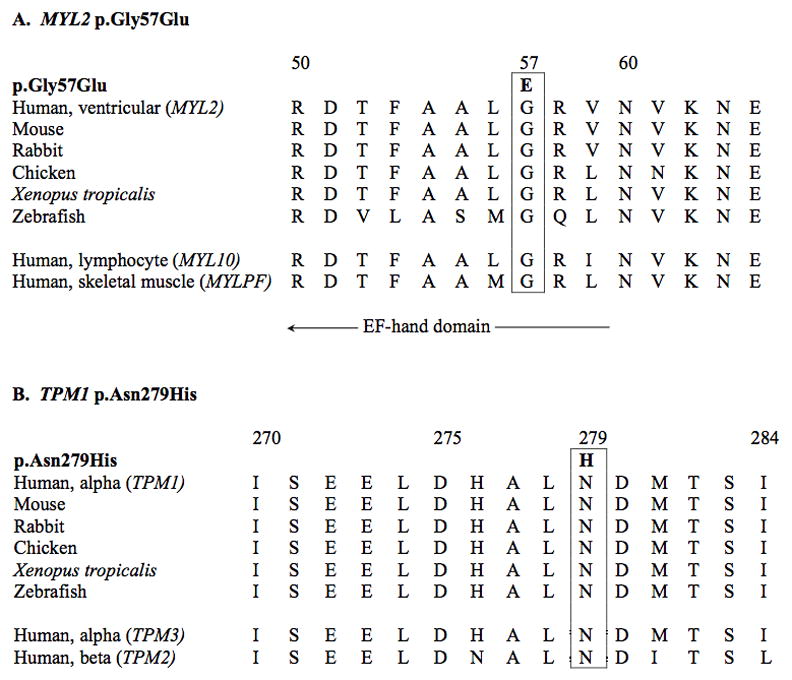
Mutations in genes that encode components of the sarcomere are well established as the cause of hypertrophic and dilated cardiomyopathies. Sarcomere genes, however, are increasingly being associated with other cardiomyopathies. One phenotype more recently recognized as a disease of the sarcomere is restrictive cardiomyopathy (RCM). We report on two patients with RCM associated with multiple mutations in sarcomere genes not previously associated with RCM. Patient 1 presented with NYHA Class III/IV heart failure at 22 years of age. She was diagnosed with RCM and advanced heart failure requiring heart transplantation. Sequencing of sarcomere genes revealed previously reported homozygous p.Glu143Lys mutations in MYL3, and a novel heterozygous p.Gly57Glu mutation in MYL2. The patient's mother is a double heterozygote for these mutations, with no evidence of cardiomyopathy. Patient 2 presented at 35 years of age with volume overload while hospitalized for oophorectomy. She was diagnosed with RCM and is being evaluated for heart transplantation. Sarcomere gene sequencing identified homozygous p.Asn279His mutations in TPM1. The patient's parents are consanguineous and confirmed heterozygotes. Her father was diagnosed with HCM at 42 years of age. This is the first report of mutations in TPM1, MYL3, and MYL2 associated with primary, non-hypertrophied RCM. The association of more sarcomere genes with RCM provides further evidence that mutations in the various sarcomere genes can cause different cardiomyopathy phenotypes. These cases also contribute to the growing body of evidence that multiple mutations have an additive effect on the severity of cardiomyopathies.
Copyright © 2011 Wiley-Liss, Inc.
Figures
References
-
- Ammash NM, Seward JB, Bailey KR, Edwards WD, Tajik AJ. Clinical profile and outcome of idiopathic restrictive cardiomyopathy. Circulation. 2000;101:2490–2496. - PubMed
-
- Blok R, van den Wijngaard A, Merckx D, Marcelis C, Rubio E, de Coo C, de Rie R, Jongbloed R, Smeets B. Two novel TNNI3 mutations in restrictive cardiomyopathy. Eur J Hum Genet. 2005;13:108.
-
- Cartegni L, Chew SL, Krainer AR. Listening to silence and understanding nonsense: exonic mutations that affect splicing. Nat Rev Genet. 2002;3:285–298. - PubMed
-
- Cecchi F, Olivotto I, Montereggi A, Santoro G, Dolara A, Maron BJ. Hypertrophic cardiomyopathy in Tuscany: clinical course and outcome in an unselected regional population. J Am Coll Cardiol. 1995;26:1529–1536. - PubMed
-
- Dellefave L, McNally EM. Sarcomere mutations in cardiomyopathy, noncompaction, and the developing heart. Circulation. 2008;117:2847–2849. - PubMed
Publication types
MeSH terms
Grants and funding
LinkOut - more resources
Full Text Sources
Molecular Biology Databases
Research Materials
Miscellaneous
