


The X-linked tumor suppressor TSPX interacts and promotes degradation of the hepatitis B viral protein HBx via the proteasome pathway
- PMID: 21829568
- PMCID: PMC3146538
- DOI: 10.1371/journal.pone.0022979
The X-linked tumor suppressor TSPX interacts and promotes degradation of the hepatitis B viral protein HBx via the proteasome pathway
Abstract
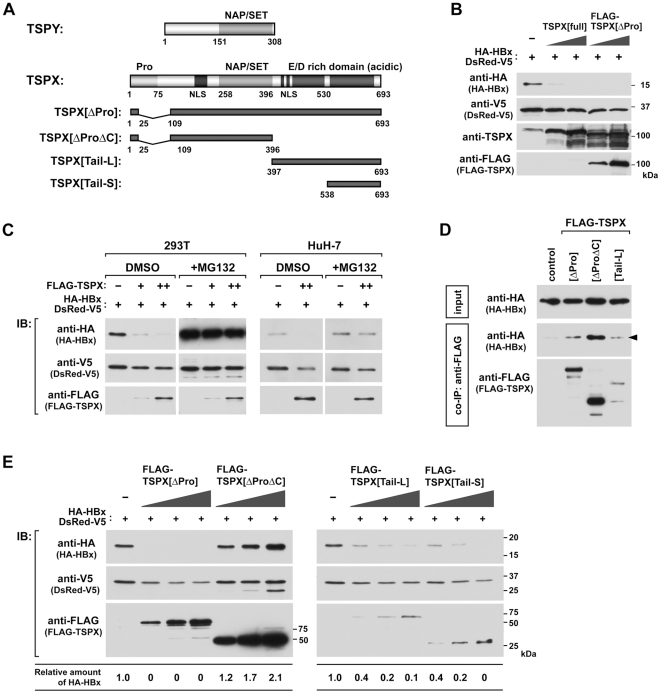
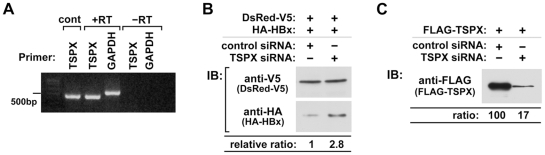
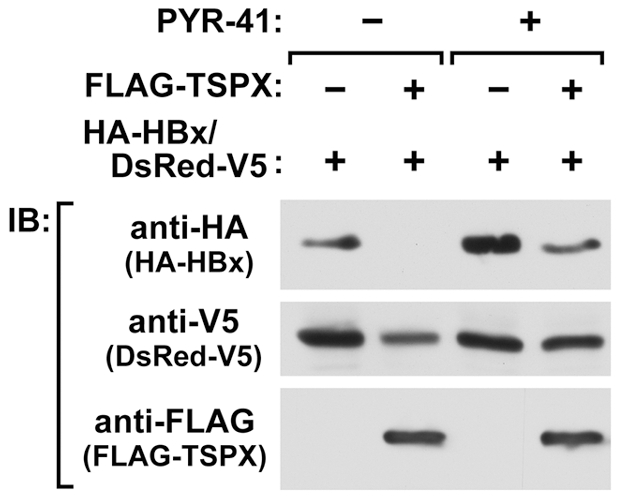
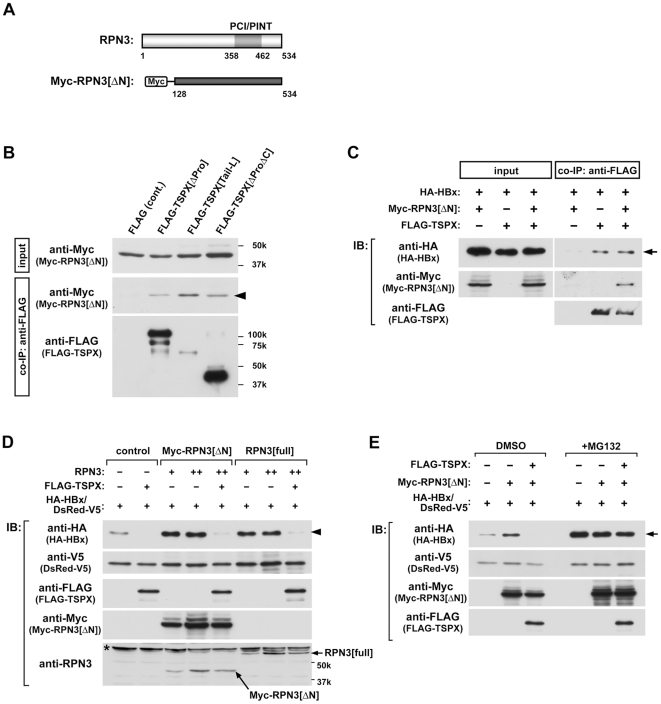
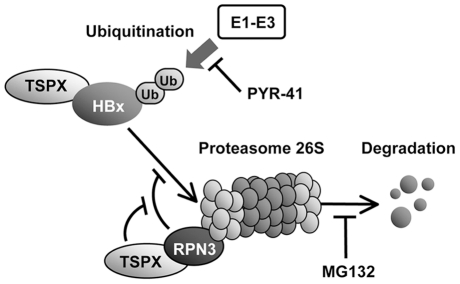
Hepatitis B virus (HBV) infection is a major risk for hepatocellular carcinoma (HCC), and it is a serious global health problem with two billion people exposed to it worldwide. HBx, an essential factor for viral replication and a putative oncoprotein encoded by the HBV genome, has been shown to promote oncogenic properties at multiple sites in HBV-infected liver cells. The expression level of HBx closely associates with the development and progression of HCC, therefore the mechanism(s) regulating the stability of HBx is important in oncogenesis of HBV-infected cells. We demonstrate that the X-linked tumor suppressor TSPX enhances the degradation of HBx through the ubiquitin-proteasome pathway. TSPX interacts with both HBx and a proteasome 19S lid subunit RPN3 via its C-terminal acidic tail. Most importantly, over-expression of RPN3 protects HBx from, and hence acts as a negative regulator for, proteasome-dependent degradation. TSPX abrogates the RPN3-depedent stabilization of HBx, suggesting that TSPX and RPN3 act competitively in regulation of HBx stability. Since mutation and/or epigenetic repression of X-located tumor suppressor gene(s) could significantly predispose males to human cancers, our data suggest that TSPX-induced HBx degradation could play key role(s) in hepatocarcinogenesis among HBV-infected HCC patients.
Conflict of interest statement
Figures
References
-
- Park YJ, Luger K. Structure and function of nucleosome assembly proteins. Biochem Cell Biol. 2006;84:549–558. - PubMed
-
- Ozbun LL, Martinez A, Jakowlew SB. Differentially expressed nucleolar TGF-beta1 target (DENTT) shows tissue-specific nuclear and cytoplasmic localization and increases TGF-beta1-responsive transcription in primates. Biochim Biophys Acta. 2005;1728:163–180. - PubMed
-
- Scully RE. Gonadoblastoma. A review of 74 cases. Cancer. 1970;25:1340–1356. - PubMed
-
- Page DC. Hypothesis: a Y-chromosomal gene causes gonadoblastoma in dysgenetic gonads. Development. 1987;101(Suppl):151–155. - PubMed
Publication types
MeSH terms
Substances
Grants and funding
LinkOut - more resources
Full Text Sources
