


Generation of a cell culture-adapted hepatitis C virus with longer half life at physiological temperature
- PMID: 21829654
- PMCID: PMC3150383
- DOI: 10.1371/journal.pone.0022808
Generation of a cell culture-adapted hepatitis C virus with longer half life at physiological temperature
Abstract
Background: We previously reported infectious HCV clones that contain the convenient reporters, green fluorescent protein (GFP) and Renilla luciferase (Rluc), in the NS5a-coding sequence. Although these viruses were useful in monitoring viral proliferation and screening of anti-HCV drugs, the infectivity and yield of the viruses were low.
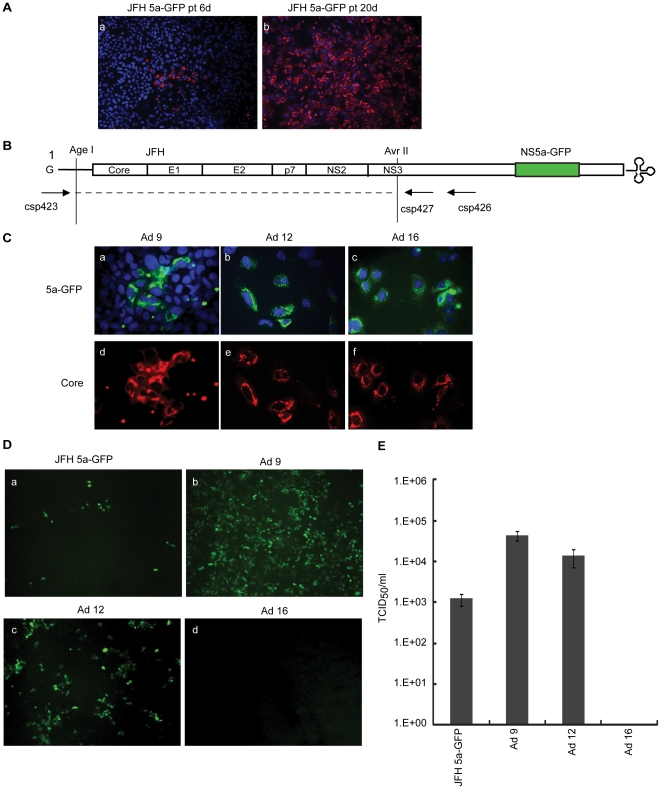
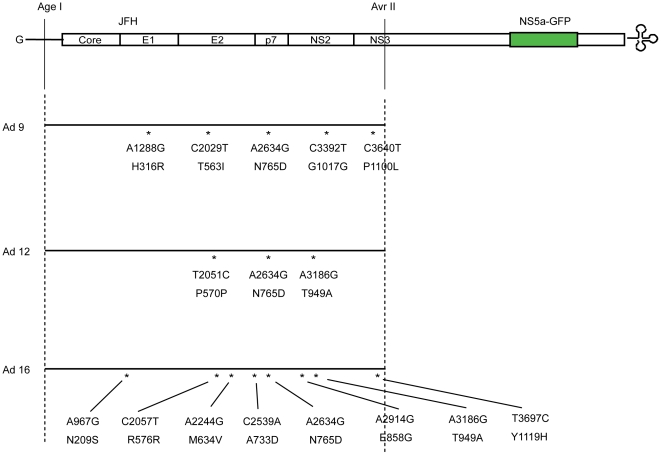
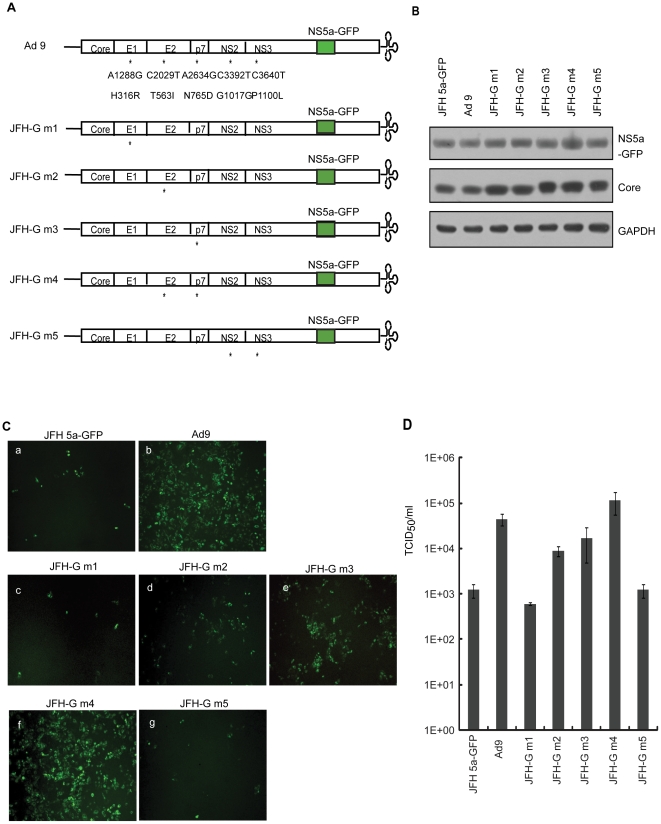
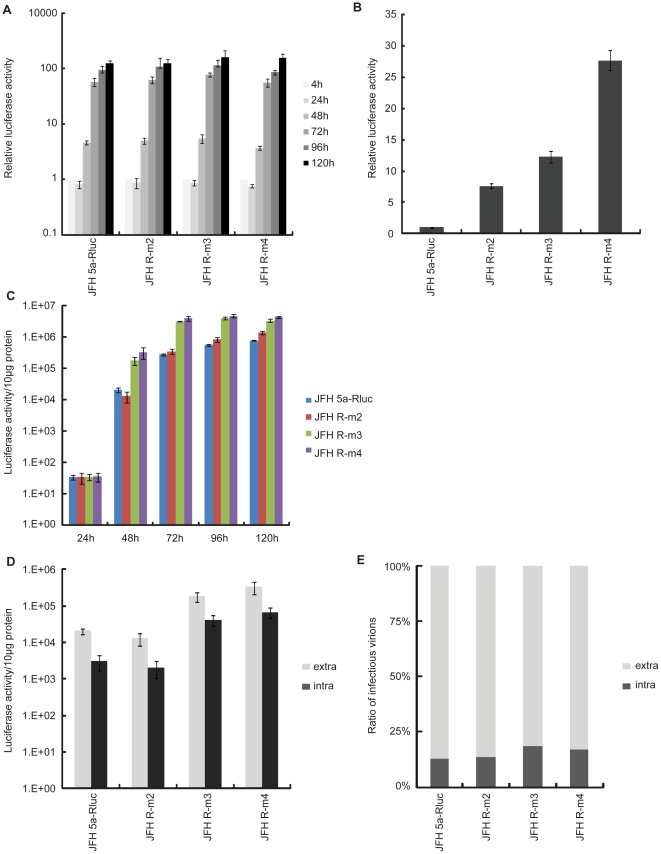
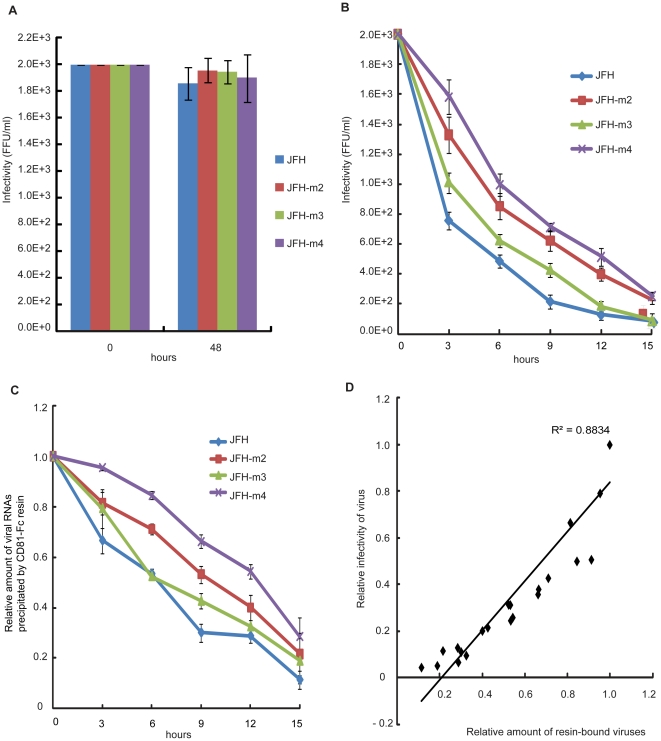
Methodology/principal findings: In order to obtain a highly efficient HCV cultivation system, we transfected Huh7.5.1 cells [1] with JFH 5a-GFP RNA and then cultivated cells for 20 days. We found a highly infectious HCV clone containing two cell culture-adapted mutations. Two cell culture-adapted mutations which were responsible for the increased viral infectivity were located in E2 and p7 protein coding regions. The viral titer of the variant was ∼100-fold higher than that of the parental virus. The mutation in the E2 protein increased the viability of virus at 37°C by acquiring prolonged interaction capability with a HCV receptor CD81. The wild-type and p7-mutated virus had a half-life of ∼2.5 to 3 hours at 37°C. In contrast, the half-life of viruses, which contained E2 mutation singly and combination with the p7 mutation, was 5 to 6 hours at 37°C. The mutation in the p7 protein, either singly or in combination with the E2 mutation, enhanced infectious virus production about 10-50-fold by facilitating an early step of virion production.
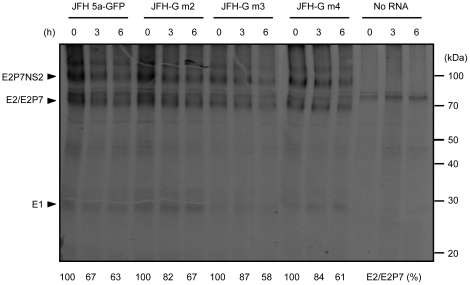
Conclusion/significance: The mutation in the E2 protein generated by the culture system increases virion viability at 37°C. The adaptive mutation in the p7 protein facilitates an earlier stage of virus production, such as virus assembly and/or morphogenesis. These reporter-containing HCV viruses harboring adaptive mutations are useful in investigations of the viral life cycle and for developing anti-viral agents against HCV.
Conflict of interest statement
Figures
References
-
- Liang TJ, Jeffers LJ, Reddy KR, De Medina M, Parker IT, et al. Viral pathogenesis of hepatocellular carcinoma in the United States. Hepatology. 1993;18:1326–1333. - PubMed
-
- Wasley A, Alter MJ. Epidemiology of hepatitis C: geographic differences and temporal trends. Semin Liver Dis. 2000;20:1–16. - PubMed
-
- Fried MW, Shiffman ML, Reddy KR, Smith C, Marinos G, et al. Peginterferon alfa-2a plus ribavirin for chronic hepatitis C virus infection. N Engl J Med. 2002;347:975–982. - PubMed
-
- Dienstag JL, McHutchison JG. American Gastroenterological Association technical review on the management of hepatitis C. Gastroenterology. 2006;130:231–264; quiz 214–237. - PubMed
Publication types
MeSH terms
Substances
LinkOut - more resources
Full Text Sources
