


As Good as it Gets? A Life Course Perspective on Marital Quality
- PMID: 21833152
- PMCID: PMC3151658
- DOI: 10.1353/sof.2005.0131
As Good as it Gets? A Life Course Perspective on Marital Quality
Abstract
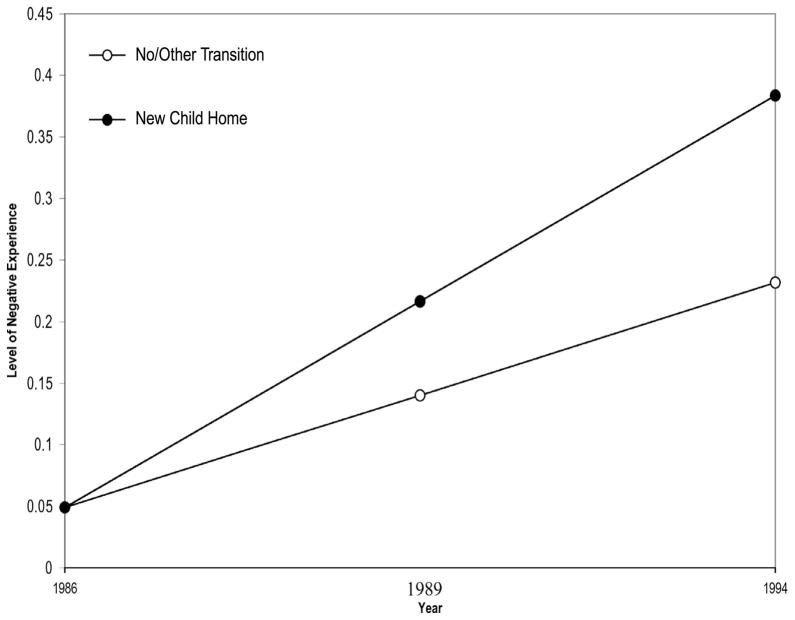
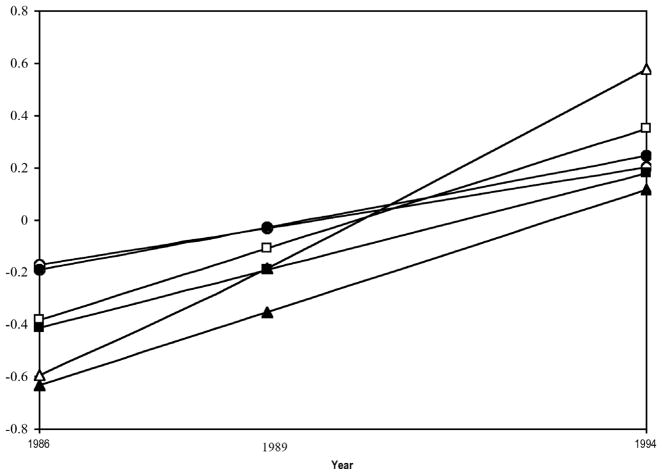
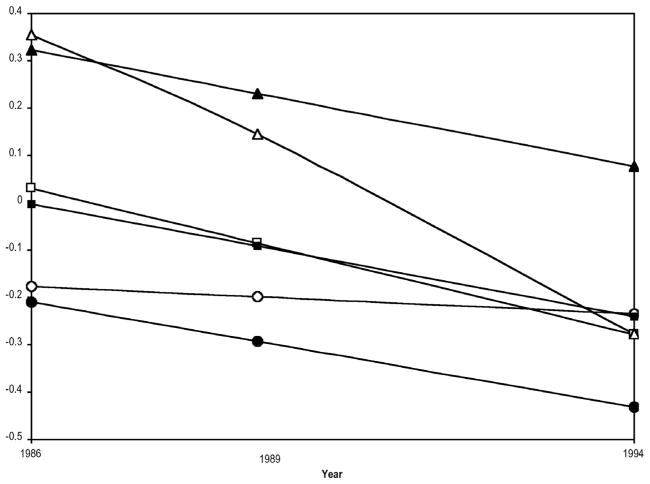
Marital relationships, like individuals, follow a developmental trajectory over time with ups and downs and gains and losses. We work from a life course perspective and use growth curve analysis to look at trajectories of change in marital quality over time. Although the tendency is for marital quality to decline over time, some groups begin with much higher levels of marital quality than others. Moreover, a number of life course and contextual factors can accelerate or slow this path of change. Our findings point to the importance of considering the multi-dimensionality of time (e.g., age, marital duration, the passage of years) as well as family transitions (e.g., having children, emptying or refilling the nest) in creating the meanings and experiences of marriage over time.
Figures
References
-
- Almeida David M, Wethington Elaine, Chandler Amy L. Daily transmission of tensions between marital dyads and parent-child dyads. Journal of Marriage and the Family. 1999;61:49–61.
-
- Aneshensel Carol S. Social Stress: Theory and Research. Annual Review of Sociology. 1992;18:15–38.
-
- Booth Alan, Dabbs James M. Testosterone and Men’s Marriages. Social Forces. 1993;72:463–77.
-
- Bradbury Thomas N, Cohan Catherine L, Karney Benjamin R. Optimizing Longitudinal Research for Understanding and Preventing Marital Dysfunction. In: Bradbury TN, editor. The Developmental Course of Marital Dysfunction. Cambridge University Press; 1998. pp. 279–311.
-
- Bryk Anthony S, Raudenbush Stephen W. Application of Hierarchical Linear Models to Assessing Change. Psychological Bulletin. 1987;101:147–158.
Grants and funding
LinkOut - more resources
Full Text Sources
Research Materials
