


Flutamide versus a cyproterone acetate-ethinyl estradiol combination in moderate acne: a pilot randomized clinical trial
- PMID: 21833162
- PMCID: PMC3149479
- DOI: 10.2147/CCID.S20543
Flutamide versus a cyproterone acetate-ethinyl estradiol combination in moderate acne: a pilot randomized clinical trial
Abstract
Background: The use of oral flutamide is rarely investigated in acne therapy. The aim of this study was to compare the efficacy of oral flutamide with that of a cyproterone-estradiol combination in treating acne lesions.
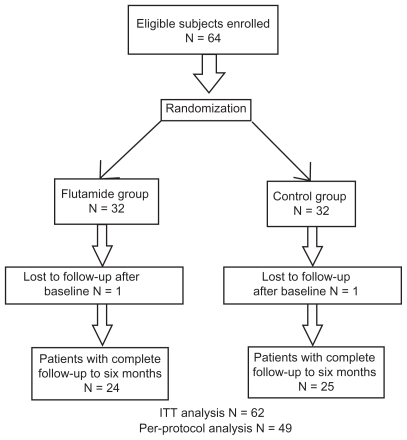
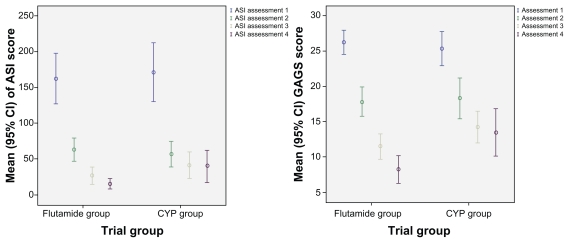
Methods: A randomized clinical trial enrolled patients with moderate acne into two equal groups to receive either oral flutamide or the cyproterone-estradiol combination for 6 months. Lesion count, Acne Severity Index, and Global Acne Grading system (GAGS) scores were used to assess improvement in acne lesions. The dichotomous measurement scale for primary endpoint assessment was defined as improvement from moderate to mild acne based on GAGS score. Patient satisfaction and dermal fat were also assessed. Intention to treat and per protocol analyses were done, reporting related effect sizes.
Results: Both treatments resulted in substantial improvement in acne lesions. Although flutamide seemed to have higher efficacy, an intention to treat analysis did not find the two treatment protocols to be different. The relative risk in intention to treat analysis was 1.8 (95% confidence interval [CI] 0.89-1.6), and was 1.33 (95% CI 1.03-1.72) for the per protocol analysis. The number needed to treat for flutamide compared with the cyproterone-estradiol combination was 7.7 and 4.2 in the intention to treat and per protocol analyses, respectively.
Conclusion: Flutamide appears to be more effective than a cyproterone-estradiol combination in some aspects of acne treatment, but this requires confirmation in a larger trial.
Keywords: acne vulgaris; androgen antagonists; cyproterone acetate; ethinyl estradiol; flutamide.
Figures
References
-
- Kurokawa I, Danby FW, Ju Q, et al. New developments in our understanding of acne pathogenesis and treatment. Exp Dermatol. 2009;18(10):821–832. - PubMed
-
- Ingram JR, Grindlay DJ, Williams HC. Management of acne vulgaris: an evidence-based update. Clin Exp Dermatol. 2010;35(4):351–354. - PubMed
-
- George R, Clarke S, Thiboutot D. Hormonal therapy for acne. Semin Cutan Med Surg. 2008;27(3):188–196. - PubMed
-
- Haroun M. Hormonal therapy of acne. J Cutan Med Surg. 2004;8(Suppl 4):6–10. - PubMed
-
- Katsambas AD, Dessinioti C. Hormonal therapy for acne: Why not as first line therapy? Facts and controversies. Clin Dermatol. 2010;28(1):17–23. - PubMed
LinkOut - more resources
Full Text Sources
