


Dissociation of corticotropin-releasing factor receptor subtype involvement in sensitivity to locomotor effects of methamphetamine and cocaine
- PMID: 21833501
- PMCID: PMC3266955
- DOI: 10.1007/s00213-011-2433-y
Dissociation of corticotropin-releasing factor receptor subtype involvement in sensitivity to locomotor effects of methamphetamine and cocaine
Abstract
Rationale: Enhanced sensitivity to the euphoric and locomotor-activating effects of psychostimulants may influence an individual's predisposition to drug abuse and addiction. While drug-induced behaviors are mediated by the actions of several neurotransmitter systems, past research revealed that the corticotropin-releasing factor (CRF) system is important in driving the acute locomotor response to psychostimulants.
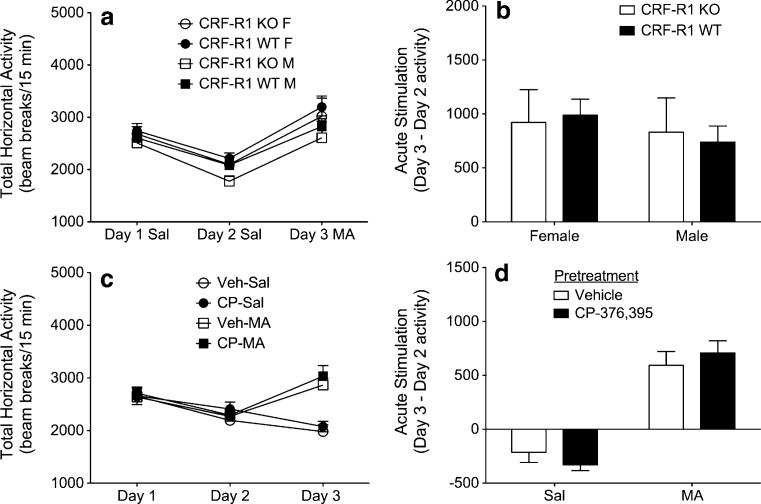
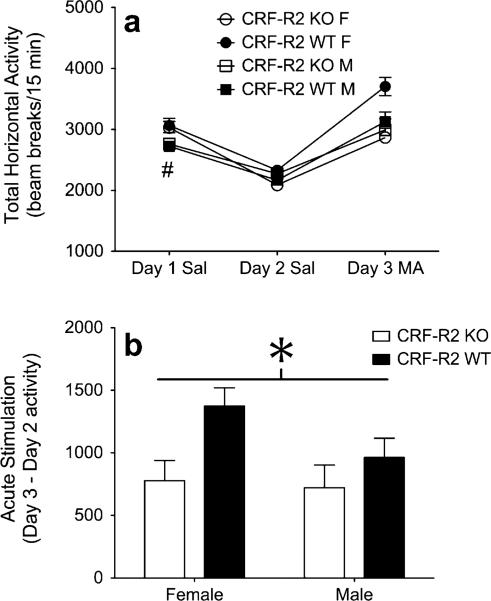
Objectives: We previously reported that genetic deletion of the CRF type-2 receptor (CRF-R2), but not the CRF type-1 receptor (CRF-R1) dampened the acute locomotor stimulant response to methamphetamine (1 mg/kg). These results contrasted with previous studies implicating CRF-R1 in the locomotor effects of psychostimulants. Since the majority of previous studies focused on cocaine, rather than methamphetamine, we set out to test the hypothesis that these drugs differentially engage CRF-R1 and CRF-R2.
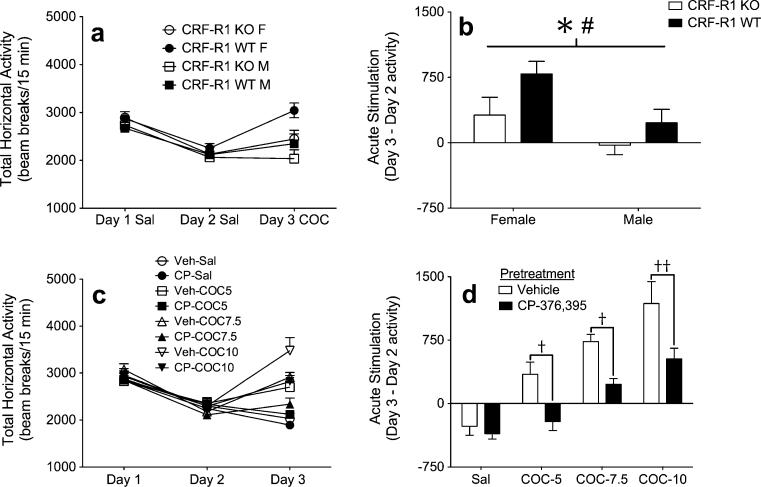
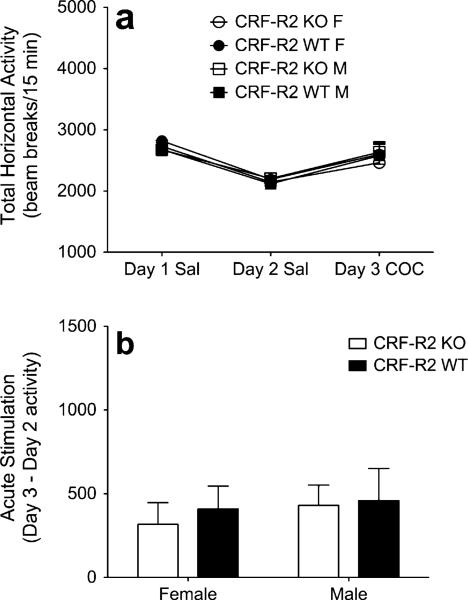
Methods: We expanded our earlier findings by first replicating our previous experiments at a higher dose of methamphetamine (2 mg/kg), and by assessing the effects of the CRF-R1-selective antagonist CP-376,395 (10 mg/kg) on methamphetamine-induced locomotor activity. Next, we used both genetic and pharmacological tools to examine the specific components of the CRF system underlying the acute locomotor response to cocaine (5-10 mg/kg).
Results: While genetic deletion of CRF-R2 dampened the locomotor response to methamphetamine (but not cocaine), genetic deletion and pharmacological blockade of CRF-R1 dampened the locomotor response to cocaine (but not methamphetamine).
Conclusions: These findings highlight the differential involvement of CRF receptors in acute sensitivity to two different stimulant drugs of abuse, providing an intriguing basis for the development of more targeted therapeutics for psychostimulant addiction.
Figures
References
-
- Cador M, Cole BJ, Koob GF, Stinus L, Le Moal M. Central administration of corticotropin releasing factor induces long-term sensitization to D-amphetamine. Brain Res. 1993a;606:181–186. - PubMed
-
- Cador M, Dulluc J, Mormede P. Modulation of the locomotor response to amphetamine by corticosterone. Neuroscience. 1993b;56:981–988. - PubMed
-
- Chen YL, Obach RS, Braselton J, Corman ML, Forman J, Freeman J, Gallaschun RJ, Mansbach R, Schmidt AW, Sprouse JS, Tingley Iii FD, Winston E, Schulz DW. 2-aryloxy-4-alkylamino-pyridines: discovery of novel corticotropin-releasing factor 1 antagonists. J Med Chem. 2008;51:1385–1392. - PubMed
-
- Cole BJ, Cador M, Stinus L, Rivier C, Rivier J, Vale W, Le Moal M, Koob GF. Critical role of the hypothalamic pituitary adrenal axis in amphetamine-induced sensitization of behavior. Life Sci. 1990;47:1715–1720. - PubMed
Publication types
MeSH terms
Substances
Grants and funding
LinkOut - more resources
Full Text Sources
Medical
Miscellaneous
