


The use of twin-ring Ilizarov external fixator constructs: application and biomechanical proof-of principle with possible clinical indications
- PMID: 21834985
- PMCID: PMC3178515
- DOI: 10.1186/1749-799X-6-41
The use of twin-ring Ilizarov external fixator constructs: application and biomechanical proof-of principle with possible clinical indications
Abstract
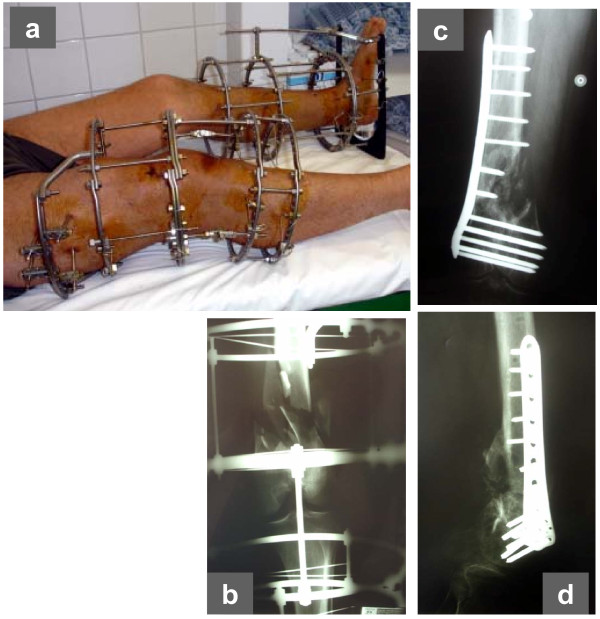
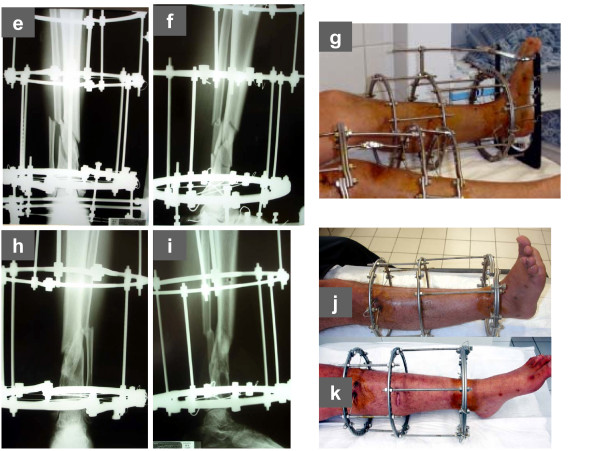
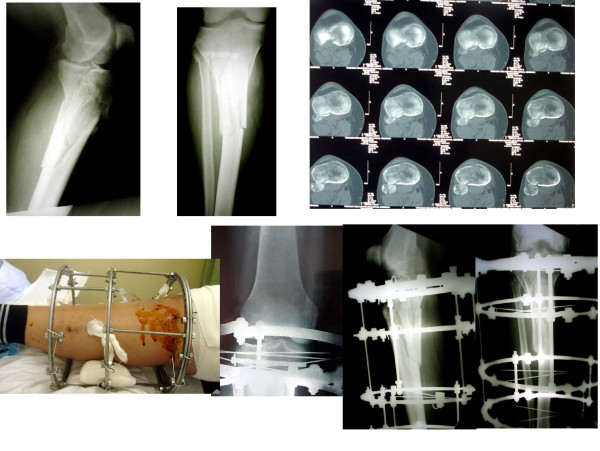
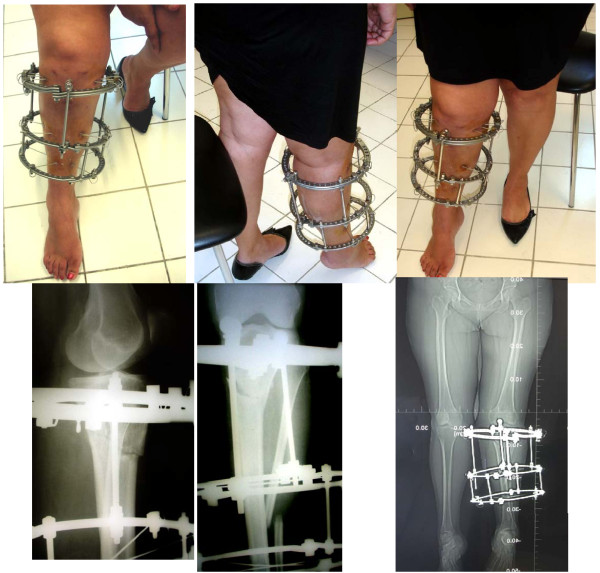
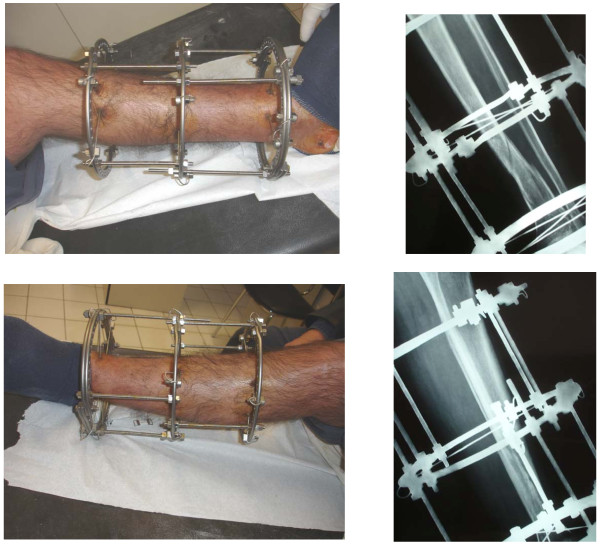
Background: In peri- or intra-articular fractures of the tibia or femur, the presence of short metaphyseal bone fragments may make the application of an Ilizarov external fixator (IEF) challenging. In such cases, it may be necessary to bridge the adjacent joint in order to ensure stable fixation. The twin-ring (TR) module of circular external fixation is proposed as an alternative method that avoids joint bridging, without compromising stability of fixation. The aim of this study is to present the experimental tests performed to compare the biomechanical characteristics of the single- and TR IEF modules. The clinical application of the TR module in select patients is also presented and the merits of this technique are discussed.
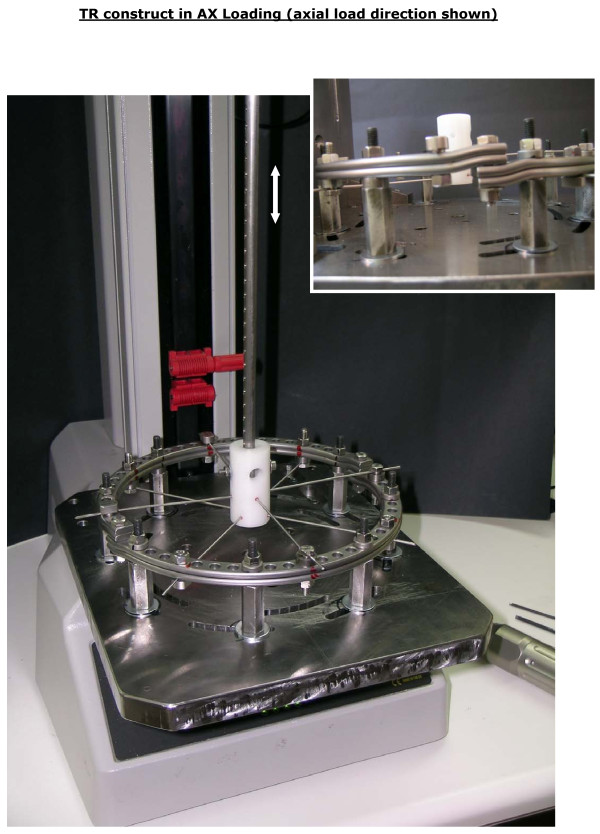
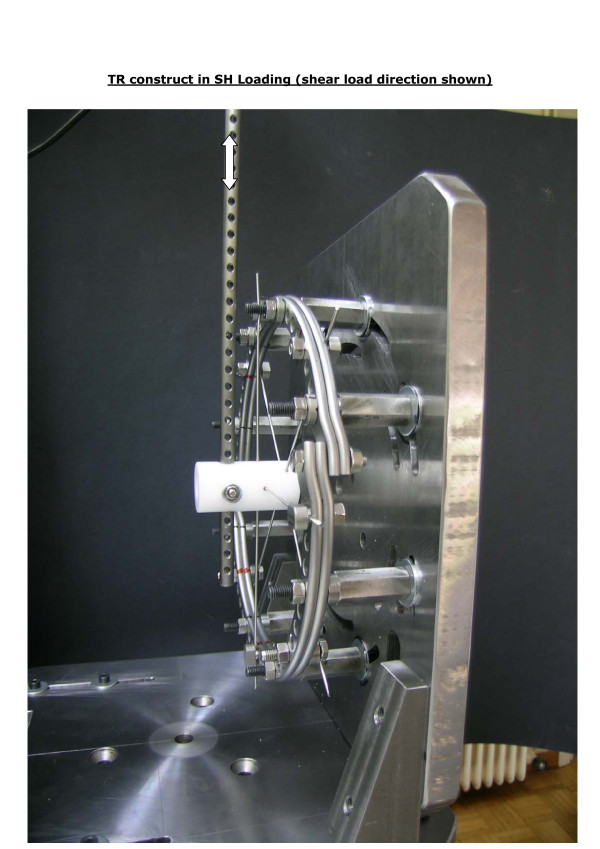
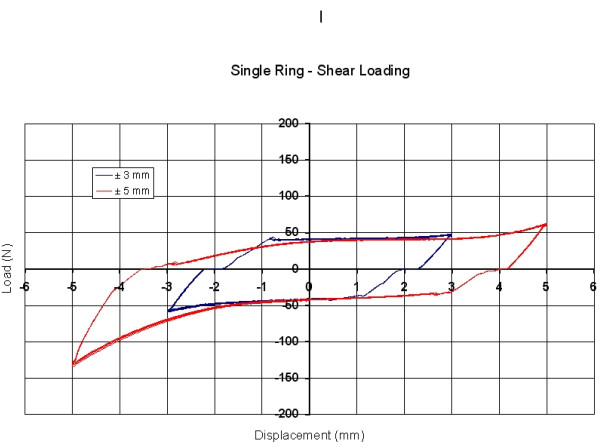
Methods: In this experimental study, the passive stiffness and stability of the single-ring (SR) and twin-ring (TR) IEF modules were tested under axial and shear loading conditions. In each module, two perpendicular wires on the upper surface and another two wires on the lower surface of the rings were used for fixation of the rings on plastic acetal cylinders simulating long bones.
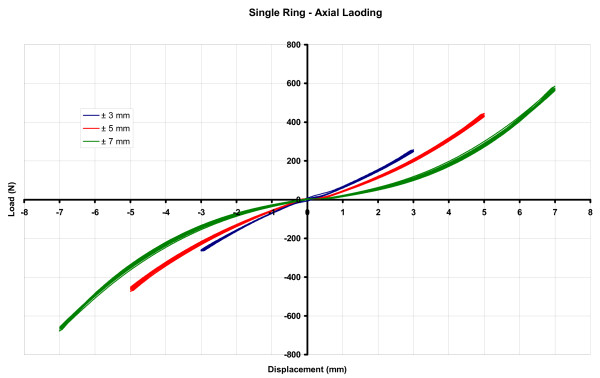
Results: In axial loading, the main outcome measure was stiffness and the SR module proved stiffer than the TR. In shear loading, the main outcome measure was stability, the TR module proving more stable than the SR.
Discussion: The TR configuration, being stiffer in shear loading, may make joint bridging unnecessary when an IEF is applied. If it is still required, TR frames allow for an earlier discontinuation of bridging; either case is in favour of a successful final outcome.
Conclusion: The application of the TR module has led to satisfactory clinical outcomes and should be considered as an alternative in select trauma patients treated with an IEF. Biomechanically, the TR module possesses features which enhance fracture healing and at the same time obviate the need for bridging adjacent joints, thereby significantly reducing patient morbidity.
Figures
References
-
- Madhusudhan Thayur R, Ramesh Balasundaram, Manjunath KS, Shah Harshad M, Sundaresh Dabir C, Krishnappa N. Outcomes of Ilizarov ring fixation in recalcitrant infected tibial non-unions-a prospective study. Journal of Trauma Management & Outcomes. 2008;2:6. doi: 10.1186/1752-2897-2-6. - DOI - PMC - PubMed
-
- Cavusoglu AT, Ozsoy MH, Dincel VE, Sakaogullari A, Basarir K, Ugurlu M. The use of a low-profile Ilizarov external fixator in the treatment of complex fractures and non-unions of the distal femur. Acta Orthop Belg. 2009;75(2):209–18. - PubMed
-
- Krettek C, Müller M, Miclau T. Evolution of minimally invasive plate osteosynthesis (MIPO) in the femur. Injury. 2001;32(Suppl 3):SC14–23. - PubMed
Publication types
MeSH terms
LinkOut - more resources
Full Text Sources
Medical
Research Materials
