


Longitudinal epidemiology of multidrug-resistant (MDR) Acinetobacter species in a tertiary care hospital
- PMID: 21835501
- PMCID: PMC4086168
- DOI: 10.1016/j.ajic.2011.04.326
Longitudinal epidemiology of multidrug-resistant (MDR) Acinetobacter species in a tertiary care hospital
Abstract
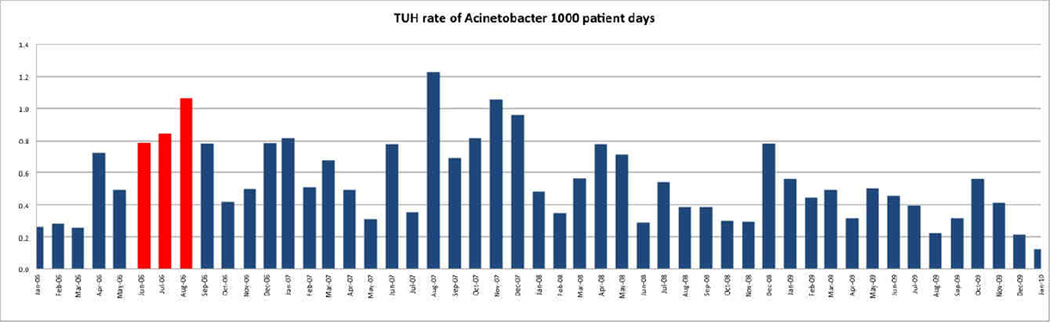
Background: Acinetobacter species are well-known causes of health care-associated infections. The longitudinal epidemiology of this species in the hospital setting is poorly understood. A sudden, persistent increase in multidrug-resistant (MDR) A baumannii infections occurred beginning in June 2006 at Temple University Hospital in Philadelphia. An analysis was done to describe the longitudinal molecular epidemiology of MDR A baumannii in a tertiary care hospital.
Methods: This was an epidemiologic investigation using repetitive extragenic palindromic-PCR (rep-PCR) of patients with a positive culture for MDR A baumannii admitted to the hospital between February 2006 and January 2010. MDR A baumannii were defined as susceptible only to colistin and/or tigecycline.
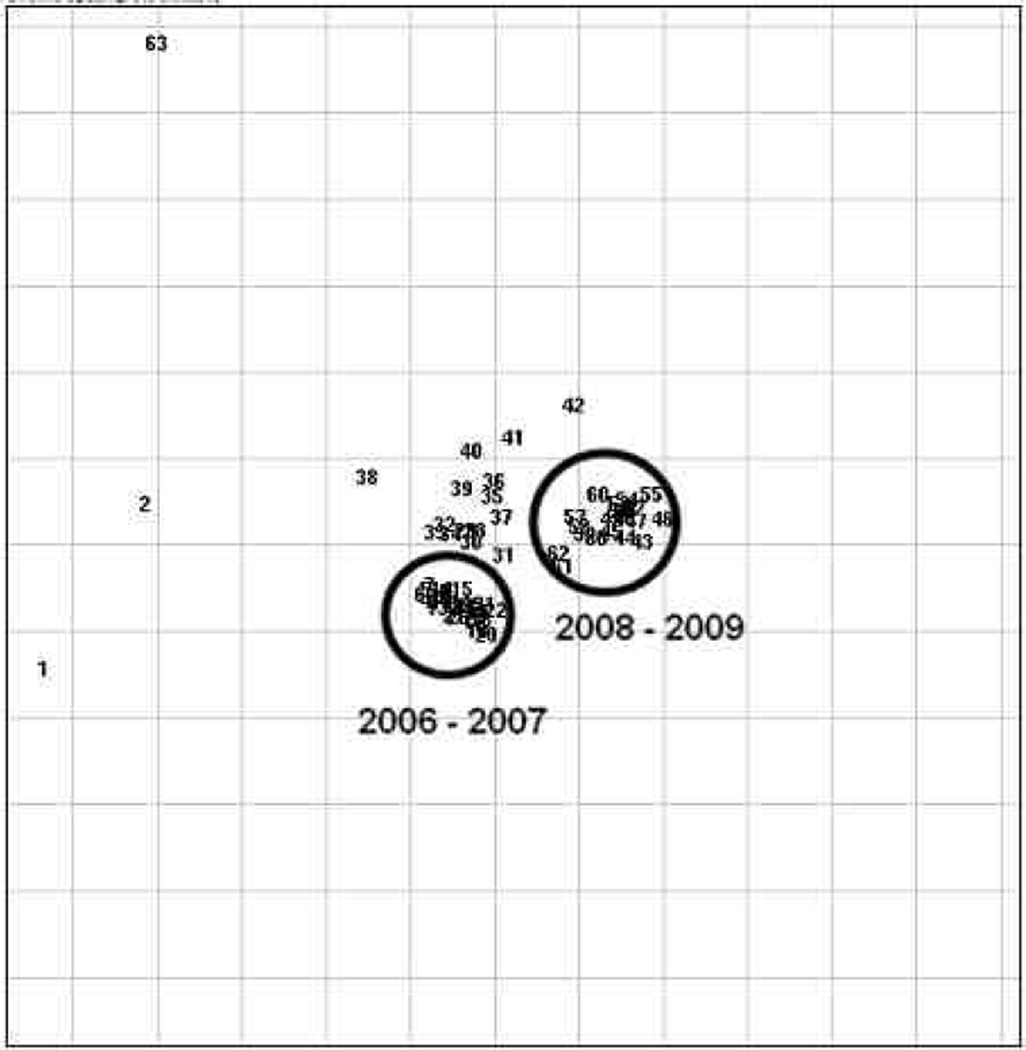
Results: The incidence rate of MDR A baumannii rose from 0.36 cases per 1,000 patient-days (pre-epidemic) to 0.86 cases per 1,000 patient-days, due mainly to an increase in the surgical intensive care unit. Enhanced infection control measures were implemented, but waves of MDR A baumannii continued to be documented through routine surveillance. Of 32 strains collected in 2006-2007, a single predominant clone and 2 minor clones accounted for almost all of the cases of MDR A baumannii studied. Of 24 strains collected in 2008-2009, another clone, different from those studied in the earlier period, predominated, and was accompanied by 3 minor variants.
Conclusion: Following an outbreak in the surgical intensive care unit, MDR A baumannii persisted in our institution for a 3-year period despite rigorous infection control measures. An unexpected strain replacement occurred during this period, with the original predominant strain disappearing completely and new minor clones displacing the original minor clones.
Published by Mosby, Inc.
Figures
References
-
- Villegas MV, Hartstein AI. Acinetobacter outbreaks, 1977–2000. Infect Control Hosp Epidemiol. 2003 Apr;24(4):284–295. - PubMed
-
- Brown S, Amyes SG. The sequences of seven class D beta-lactamases isolated from carbapenem-resistant Acinetobacter baumannii from four continents. Clin Microbiol Infect. 2005 Apr;11(4):326–329. - PubMed
-
- Navon-Venezia S, Ben-Ami R, Carmeli Y. Update on Pseudomonas aeruginosa and Acinetobacter baumannii infections in the healthcare setting. Curr Opin Infect Dis. 2005 Aug;18(4):306–313. - PubMed
-
- del Mar Tomas M, Cartelle M, Pertega S, et al. Hospital outbreak caused by a carbapenem-resistant strain of Acinetobacter baumannii: patient prognosis and risk-factors for colonisation and infection. Clin Microbiol Infect. 2005 Jul;11(7):540–546. - PubMed
