


The mechanism of tail-anchored protein insertion into the ER membrane
- PMID: 21835666
- PMCID: PMC3614002
- DOI: 10.1016/j.molcel.2011.07.020
The mechanism of tail-anchored protein insertion into the ER membrane
Abstract
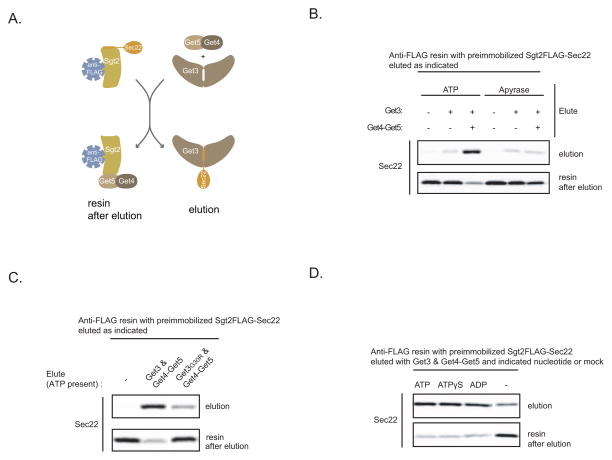
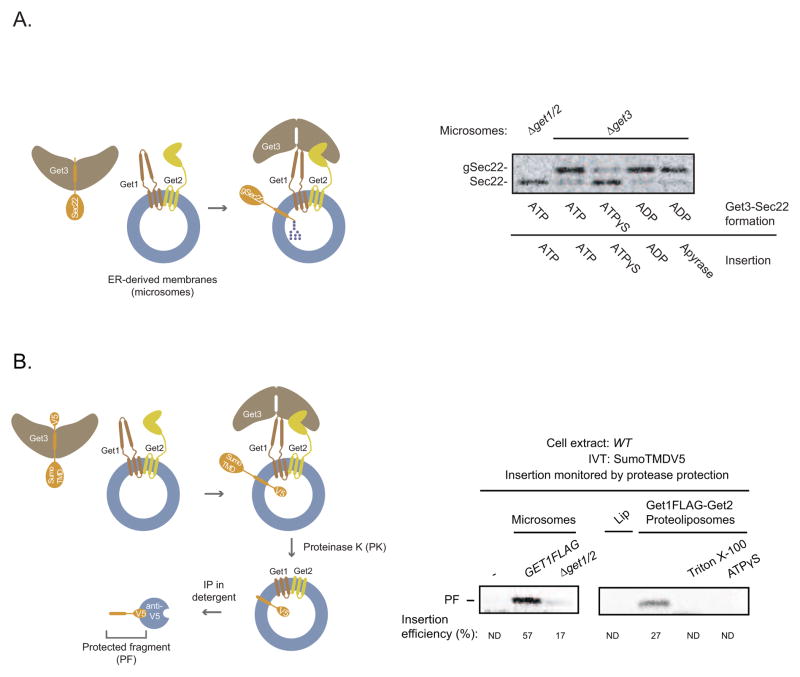
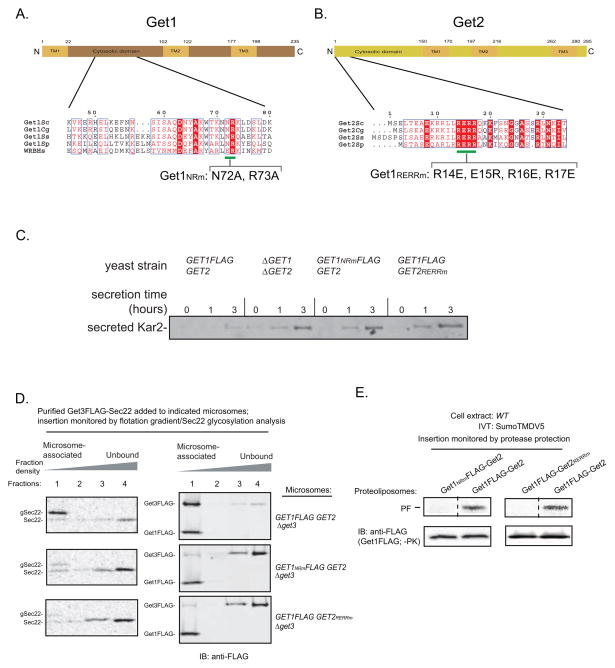
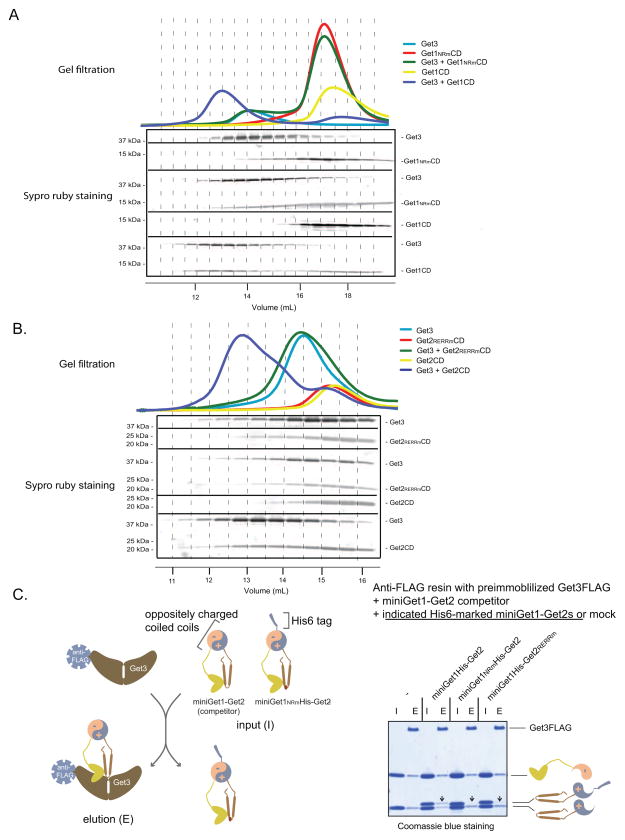
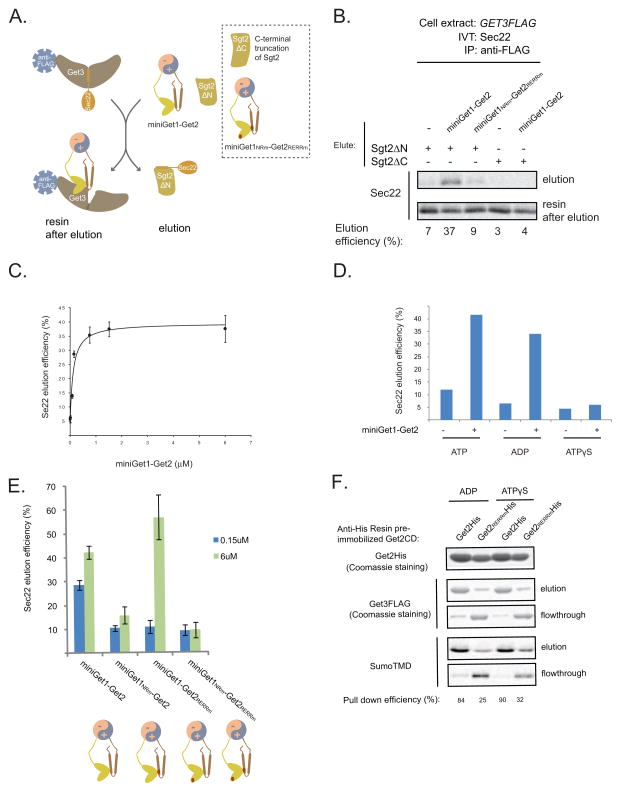
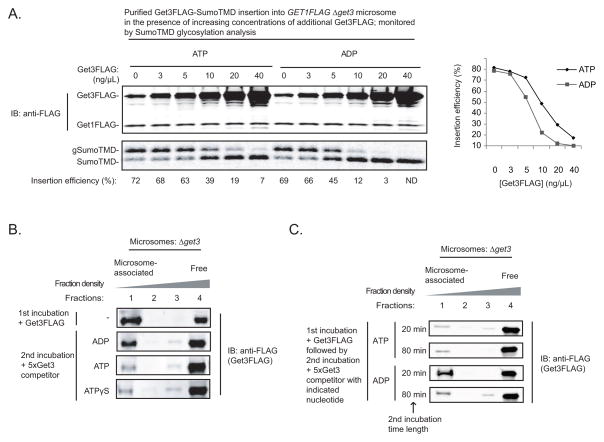
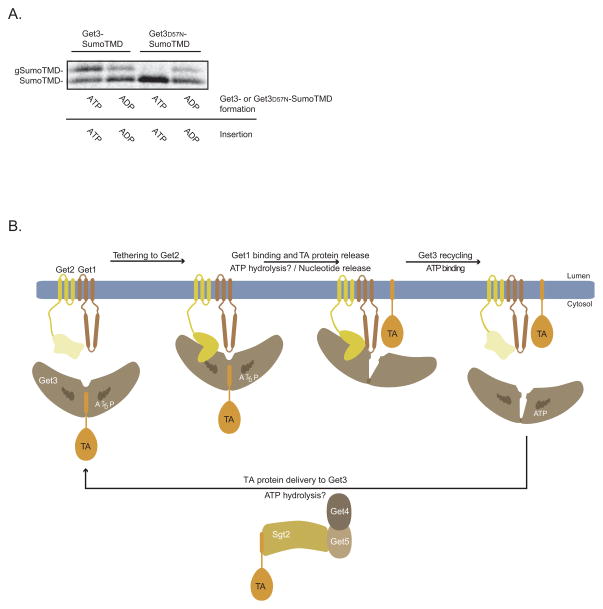
Tail-anchored (TA) proteins access the secretory pathway via posttranslational insertion of their C-terminal transmembrane domain into the endoplasmic reticulum (ER). Get3 is an ATPase that delivers TA proteins to the ER by interacting with the Get1-Get2 transmembrane complex, but how Get3's nucleotide cycle drives TA protein insertion remains unclear. Here, we establish that nucleotide binding to Get3 promotes Get3-TA protein complex formation by recruiting Get3 to a chaperone that hands over TA proteins to Get3. Biochemical reconstitution and mutagenesis reveal that the Get1-Get2 complex comprises the minimal TA protein insertion machinery with functionally critical cytosolic regions. By engineering a soluble heterodimer of Get1-Get2 cytosolic domains, we uncover the mechanism of TA protein release from Get3: Get2 tethers Get3-TA protein complexes into proximity with the ATPase-dependent, substrate-releasing activity of Get1. Lastly, we show that ATP enhances Get3 dissociation from the membrane, thus freeing Get1-Get2 for new rounds of substrate insertion.
Copyright © 2011 Elsevier Inc. All rights reserved.
Figures
References
-
- Borgese N, Fasana E. Targeting pathways of C-tail-anchored proteins. Biochim Biophys Acta. 2011;1808:937–946. - PubMed
Publication types
MeSH terms
Substances
Grants and funding
LinkOut - more resources
Full Text Sources
Molecular Biology Databases
