Postoperative biomarkers predict acute kidney injury and poor outcomes after pediatric cardiac surgery
- PMID: 21836147
- PMCID: PMC3171944
- DOI: 10.1681/ASN.2010111163
Postoperative biomarkers predict acute kidney injury and poor outcomes after pediatric cardiac surgery
Abstract
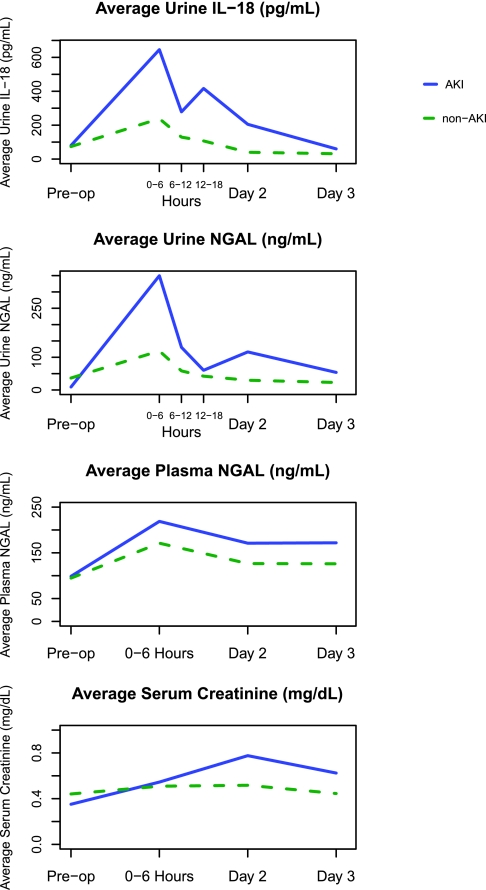
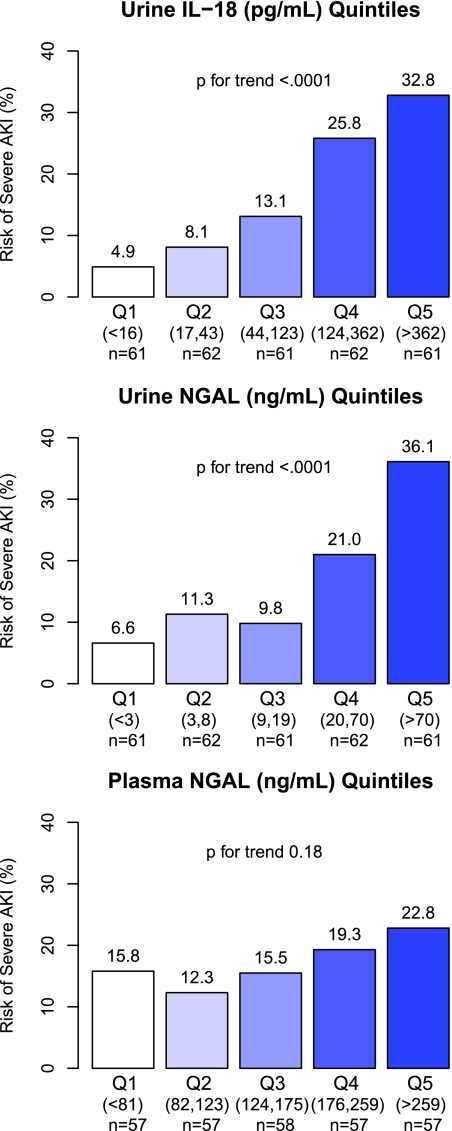
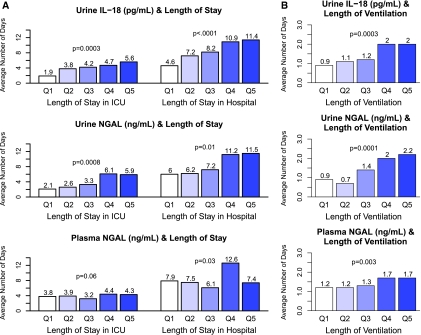
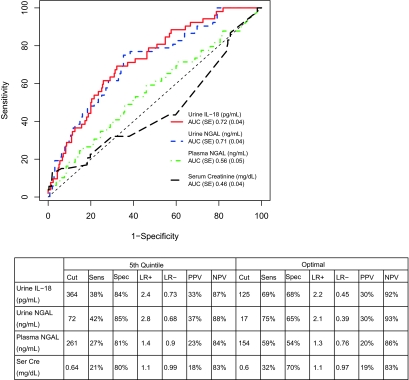
Acute kidney injury (AKI) occurs commonly after pediatric cardiac surgery and associates with poor outcomes. Biomarkers may help the prediction or early identification of AKI, potentially increasing opportunities for therapeutic interventions. Here, we conducted a prospective, multicenter cohort study involving 311 children undergoing surgery for congenital cardiac lesions to evaluate whether early postoperative measures of urine IL-18, urine neutrophil gelatinase-associated lipocalin (NGAL), or plasma NGAL could identify which patients would develop AKI and other adverse outcomes. Urine IL-18 and urine and plasma NGAL levels peaked within 6 hours after surgery. Severe AKI, defined by dialysis or doubling in serum creatinine during hospital stay, occurred in 53 participants at a median of 2 days after surgery. The first postoperative urine IL-18 and urine NGAL levels strongly associated with severe AKI. After multivariable adjustment, the highest quintiles of urine IL-18 and urine NGAL associated with 6.9- and 4.1-fold higher odds of AKI, respectively, compared with the lowest quintiles. Elevated urine IL-18 and urine NGAL levels associated with longer hospital stay, longer intensive care unit stay, and duration of mechanical ventilation. The accuracy of urine IL-18 and urine NGAL for diagnosis of severe AKI was moderate, with areas under the curve of 0.72 and 0.71, respectively. The addition of these urine biomarkers improved risk prediction over clinical models alone as measured by net reclassification improvement and integrated discrimination improvement. In conclusion, urine IL-18 and urine NGAL, but not plasma NGAL, associate with subsequent AKI and poor outcomes among children undergoing cardiac surgery.
Trial registration: ClinicalTrials.gov NCT00774137.
Figures
Comment in
-
Blind men and elephants and the biological markers of AKI.J Am Soc Nephrol. 2011 Sep;22(9):1578-80. doi: 10.1681/ASN.2011070736. Epub 2011 Aug 11. J Am Soc Nephrol. 2011. PMID: 21836142 No abstract available.
References
-
- Mishra J, Dent C, Tarabishi R, Mitsnefes MM, Ma Q, Kelly C, Ruff SM, Zahedi K, Shao M, Bean J, Mori K, Barasch J, Devarajan P: Neutrophil gelatinase-associated lipocalin (NGAL) as a biomarker for acute renal injury after cardiac surgery. Lancet 365: 1231–1238, 2005 - PubMed
-
- Pedersen KR, Hjortdal VE, Christensen S, Pedersen J, Hjortholm K, Larsen SH, Povlsen JV: Clinical outcome in children with acute renal failure treated with peritoneal dialysis after surgery for congenital heart disease. Kidney Int Suppl 108: S81–S86, 2008 - PubMed
-
- Sorof JM, Stromberg D, Brewer ED, Feltes TF, Fraser CD, Jr: Early initiation of peritoneal dialysis after surgical repair of congenital heart disease. Pediatr Nephrol 13: 641–645, 1999 - PubMed
-
- Zappitelli M, Bernier PL, Saczkowski RS, Tchervenkov CI, Gottesman R, Dancea A, Hyder A, Alkandari O: A small post-operative rise in serum creatinine predicts acute kidney injury in children undergoing cardiac surgery. Kidney Int 76: 885–892, 2009 - PubMed
Publication types
MeSH terms
Substances
Associated data
Grants and funding
LinkOut - more resources
Full Text Sources
Other Literature Sources
Medical
Miscellaneous