


Mutations in IL36RN/IL1F5 are associated with the severe episodic inflammatory skin disease known as generalized pustular psoriasis
- PMID: 21839423
- PMCID: PMC3169817
- DOI: 10.1016/j.ajhg.2011.07.022
Mutations in IL36RN/IL1F5 are associated with the severe episodic inflammatory skin disease known as generalized pustular psoriasis
Abstract
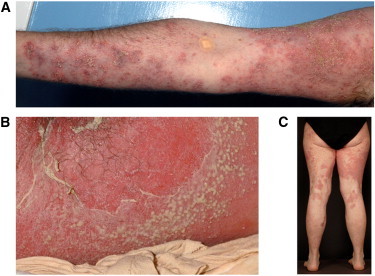
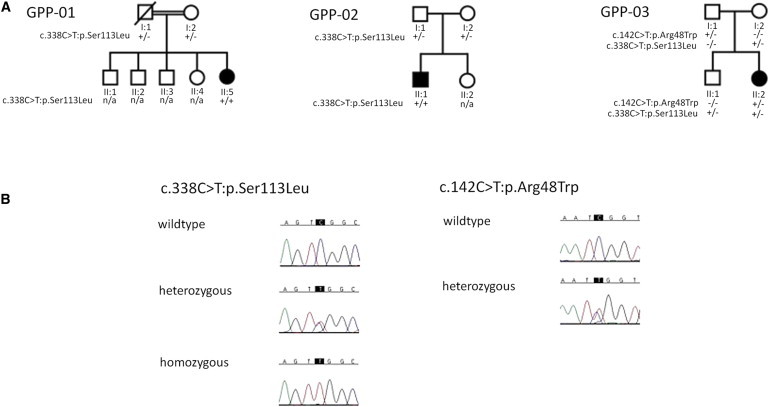
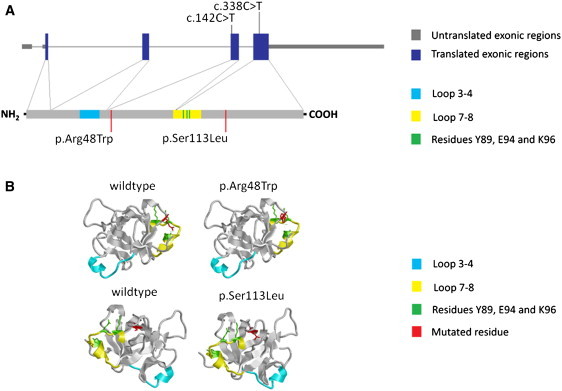
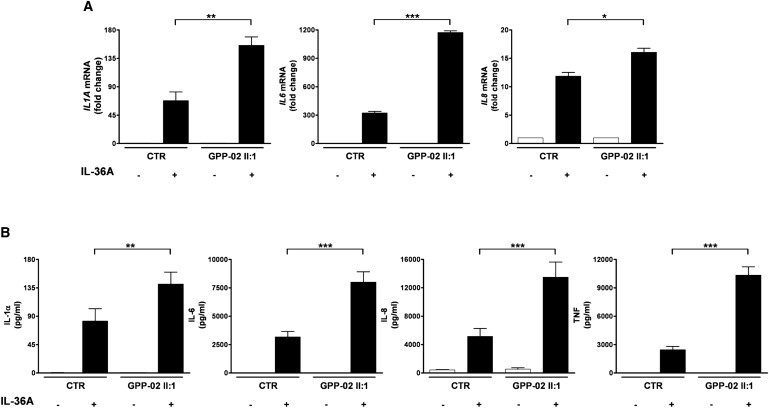
Generalized pustular psoriasis (GPP) is a rare and yet potentially lethal clinical variant of psoriasis, characterized by the formation of sterile cutaneous pustules, neutrophilia, fever and features of systemic inflammation. We sequenced the exomes of five unrelated individuals diagnosed with GPP. Nonsynonymous, splice-site, insertion, and deletion variants with an estimated population frequency of <0.01 were considered as candidate pathogenic mutations. A homozygous c.338C>T (p.Ser113Leu) missense substitution of IL36RN was identified in two individuals, with a third subject found to be a compound heterozygote for c.338C>T (p.Ser113Leu) and a c.142C>T (p.Arg48Trp) missense substitution. IL36RN (previously known as IL1F5) encodes an IL-1 family receptor antagonist, which opposes the activity of the IL-36A and IL-36G innate cytokines. Homology searches revealed that GPP mutations alter evolutionarily conserved residues. Homozygosity for the c.338C>T (p.Ser113Leu) variant is associated with an elevated proinflammatory response following ex vivo stimulation with IL36A. These findings suggest loss of function of IL36RN as the genetic basis of GPP and implicate innate immune dysregulation in this severe episodic inflammatory disease, thereby highlighting IL-1 signaling as a potential target for therapeutic intervention.
Copyright © 2011 The American Society of Human Genetics. Published by Elsevier Inc. All rights reserved.
Figures
References
-
- Griffiths C.E.M., Barker J.N.W.N. Psoriasis. In: Burns T., Breathnach S., Cox N., Griffiths C.E.M., editors. Rook's Textbook of Dermatology. Wiley-Blackwell; Chichester, England: 2010. pp. 20.1–20.60.
-
- Simpson M.A., Irving M.D., Asilmaz E., Gray M.J., Dafou D., Elmslie F.V., Mansour S., Holder S.E., Brain C.E., Burton B.K. Mutations in NOTCH2 cause Hajdu-Cheney syndrome, a disorder of severe and progressive bone loss. Nat. Genet. 2011;43:303–305. - PubMed
-
- Strange A., Capon F., Spencer C.C., Knight J., Weale M.E., Allen M.H., Barton A., Band G., Bellenguez C., Bergboer J.G., Genetic Analysis of Psoriasis Consortium & the Wellcome Trust Case Control Consortium 2 A genome-wide association study identifies new psoriasis susceptibility loci and an interaction between HLA-C and ERAP1. Nat. Genet. 2010;42:985–990. - PMC - PubMed
Publication types
MeSH terms
Substances
Grants and funding
LinkOut - more resources
Full Text Sources
Other Literature Sources
Medical
Molecular Biology Databases
