


Effects of di-n-butyl phthalate on male rat reproduction following pubertal exposure
- PMID: 21841806
- PMCID: PMC3739579
- DOI: 10.1038/aja.2011.76
Effects of di-n-butyl phthalate on male rat reproduction following pubertal exposure
Abstract
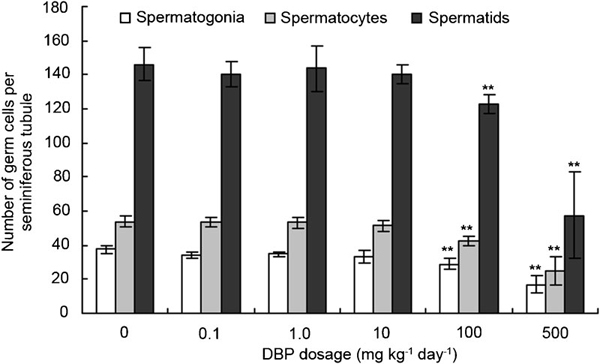
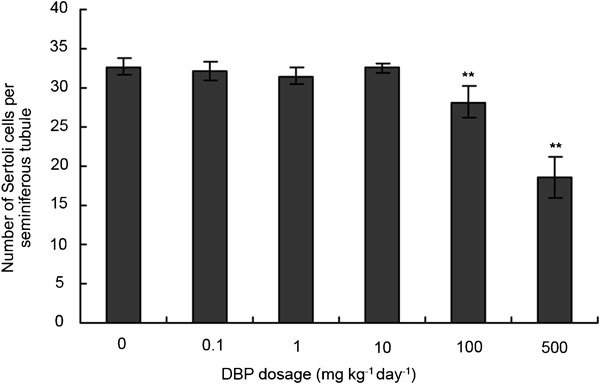
Di-n-butyl phthalate (DBP) is an endocrine-disrupting chemical that has the potential to affect male reproduction. However, the reproductive effects of low-dose DBP are still not well known, especially at the molecular level. In the present study, pubertal male Sprague-Dawley rats were orally administered DBP at a wide range of doses (0.1, 1.0, 10, 100 and 500 mg kg⁻¹ day⁻¹) for 30 days. The selected end points included reproductive organ weights, testicular histopathology and serum hormonal levels. Additionally, proteomic analysis was performed to identify proteins that are differentially expressed as a result of exposure to DBP at low doses (0.1, 1.0 and 10 mg kg⁻¹ day⁻¹). Toxic effects were observed in the high-dose groups, including anomalous development of testes and epididymides, severe atrophy of seminiferous tubules, loss of spermatogenesis and abnormal levels of serum hormones. Treatment with low doses of DBP seemed to exert a 'stimulative effect' on the serum hormones. Proteomics analysis of rat testes showed 20 differentially expressed proteins. Among these proteins, alterations in the expression of HnRNPA2/B1, vimentin and superoxide dismutase 1 (SOD1) were further confirmed by Western blot and immunohistochemistry. Taken together, we conclude that high doses of DBP led to testicular toxicity, and low doses of DBP led to changes in the expression of proteins involved in spermatogenesis as well as changes in the number and function of Sertoli and Leydig cells, although no obvious morphological changes appeared. The identification of these differentially expressed proteins provides important information about the mechanisms underlying the effects of DBP on male rat reproduction.
Figures



References
-
- Bosnir J, Puntarić D, Skes I, Klarić M, Simić S, et al. Migration of phthalates from plastic products to model solutions. Coll Antropol. 2003;27 Suppl 1:23–30. - PubMed
-
- Kavlock R, Boekelheide K, Chapin R, Cunningham M. NTP center for the evaluation of risks to human reproduction: phthalates expert panel report on the reproductive and developmental toxicity of di(2-ethylhexyl) phthalate. Reprod Toxicol. 2002;16:529–653. - PubMed
-
- Gray LE Jr, Wolf C, Lambright C, Mann P, Price M, et al. Administration of potentially antiandrogenic pesticides (procymidone, linuron, iprodione, chlozolinate, p,p'-DDE, and ketoconazole) and toxic substances (dibutyl- and diethylhexyl phthalate, PCB 169, and ethane dimethane sulphonate) during sexual differentiation produces diverse profiles of reproductive malformations in the male rat. Toxicol Ind Health. 1999;15:94–118. - PubMed
-
- Mylchreest E, Sar M, Cattley RC, Foster PM. Disruption of androgen-regulated male reproductive development by di(n-butyl) phthalate during late gestation in rats is different from flutamide. Toxicol Appl Pharmacol. 1999;156:81–95. - PubMed
Publication types
MeSH terms
Substances
LinkOut - more resources
Full Text Sources
Miscellaneous
