


The influence of a series of five dry cupping treatments on pain and mechanical thresholds in patients with chronic non-specific neck pain--a randomised controlled pilot study
- PMID: 21843336
- PMCID: PMC3224248
- DOI: 10.1186/1472-6882-11-63
The influence of a series of five dry cupping treatments on pain and mechanical thresholds in patients with chronic non-specific neck pain--a randomised controlled pilot study
Abstract
Background: In this preliminary trial we investigated the effects of dry cupping, an ancient method for treating pain syndromes, on patients with chronic non-specific neck pain. Sensory mechanical thresholds and the participants' self-reported outcome measures of pain and quality of life were evaluated.
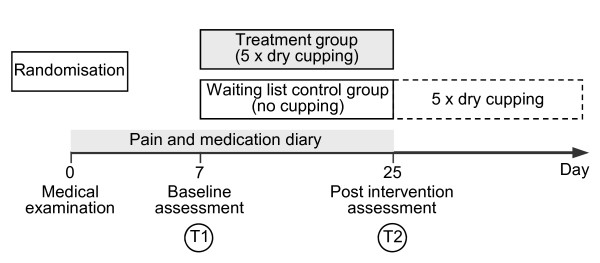
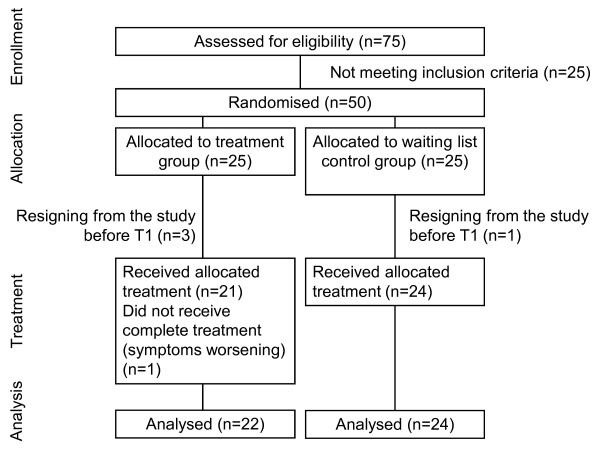
Methods: Fifty patients (50.5 ± 11.9 years) were randomised to a treatment group (TG) or a waiting-list control group (WL). Patients in the TG received a series of 5 cupping treatments over a period of 2 weeks; the control group did not. Self-reported outcome measures before and after the cupping series included the following: Pain at rest (PR) and maximal pain related to movement (PM) on a 100-mm visual analogue scale (VAS), pain diary (PD) data on a 0-10 numeric rating scale (NRS), Neck Disability Index (NDI), and health-related quality of life (SF-36). In addition, the mechanical-detection thresholds (MDT), vibration-detection thresholds (VDT), and pressure-pain thresholds (PPT) were determined at pain-related and control areas.
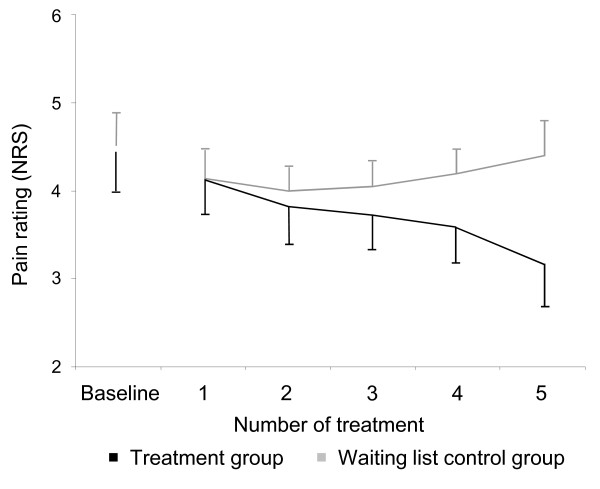
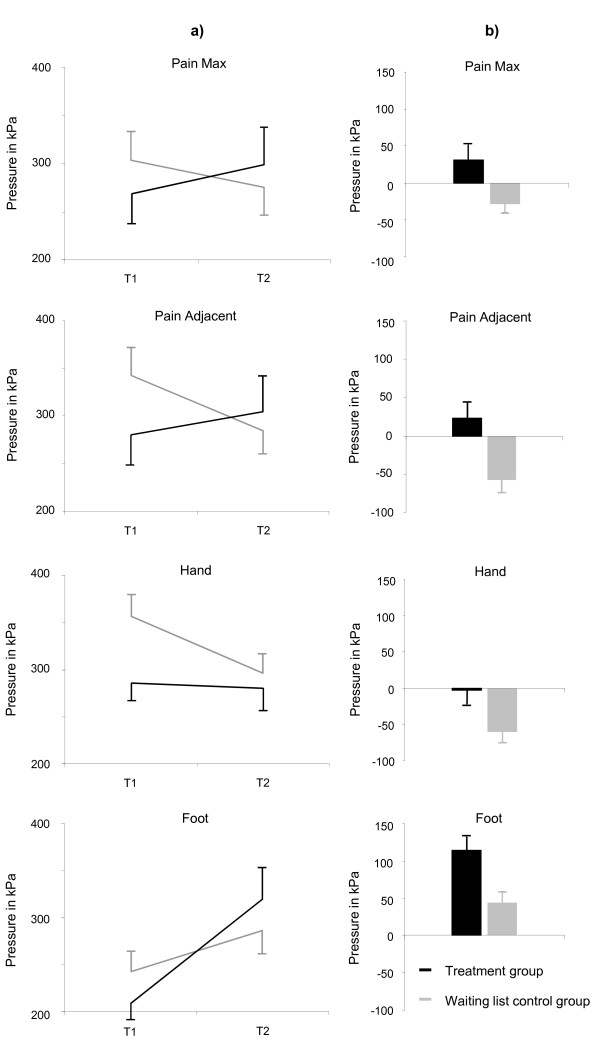
Results: Patients of the TG had significantly less pain after cupping therapy than patients of the WL group (PR: Δ-22.5 mm, p = 0.00002; PM: Δ-17.8 mm, p = 0.01). Pain diaries (PD) revealed that neck pain decreased gradually in the TG patients and that pain reported by the two groups differed significantly after the fifth cupping session (Δ-1.1, p = 0.001). There were also significant differences in the SF-36 subscales for bodily pain (Δ13.8, p = 0.006) and vitality (Δ10.2, p = 0.006). Group differences in PPT were significant at pain-related and control areas (all p < 0.05), but were not significant for MDT or VDT.
Conclusions: A series of five dry cupping treatments appeared to be effective in relieving chronic non-specific neck pain. Not only subjective measures improved, but also mechanical pain sensitivity differed significantly between the two groups, suggesting that cupping has an influence on functional pain processing.
Trial registration: The trial was registered at clinicaltrials.gov (NCT01289964).
Figures
References
-
- Binder A. The diagnosis and treatment of nonspecific neck pain and whiplash. Eura Medicophys. 2007;43(1):79–89. - PubMed
-
- Schoffermann JA, Koestler ME. In: Handbook of Complex Occupational Disability Claims: Early Risk Identification, Intervention and Prevention. Schultz IZ, Gatchel RJ, editor. New York: Springer; 2005. Whiplash and neck pain-related disability; pp. 203–216.
-
- Merskey H, Bogduk N. Classification of Chronic Pain: Description Of Chronic Pain Syndromes and Definitions of Pain Terms. 2. Seattle: IASP Press; 1994.
-
- Hogg-Johnson S, van der Velde G, Carroll LJ, Holm LW, Cassidy JD, Guzman J, Cote P, Haldeman S, Ammendolia C, Carragee E, Hurwitz E, Nordin M, Peloso P. The burden and determinants of neck pain in the general population: results of the Bone and Joint Decade 2000-2010 Task Force on Neck Pain and Its Associated Disorders. J Manipulative Physiol Ther. 2009;32(2 Suppl):S46–60. - PubMed
Publication types
MeSH terms
Associated data
LinkOut - more resources
Full Text Sources
Medical
Research Materials
Miscellaneous
