. 2011 Aug 18;10(2):118-35.
doi: 10.1016/j.chom.2011.07.005.

An iron homeostasis regulatory circuit with reciprocal roles in Candida albicans commensalism and pathogenesis

Affiliations

An iron homeostasis regulatory circuit with reciprocal roles in Candida albicans commensalism and pathogenesis

Changbin Chen et al. Cell Host Microbe. .

Abstract

The mammalian gastrointestinal tract and bloodstream are highly disparate biological niches that differ in concentrations of nutrients such as iron. However, some commensal-pathogenic microorganisms, such as the yeast Candida albicans, thrive in both environments. We report the evolution of a transcription circuit in C. albicans that controls iron uptake and determines its fitness in both niches. Our analysis of DNA-binding proteins that regulate iron uptake by this organism suggests the evolutionary intercalation of a transcriptional activator called Sef1 between two broadly conserved iron-responsive transcriptional repressors, Sfu1 and Hap43. Sef1 activates iron-uptake genes and promotes virulence in a mouse model of bloodstream infection, whereas Sfu1 represses iron-uptake genes and is dispensable for virulence but promotes gastrointestinal commensalism. Thus, C. albicans can alternate between genetic programs conferring resistance to iron depletion in the bloodstream versus iron toxicity in the gut, and this may represent a fundamental attribute of gastrointestinal commensal-pathogens.


Figures

Figure 1
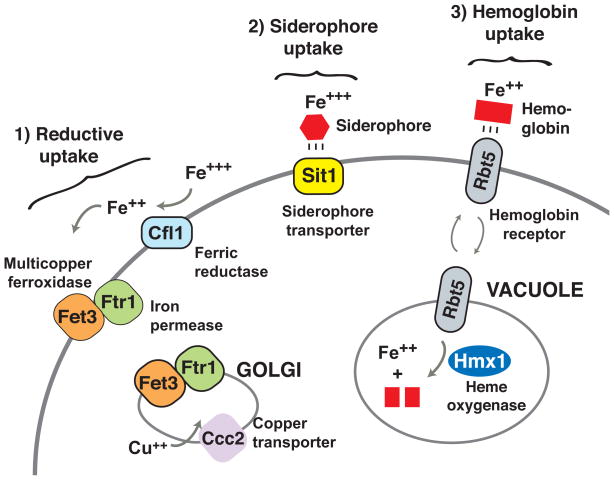
Figure 1. Iron acquisition in C. albicans
Shown are key factors mediating the three known pathways of high-affinity iron uptake in this organism: reductive iron uptake, siderophore-iron uptake, and hemoglobin-iron uptake. Gene families encode ferric reductases and multicopper oxidases of the reductive pathway, and only a subset are expressed in an iron-dependent fashion. Ccc2 is a copper transporter required for proper assembly and function of Fet3/iron permease complexes. Genes for each depicted protein are directly activated by Sef1, and genes for Ftr1, Sit1, and Rbt5 are directly repressed by Sfu1.
Figure 2
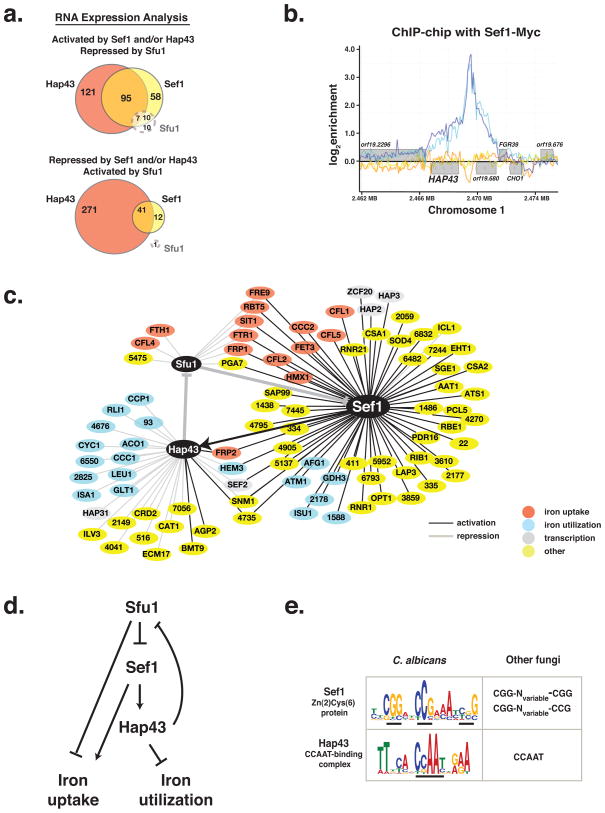
Figure 2. Transcriptional regulatory activities of Sef1, Sfu1, and Hap43
a) Gene sets controlled by Sef1, Sfu1, and Hap43, based on whole genome ORF microarray analysis of the respective knockout mutants. Activation was defined by a minimum 2-fold decrease of gene expression in the deletion mutant relative to wild type, and repression by a minimum 2-fold increase. sef1ΔΔ and hap43ΔΔ were assessed in low iron medium, and sfu1ΔΔ in iron replete medium. Expression of the lone Sfu1-activated gene (IRO1) was unaffected by mutation of SEF1 or HAP43. b) Sef1 binds to the HAP43 promoter. ChIP enrichment profiles of duplicate Sef1-Myc extracts are plotted in dark and light blue, and results from untagged controls are in yellow and orange. Genes are transcribed from left to right above the baseline, and from right to left below. c) Direct gene regulation by Sef1, Sfu1, and Hap43. Gene activation is indicated by a black line and repression by a grey line. Targets involved in iron uptake are shaded red, iron utilization targets are blue, transcription factors are grey, all others are yellow. Targets lacking common names are depicted by the unique numerical components of their standard names; i.e. “123” for orf19.123. d) Simplified scheme of C. albicans iron homeostasis. e) Sef1 and Hap43 DNA recognition motifs compared to consensus sequences of orthologs in other species See also Figure S1 and Tables S1a and S1b.
Figure 3
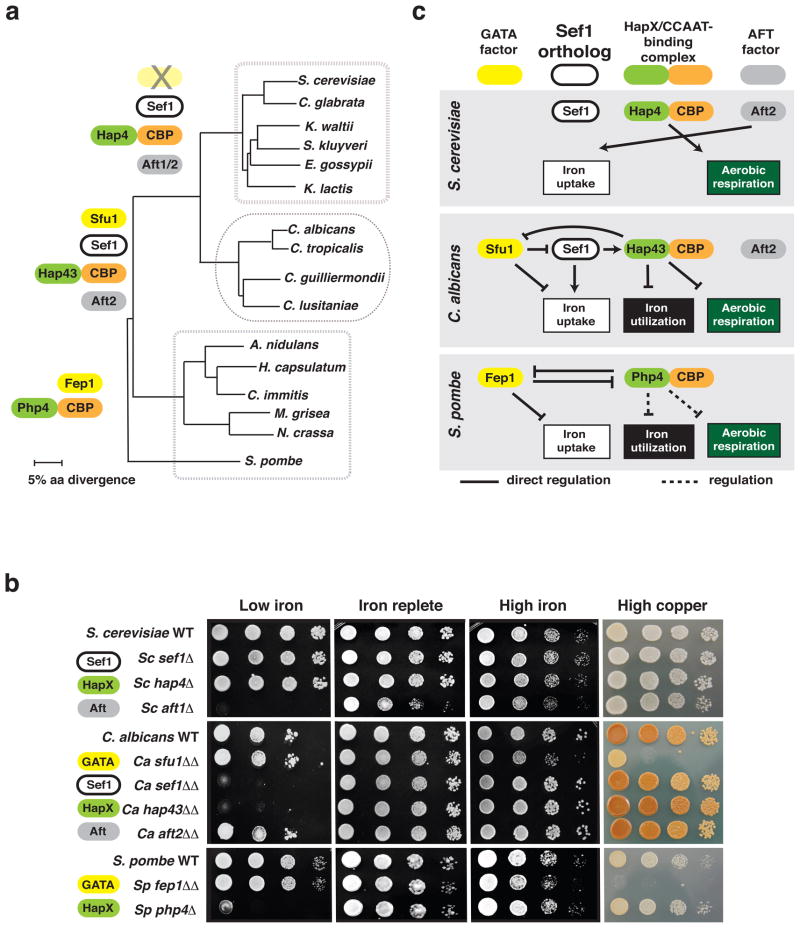
Figure 3. Analysis of transcription factor orthologs in C. albicans, S. cerevisiae, and S. pombe
a) Phylogeny of iron-related transcription factors, based on amino acid sequence. Transcription factors present in each boxed lineage are shown on the left. Notably, Sef1 and Aft factors were gained by the C. albicans and S. cerevisiae lineages, and the GATA factor was lost by the S. cerevisiae lineage. Although the Hap2, Hap3, and Hap5 components of the CCAAT-binding complex are conserved at the sequence level in all three lineages, orthologs of the “HapX” regulatory component could not be unambiguously identified based on amino acid sequence and were instead defined functionally (Baek et al., 2008; Forsburg and Guarente, 1989; Hortschansky et al., 2007; Mercier et al., 2006). b) Phenotypic comparison of orthologous mutants in C. albicans, S. cerevisiae, and S. pombe. Strains were plated on low iron medium (with iron chelators), iron replete medium (standard), high iron medium (with ferrichrome), or high copper medium (with copper sulfate) and incubated at 30°C. Note that densely growing C. albicans is darkly pigmented on high copper medium. c) Updated comparison of iron homeostasis among three model fungi. The schematic integrates published information with our current analysis of C. albicans, S. pombe, and S. cerevisiae. S. pombe Php4/CBP has been implicated in repression of iron utilization genes (Mercier et al., 2006), but direct regulation has not yet been demonstrated. See also Figure S2. Strains and primers are described in Tables S2a and S2b, respectively.
Figure 4
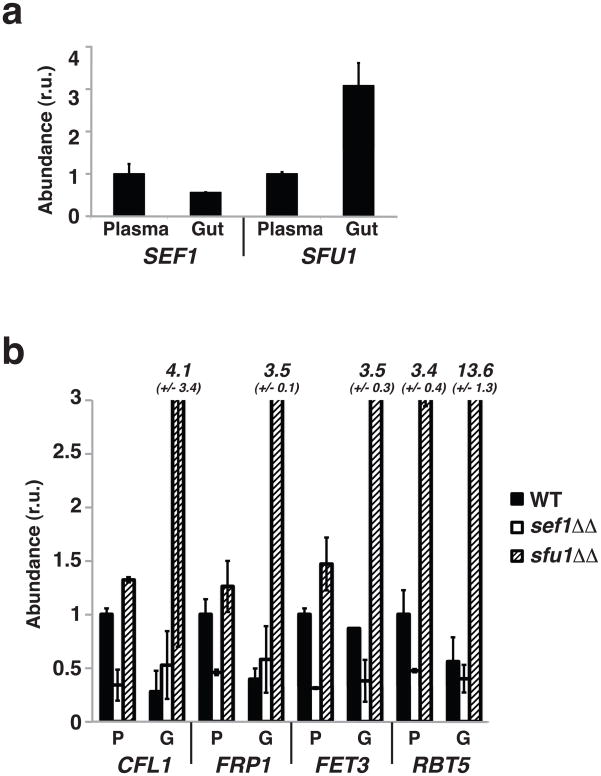
Figure 4. Analysis of C. albicans gene expression in host niches that differ in iron content
a) SEF1 is induced in the bloodstream, and SFU1 is induced in the gut. RT-PCR was used to analyze RNA extracted from wild type C. albicans grown for 1 hour in human plasma or for 5 days in the mouse gastrointestinal infection model. Transcript levels were normalized to levels of 16S ribosomal RNA. Error bars indicate the standard deviation. b) Expression of iron uptake genes in wild type, sef1ΔΔ, and sfu1ΔΔ after growth in human plasma or the murine gastrointestinal tract. P stands for plasma and G for gut. Numerical values (with standard deviation) are presented for results that exceed the scale of the chart.
Figure 5
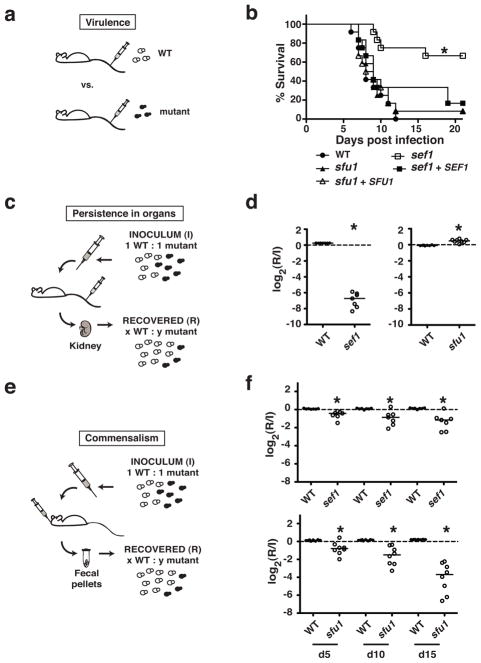
Figure 5. Roles of C. albicans Sef1 and Sfu1 in virulence and commensalism
a) Virulence experiment. BALB/c mice were infected by tail vein injection with individual C. albicans strains (wild type, sef1ΔΔ, sfu1ΔΔ, or gene addback strains), and time to illness was monitored. b) Sef1 but not Sfu1 is essential for virulence. Only the sef1ΔΔ mutant exhibited a significant decrease in virulence compared to wild type (asterisk indicates p<0.0001, log rank test). c) Persistence experiment. BALB/c mice were infected by tail vein injection with 1:1 mixtures of wild type and sef1ΔΔ or sfu1ΔΔ). After mice developed clinical disease, the abundance of each strain in the inoculum (I) vs. mouse kidneys (R) was determined by qPCR. d) Sef1 but not Sfu1 is required for persistence in host kidneys. Compared to wild type, sef1ΔΔ was significantly depleted from kidneys (p<0.0001, unpaired t-test), whereas sfu1ΔΔ was significantly enriched (p<0.0001). e) Commensalism experiment. BALB/c mice were infected by gavage with 1:1 mixtures of wild type and sef1ΔΔ or sfu1ΔΔ. The abundance of each strain in the inoculum (I) and after recovery from fecal pellets (R) was determined by qPCR. f) Sfu1 and Sef1 promote commensalism. sef1ΔΔ and sfu1ΔΔ were progressively depleted from fecal pellets relative to wild type (sef1ΔΔ: p=0.0017 at day 5, p=0.0047 at day 10, p=0.0012 at day 12; sfu1ΔΔ: p<0.002 at day 5, p<0.0003 at day 10, p<0.0001 at day 15; unpaired t-test). Comparison between the competitive indices of each mutant on day 15 indicated a more severe defect for sfu1ΔΔ (p=0.002, unpaired t-test).

Comment in

References

    1. Almeida RS, Brunke S, Albrecht A, Thewes S, Laue M, Edwards JE, Filler SG, Hube B. the hyphal-associated adhesin and invasin Als3 of Candida albicans mediates iron acquisition from host ferritin. PLoS Pathog. 2008;4:e1000217. - PMC - PubMed
    1. Altschul SF, Madden TL, Schaffer AA, Zhang J, Zhang Z, Miller W, Lipman DJ. Gapped BLAST and PSI-BLAST: a new generation of protein database search programs. Nucleic Acids Res. 1997;25:3389–3402. - PMC - PubMed
    1. Ardon O, Bussey H, Philpott C, Ward DM, Davis-Kaplan S, Verroneau S, Jiang B, Kaplan J. Identification of a Candida albicans ferrichrome transporter and its characterization by expression in Saccharomyces cerevisiae. J Biol Chem. 2001;276:43049–43055. - PubMed
    1. Baek YU, Li M, Davis DA. Candida albicans ferric reductases are differentially regulated in response to distinct forms of iron limitation by the Rim101 and CBF transcription factors. Eukaryot Cell. 2008;7:1168–1179. - PMC - PubMed
    1. Bailey TL, Elkan C. Fitting a mixture model by expectation maximization to discover motifs in biopolymers. Paper presented at: Second International Conference on Intelligent Systems for Molecular Biology (AAAI Press).1994. - PubMed

Publication types

MeSH terms

Associated data