


The evolution of antisocial punishment in optional public goods games
- PMID: 21847108
- PMCID: PMC3279747
- DOI: 10.1038/ncomms1442
The evolution of antisocial punishment in optional public goods games
Abstract
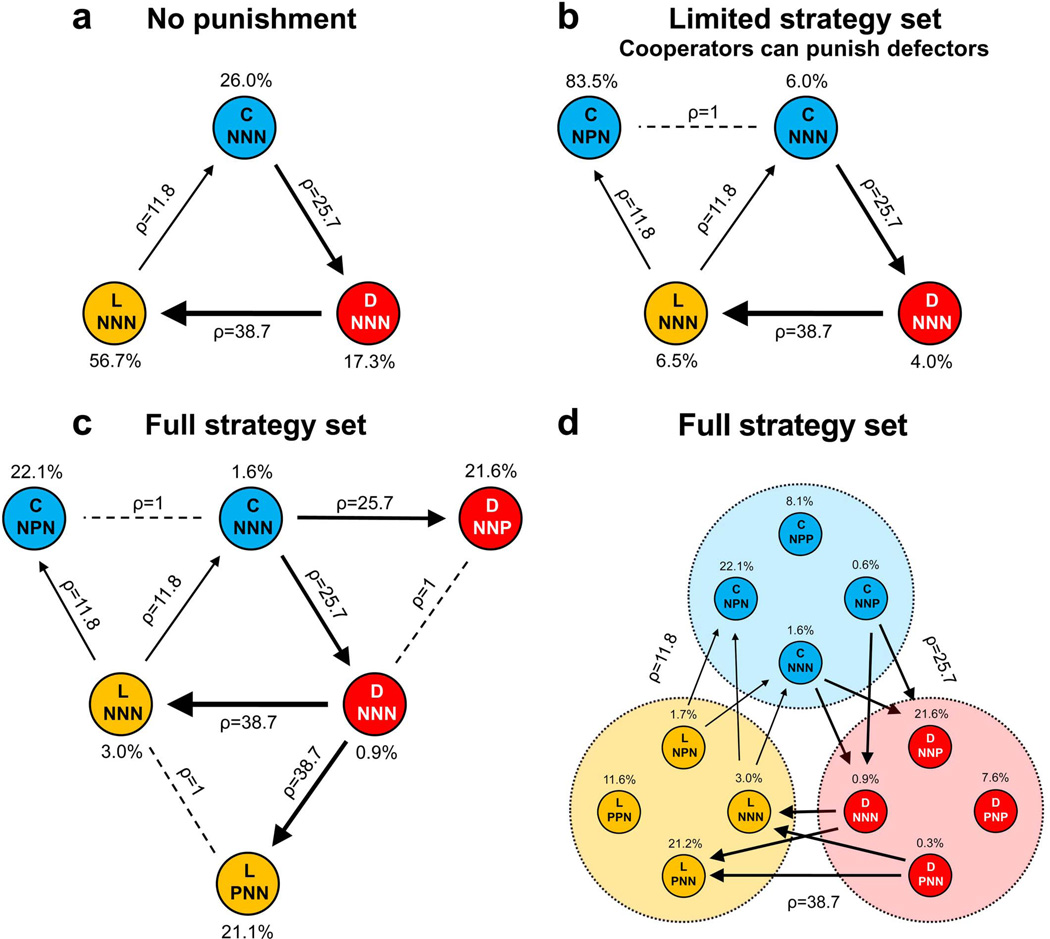
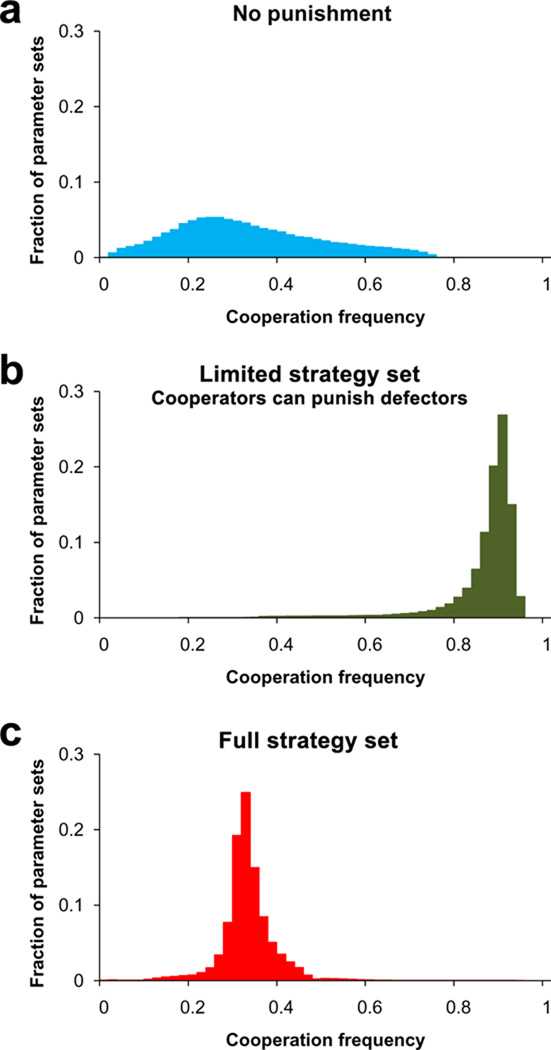
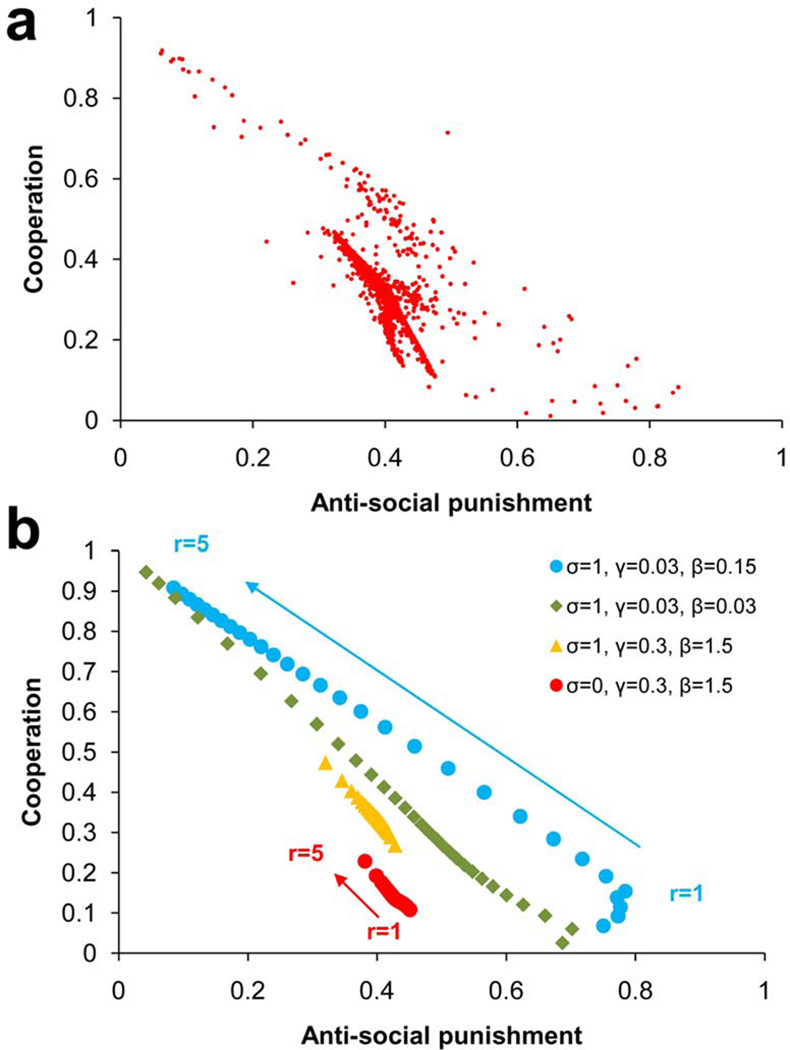
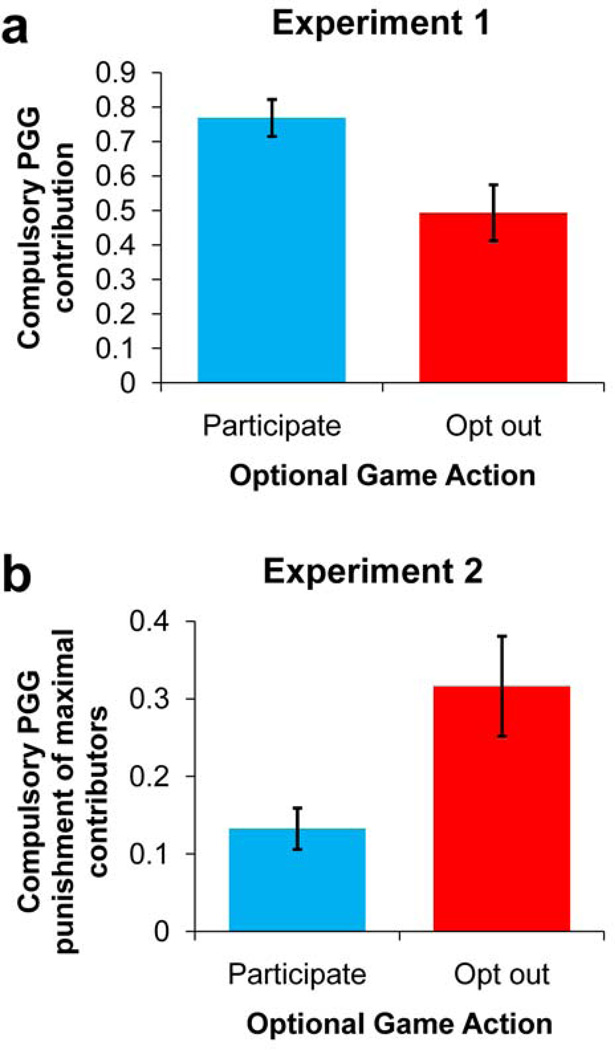
Cooperation, where one individual incurs a cost to help another, is a fundamental building block of the natural world and human society. It has been suggested that costly punishment can promote the evolution of cooperation, with the threat of punishment deterring free-riders. Recent experiments, however, have revealed the existence of 'antisocial' punishment, where non-cooperators punish cooperators. While various theoretical models find that punishment can promote the evolution of cooperation, these models a priori exclude the possibility of antisocial punishment. Here we extend the standard theory of optional public goods games to include the full set of punishment strategies. We find that punishment no longer increases cooperation, and that selection favours substantial levels of antisocial punishment for a wide range of parameters. Furthermore, we conduct behavioural experiments, showing results consistent with our model predictions. As opposed to an altruistic act that promotes cooperation, punishment is mostly a self-interested tool for protecting oneself against potential competitors.
Figures
References
-
- Sigmund K. The calculus of selfishness. Princeton Univ Press; 2010.
-
- Ostrom E. Governing the commons: The evolution of institutions for collective action. Cambridge Univ Pr; 1990.
-
- Cressman R. The stability concept of evolutionary game theory: a dynamic approach. Springer-Verlag; 1992.
Publication types
MeSH terms
Grants and funding
LinkOut - more resources
Full Text Sources
