


Overactive bladder: the importance of tailoring treatment to the individual patient
- PMID: 21847345
- PMCID: PMC3155853
- DOI: 10.2147/JMDH.S21401
Overactive bladder: the importance of tailoring treatment to the individual patient
Abstract
Introduction: Overactive bladder (OAB) is a prevalent and persistent condition that is often under-diagnosed and under-treated, and which frequently requires tailored treatment for successful management.
Methods: This consensus opinion-based review summarizes the discussions of a group of experts in the field of OAB that were assembled to evaluate the importance of correct diagnosis and appropriate pharmacotherapy in patients with OAB.
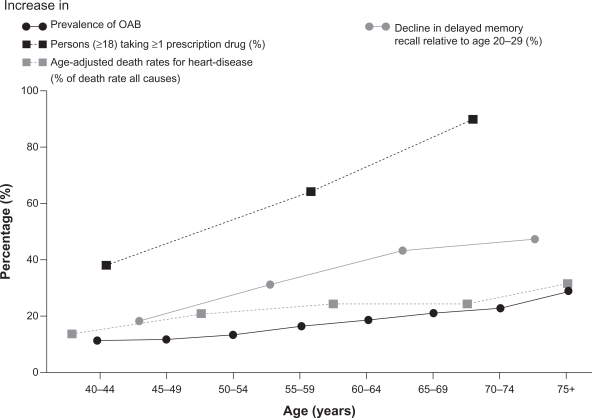
Results: A thorough diagnostic process is crucial for allowing exclusion of underlying medical issues and differentiation from genitourinary conditions other than OAB. In addition, selecting the most appropriate pharmacotherapy needs to be carefully considered in the context of each patient with OAB. In general, patients with OAB tend to be older with various comorbidities and often receiving multiple concomitant medications. Treatment decisions should take into consideration the differing potential for antimuscarinic medications to alter cognitive and cardiovascular functions, both of which may be compromised in this patient population.
Conclusion: Tailoring treatment to individual patients by comprehensive patient assessment may lead to more effective management of patients with OAB, especially those receiving polypharmacy for comorbidities.
Keywords: antimuscarinics; cardiovascular; cognitive function; diagnosis; overactive bladder.
Figures

References
-
- Haylen BT, De Ridder D, Freeman RM, et al. An International Urogynecological Association (IUGA)/International Continence Society (ICS) joint report on the terminology for female pelvic floor dysfunction. Neurourol Urodyn. 2010;29(1):4–20. - PubMed
-
- Irwin DE, Milsom I, Hunskaar S, et al. Population-based survey of urinary incontinence, overactive bladder, and other lower urinary tract symptoms in five countries: results of the EPIC study. Eur Urol. 2006;50(6):1306–1314. - PubMed
-
- Garnett S, Swithinbank L, Ellis-Jones J, et al. The long-term natural history of overactive bladder symptoms due to idiopathic detrusor overactivity in women. BJU Int. 2009;104(7):948–953. - PubMed
-
- Malmsten UG, Molander U, Peeker R, Irwin DE, Milsom I. Urinary incontinence, overactive bladder, and other lower urinary tract symptoms: a longitudinal population-based survey in men aged 45–103 years. Eur Urol. 2010;58(1):149–156. - PubMed
-
- Abrams P, Wein A. The overactive bladder: a widespread but treatable condition. Stockholm: Erik Sparre Medical AB; 1998.
LinkOut - more resources
Full Text Sources
