


Gestational and fetal outcomes in B19 maternal infection: a problem of diagnosis
- PMID: 21849687
- PMCID: PMC3187331
- DOI: 10.1128/JCM.00854-11
Gestational and fetal outcomes in B19 maternal infection: a problem of diagnosis
Abstract
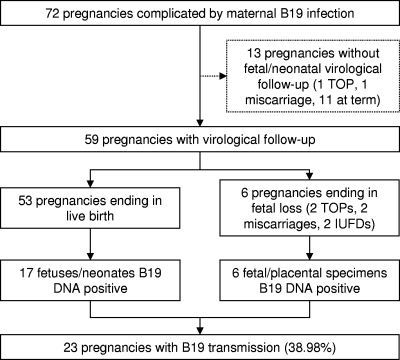
Parvovirus B19 infection during pregnancy is a potential hazard to the fetus because of the virus' ability to infect fetal erythroid precursor cells and fetal tissues. Fetal complications range from transitory fetal anemia and nonimmune fetal hydrops to miscarriage and intrauterine fetal death. In the present study, 72 pregnancies complicated by parvovirus B19 infection were followed up: fetal and neonatal specimens were investigated by serological and/or virological assays to detect fetal/congenital infection, and fetuses and neonates were clinically evaluated to monitor pregnancy outcomes following maternal infection. Analysis of serological and virological maternal B19 markers of infection demonstrated that neither B19 IgM nor B19 DNA detected all maternal infections. IgM serology correctly diagnosed 94.1% of the B19 infections, while DNA testing correctly diagnosed 96.3%. The maximum sensitivity was achieved with the combined detection of both parameters. B19 vertical transmission was observed in 39% of the pregnancies, with an overall 10.2% rate of fetal deaths. The highest rates of congenital infections and B19-related fatal outcomes were observed when maternal infections occurred by the gestational week 20. B19 fetal hydrops occurred in 11.9% of the fetuses, and 28.6% resolved the hydrops with a normal neurodevelopment outcome at 1- to 5-year follow-up. In conclusion, maternal screening based on the concurrent analysis of B19 IgM and DNA should be encouraged to reliably diagnose maternal B19 infection and correctly manage pregnancies at risk.
Figures
References
-
- Bonvicini F., et al. 2009. Diagnosis of fetal parvovirus B19 infection: value of virological assays in fetal specimens. BJOG 116:813–817 - PubMed
-
- Bredl S., et al. 2005. Evidence for parvovirus B19 reactivation in seropositive pregnant women, abstr. 34. Abstracts of the XIII International Parvovirus Workshop, Helsinki, Finland
-
- Broliden K., Tolvenstam T., Norbeck O. 2006. Clinical aspects of parvovirus B19 infection. J. Intern. Med. 260:285–304 - PubMed
-
- Brown K. E. 1994. Congenital anaemia after transplacental B19 parvovirus infection. Lancet 343:895–896 - PubMed
-
- Chisaka H., Morita E., Yaegashi N., Sugamura K. 2003. Parvovirus B19 and the pathogenesis of anaemia. Rev. Med. Virol. 13:347–359 - PubMed
MeSH terms
Substances
LinkOut - more resources
Full Text Sources
Medical
