


Increased tumor necrosis factor-α, cleaved caspase 3 levels and insulin receptor substrate-1 phosphorylation in the β₁-adrenergic receptor knockout mouse
- PMID: 21850156
- PMCID: PMC3137556
Increased tumor necrosis factor-α, cleaved caspase 3 levels and insulin receptor substrate-1 phosphorylation in the β₁-adrenergic receptor knockout mouse
Abstract
Purpose: To investigate the role of β1-adrenergic receptors on insulin like growth factor (IGF)-1 receptor signaling and apoptosis in the retina using β1-adrenergic receptor knockout (KO) mice.
Methods: Western blotting and enzyme-linked immunosorbent assay analyses were done on whole retinal lysates from β1-adrenergic receptor KO mice and wild-type littermates. In addition, vascular analyses of degenerate capillaries and pericyte ghosts were done on the retina of the β1-adrenergic receptor KO mice versus littermates.
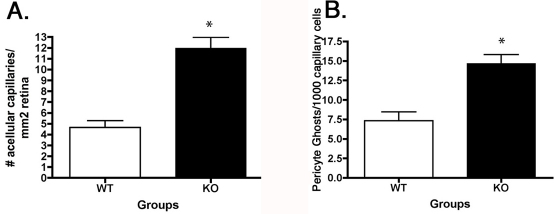
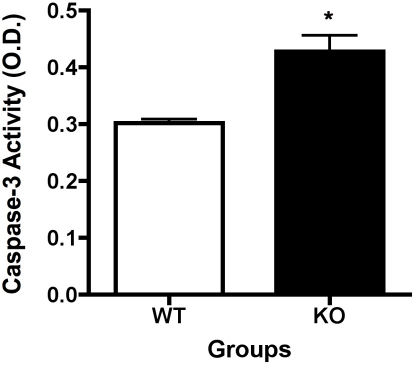
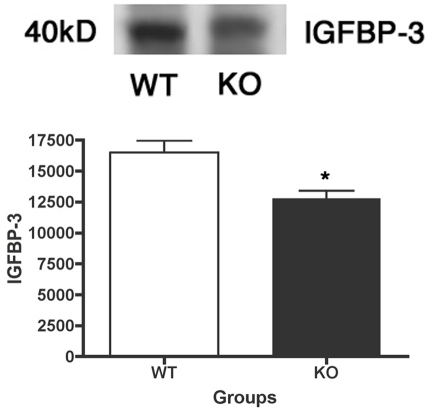
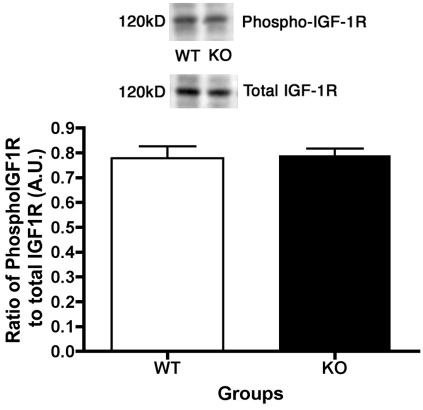
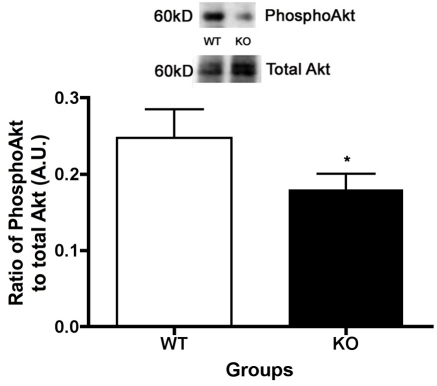
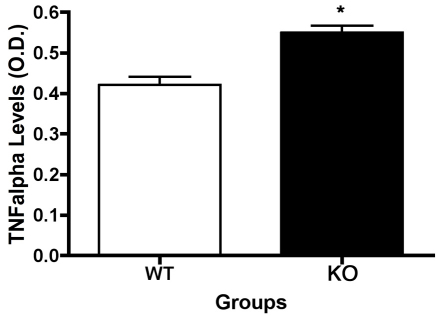
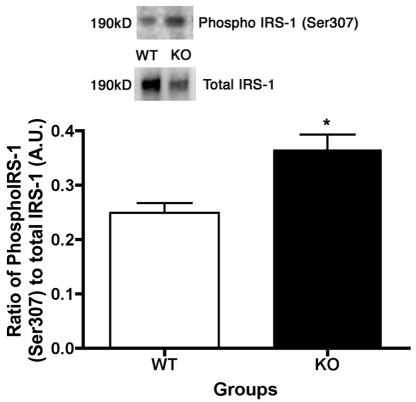
Results: Lack of β1-adrenergic receptors produced a significant increase in both degenerate capillaries and pericyte ghosts. This was accompanied by an increase in cleaved caspase 3 and tumor necrosis factor α levels. IGF-1 receptor phosphorylation was not changed; however, protein kinase B (Akt) phosphorylation was significantly decreased. The decrease in Akt phosphorylation is likely caused by increased insulin receptor substrate-1 serine 307 (IRS-1(Ser307)) phosphorylation, which is inhibitory to IGF-1 receptor signaling.
Conclusions: These studies further support the idea that maintenance of β-adrenergic receptor signaling is beneficial for retinal homeostasis. Loss of β1-adrenergic receptor signaling alters tumor necrosis factor α and apoptosis levels in the retina, as well as Akt and IGF-1 receptor phosphorylation. Since many of these same changes are observed in the diabetic retina, these data support that novel β-adrenergic receptor agents may provide additional avenues for therapeutics.
Figures
References
-
- Hammes HP, Weiss A, Hess S, Araki N, Horiuchi S, Brownlee M, Preissner KT. Modification of vitronectin by advanced glycation alters functional properties in vitro and in the diabetic retina. Lab Invest. 1996;75:325–38. - PubMed
-
- Wautier JL, Schmidt AM. Protein glycation: a firm link to endothelial cell dysfunction. Circ Res. 2004;95:233–8. - PubMed
-
- Joussen AM, Poulaki V, Mitsiades N, Cai WY, Suzuma I, Pak J, Ju ST, Rook SL, Esser P, Mitsiades CS, Kirchhof B, Adamis AP, Aiello LP. Suppression of Fas-FasL-induced endothelial cell apoptosis prevents diabetic blood-retinal barrier breakdown in a model of streptozotocin-induced diabetes. FASEB J. 2003;17:76–8. - PubMed
-
- Wiley LA, Rupp GR, Steinle JJ. Sympathetic innervation regulates basement membrane thickening and pericyte number in rat retina. Invest Ophthalmol Vis Sci. 2005;46:744–8. - PubMed
Publication types
MeSH terms
Substances
Grants and funding
LinkOut - more resources
Full Text Sources
Medical
Molecular Biology Databases
Research Materials
Miscellaneous