


Dysregulation in retinal para-inflammation and age-related retinal degeneration in CCL2 or CCR2 deficient mice
- PMID: 21850237
- PMCID: PMC3151263
- DOI: 10.1371/journal.pone.0022818
Dysregulation in retinal para-inflammation and age-related retinal degeneration in CCL2 or CCR2 deficient mice
Abstract
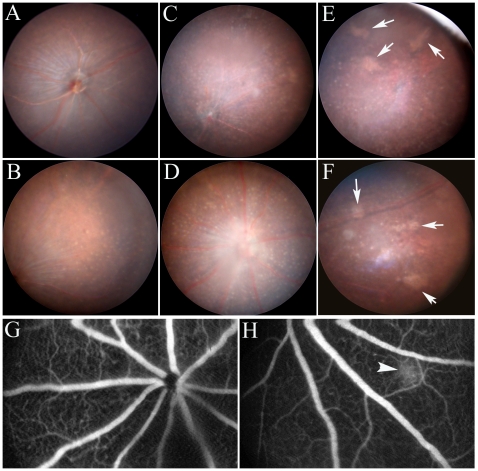
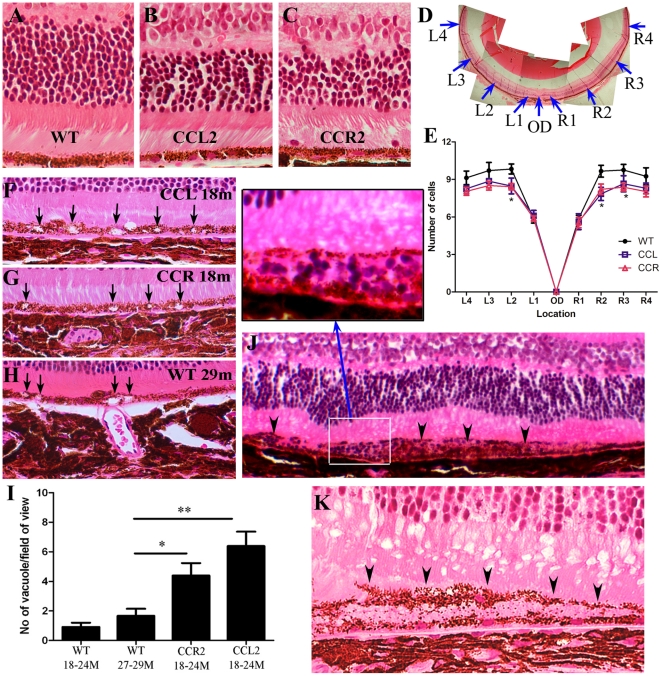
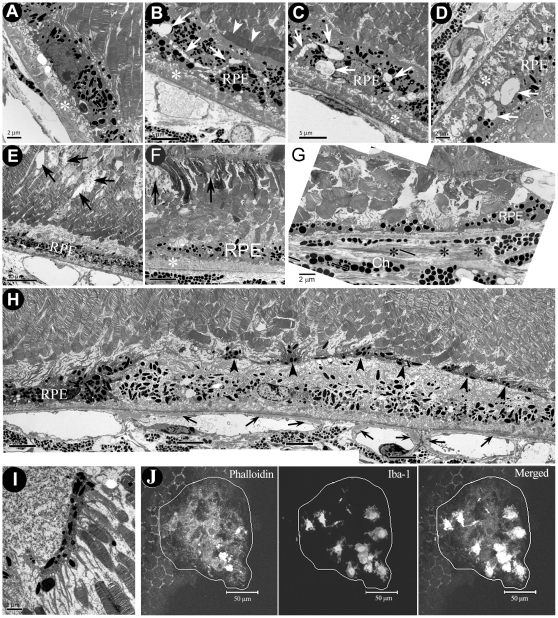
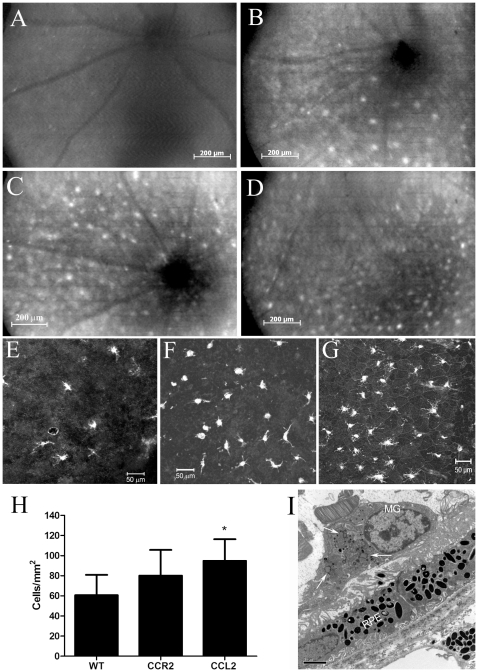
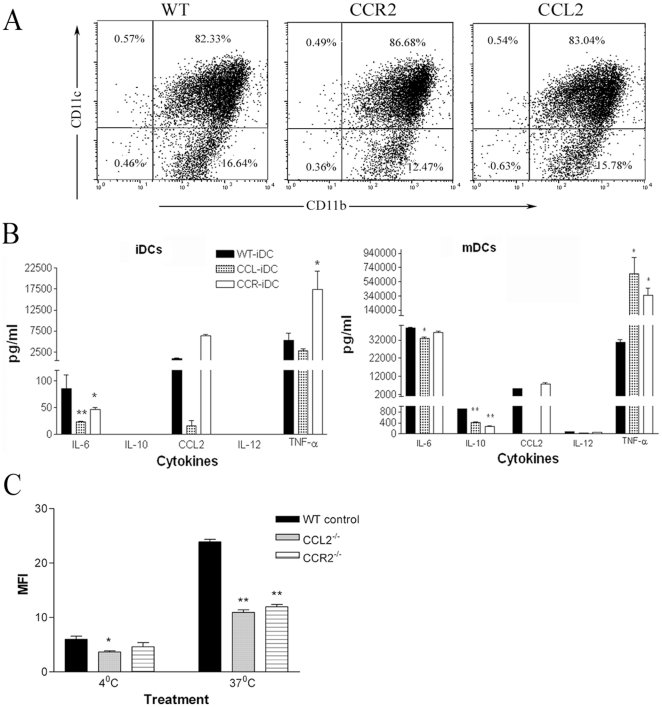
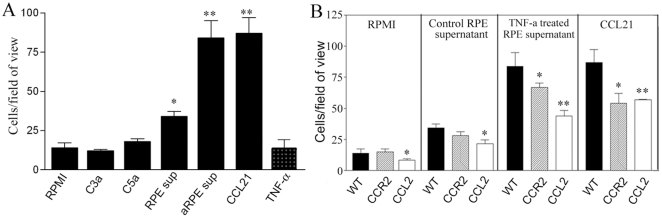
We have shown previously that a para-inflammatory response exists at the retinal/choroidal interface in the aging eye; and this response plays an important role in maintaining retinal homeostasis under chronic stress conditions. We hypothesized that dysregulation of the para-inflammatory response may result in an overt pro-inflammatory response inducing retinal degeneration. In this study, we examined this hypothesis in mice deficient in chemokine CCL2 or its cognate receptor CCR2. CCL2- or CCR2-deficient mice developed retinal degenerative changes with age, characterized as retinal pigment epithelial (RPE) cell and photoreceptor cell death. Retinal cell death was associated with significantly more subretinal microglial accumulation and increased complement activation. In addition, monocytes from CCL2- or CCR2-deficient mice had reduced capacity for phagocytosis and chemotaxis, expressed less IL-10 but more iNOS, IL-12 and TNF-α when compared to monocytes from WT mice. Complement activation at the site of RPE cell death resulted in C3b/C3d but not C5b-9 deposition, indicating only partial activation of the complement pathway. Our results suggest that altered monocyte functions may convert the protective para-inflammatory response into an overtly harmful inflammation at the retina/choroidal interface in CCL2- or CCR2-deficient mice, leading to RPE and photoreceptor degeneration. These data support a concept whereby a protective para-inflammatory response relies upon a normally functioning innate immune system. If the innate immune system is deficient chronic stress may tip the balance towards an overt inflammatory response causing cell/tissue damage.
Conflict of interest statement
Figures
References
-
- Friedman DS, O'Colmain BJ, Munoz B, Tomany SC, McCarty C, et al. Prevalence of age-related macular degeneration in the United States. Arch Ophthalmol. 2004;122(4):564–572. - PubMed
-
- Chakravarthy U, Adamis AP, Cunningham ET, Jr, Goldbaum M, et al. VEGF Inhibition Study in Ocular Neovascularization (V.I.S.I.O.N.) Clinical Trial Group. Year 2 efficacy results of 2 randomized controlled clinical trials of pegaptanib for neovascular age-related macular degeneration. Ophthalmology. 2006;113(9):1508.e1–1508.25. - PubMed
-
- Hughes MS, Sang DN. Safety and efficacy of intravitreal bevacizumab followed by pegaptanib maintenance as a treatment regimen for age-related macular degeneration. Ophthalmic Surg Lasers Imaging. 2006;37(6):446–454. - PubMed
-
- Bressler NM, Chang TS, Fine JT, Dolan CM, Ward J, et al. Improved vision-related function after ranibizumab vs photodynamic therapy: a randomized clinical trial. Arch Ophthalmol. 2009;127(1):13–21. - PubMed
MeSH terms
Substances
LinkOut - more resources
Full Text Sources
Other Literature Sources
Medical
Molecular Biology Databases
