


Image-guided tumor-selective radioiodine therapy of liver cancer after systemic nonviral delivery of the sodium iodide symporter gene
- PMID: 21851208
- PMCID: PMC3237693
- DOI: 10.1089/hum.2011.041
Image-guided tumor-selective radioiodine therapy of liver cancer after systemic nonviral delivery of the sodium iodide symporter gene
Abstract
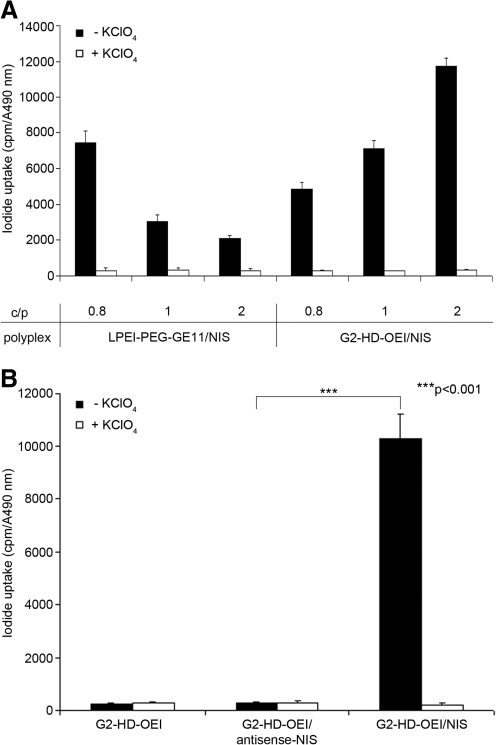
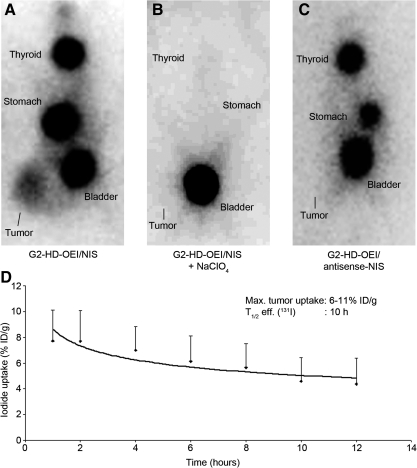
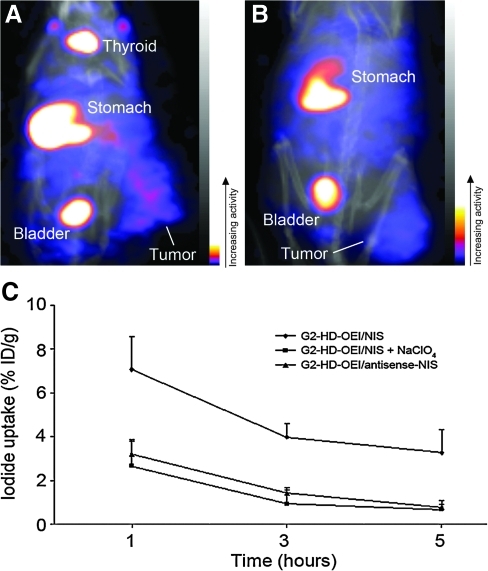
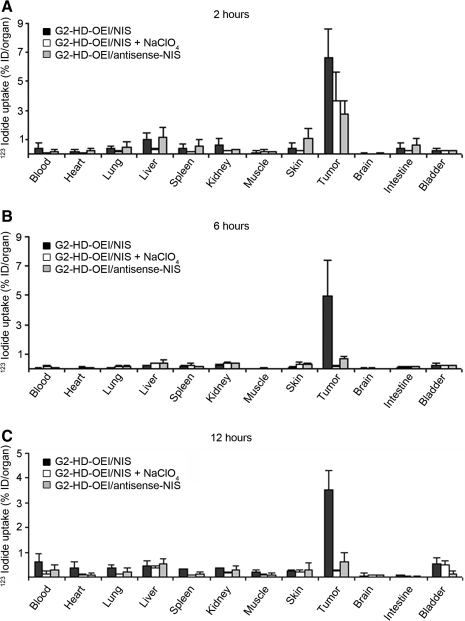
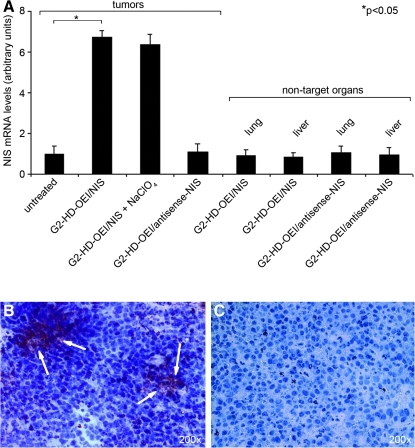
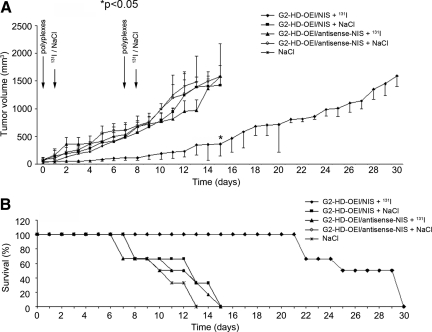
We reported the induction of tumor-selective iodide uptake and therapeutic efficacy of (131)I in a hepatocellular carcinoma (HCC) xenograft mouse model, using novel polyplexes based on linear polyethylenimine (LPEI), shielded by polyethylene glycol (PEG), and coupled with the epidermal growth factor receptor-specific peptide GE11 (LPEI-PEG-GE11). The aim of the current study in the same HCC model was to evaluate the potential of biodegradable nanoparticle vectors based on pseudodendritic oligoamines (G2-HD-OEI) for systemic sodium iodide symporter (NIS) gene delivery and to compare efficiency and tumor specificity with LPEI-PEG-GE11. Transfection of HCC cells with NIS cDNA, using G2-HD-OEI, resulted in a 44-fold increase in iodide uptake in vitro as compared with a 22-fold increase using LPEI-PEG-GE11. After intravenous application of G2-HD-OEI/NIS HCC tumors accumulated 6-11% ID/g (123)I (percentage of the injected dose per gram tumor tissue) with an effective half-life of 10 hr (tumor-absorbed dose, 281 mGy/MBq) as measured by (123)I scintigraphic gamma camera or single-photon emission computed tomography computed tomography (SPECT CT) imaging, as compared with 6.5-9% ID/g with an effective half-life of only 6 hr (tumor-absorbed dose, 47 mGy/MBq) for LPEI-PEG-GE11. After only two cycles of G2-HD-OEI/NIS/(131)I application, a significant delay in tumor growth was observed with markedly improved survival. A similar degree of therapeutic efficacy had been observed after four cycles of LPEI-PEG-GE11/(131)I. These results clearly demonstrate that biodegradable nanoparticles based on OEI-grafted oligoamines show increased efficiency for systemic NIS gene transfer in an HCC model with similar tumor selectivity as compared with LPEI-PEG-GE11, and therefore represent a promising strategy for NIS-mediated radioiodine therapy of HCC.
Figures
References
-
- Akinc A. Thomas M. Klibanov A.M. Langer R. Exploring polyethylenimine-mediated DNA transfection and proton sponge hypothesis. J. Gene Med. 2005;7:657–663. - PubMed
-
- Blechacz B. Splinter P.L. Greiner S., et al. Engineered measles virus as a novel oncolytic viral therapy system for hepatocellular carcinoma. Hepatology. 2006;44:1465–1477. - PubMed
-
- Boland A. Ricard M. Opolon P., et al. Adenovirus-mediated transfer of the thyroid sodium/iodide symporter gene into tumors for a targeted radiotherapy. Cancer Res. 2000;13:3484–3492. - PubMed
-
- Brunner S. Sauer T. Carotta S., et al. Cell cycle dependence of gene transfer by lipoplex, polyplex and recombinant adenovirus. Gene Ther. 2000;7:401–407. - PubMed
Publication types
MeSH terms
Substances
LinkOut - more resources
Full Text Sources
Medical
Research Materials
