


Age-dependent loss of MMP-3 in Hutchinson-Gilford progeria syndrome
- PMID: 21852285
- PMCID: PMC3193525
- DOI: 10.1093/gerona/glr137
Age-dependent loss of MMP-3 in Hutchinson-Gilford progeria syndrome
Abstract
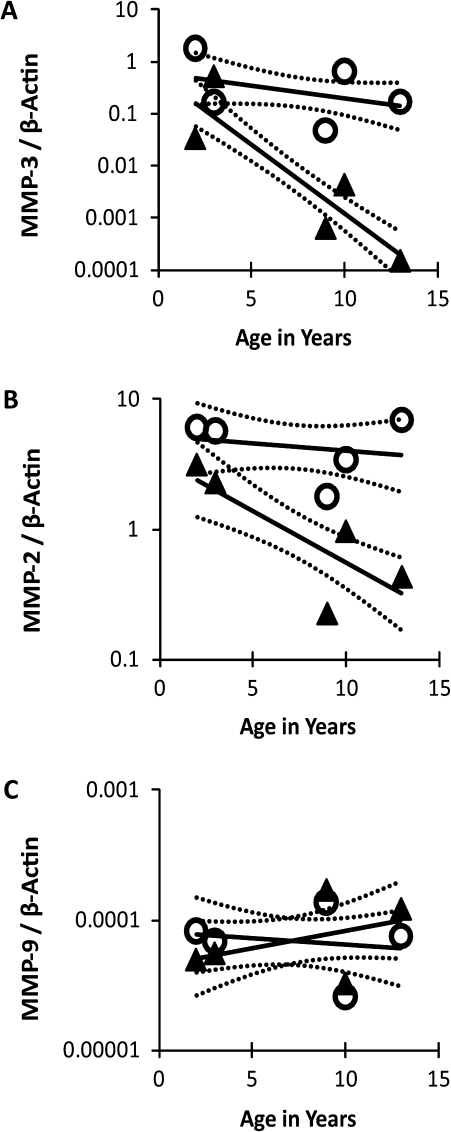
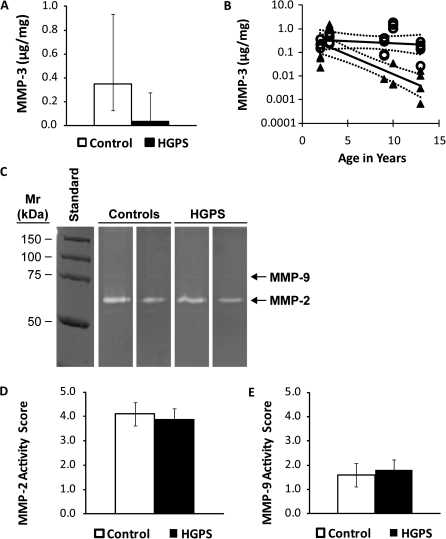
Hutchinson-Gilford progeria syndrome (HGPS) is a rare, progressive segmental premature aging disease that includes scleroderma-like skin, progressive joint contracture, and atherosclerosis. Affected individuals die prematurely of heart attacks or strokes. Extracellular matrix dysregulation is implicated as a factor in disease progression. We analyzed messenger RNA and protein levels for matrix metalloproteinases (MMPs)-2,-3, and -9 in HGPS primary human dermal fibroblasts using real-time polymerase chain reaction, enzyme-linked immunosorbent assay, and gelatin zymography. MMP-3 messenger RNA and protein levels decreased significantly with increasing donor age in HGPS fibroblasts but not in controls. MMP-2 messenger RNA also showed a donor age-dependent decrease in HGPS fibroblasts, but levels of secreted protein were unchanged. MMP-9 was similar in HGPS and control cultures. The decreased MMP-3 may represent a shift in the inherent extracellular matrix-degrading proteolytic balance in favor of matrix deposition in HGPS. This metalloproteinase has the potential to serve as a biomarker of therapeutic efficacy when assessing treatments for HGPS.
Figures
References
-
- Hennekam RC. Hutchinson-Gilford progeria syndrome: review of the phenotype. Am J Med Genet A. 2006;140:2603–2624. - PubMed
Publication types
MeSH terms
Substances
Grants and funding
LinkOut - more resources
Full Text Sources
Medical
Miscellaneous
