doi: 10.2105/AJPH.2011.300289.
Epub 2011 Aug 18.
Causes of the decline in cigarette smoking among African American youths from the 1970s to the 1990s
Affiliations
- PMID: 21852655
- PMCID: PMC3222352
- DOI: 10.2105/AJPH.2011.300289
Item in Clipboard
Causes of the decline in cigarette smoking among African American youths from the 1970s to the 1990s
Am J Public Health.
2011 Oct.
Abstract
Adult cigarette smoking prevalence trends among African Americans (AAs) and Whites are similar. However, during the decline in youth smoking that occurred between the mid-1970s and the early 1990s, the drop in smoking rates among AA adolescents was more than double that among Whites. We examined the evidence for potential explanations for this phenomenon. On the basis of our findings, we propose that racial differences in parental attitudes, religious ties, negative perceptions and experiences of the health effects of smoking, worsening poverty, increased use of food stamps, and price sensitivity were major factors contributing to the more rapid decrease in and continued lower rates of smoking among AA youths.
Figures
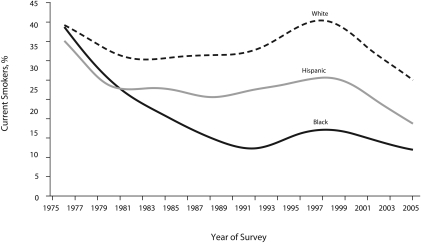
Thirty-day prevalence of cigarette use among African American, White, and Hispanic high school seniors: United States, 1976–2005. Source. Nelson et al. Printed with permission.
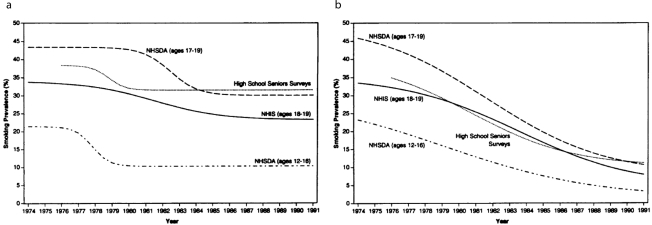
Cigarette smoking trends among (a) White adolescents and (b) African American adolescents across High School Seniors Surveys, NHSDA, and NHIS data: United States, 1974–1991. Note. NHIS ;= ;National Health Interview Survey; NHSDA ;= ;National Household Surveys on Drug Abuse.Source. Nelson et al. Printed with permission.
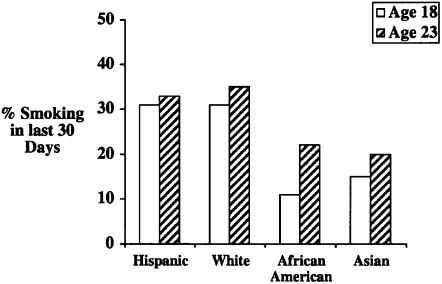
Thirty-day smoking rates among people aged 18 and 23 years, by race/ethnicity: United States, 1990 and 1995. Source. Fisher et al. Printed with permission.
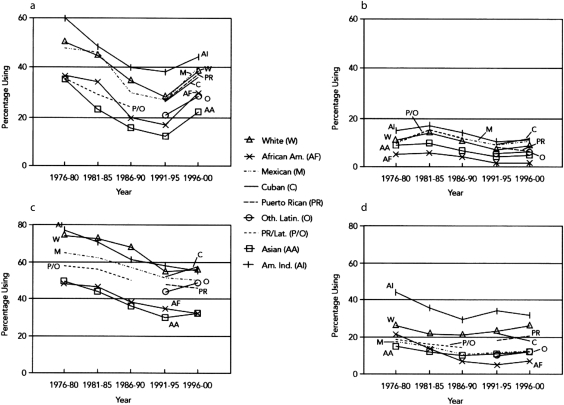
Prevalence of use of (a) marijuana, (b) cocaine, (c) alcohol, and (d) tobacco among high school seniors, by race/ethnicity: United States, 1976–2000. Source. Wallace et al. Printed with permission.
References
-
- Centers for Disease Control and Prevention Smoking-attributable mortality, years of potential life lost, and productivity losses—United States, 2000–2004. MMWR Morb Mortal Wkly Rep. 2008;57(45):1226–1228 - PubMed
-
- Ries LAG, Melbert D, Krapcho M, et al. SEER cancer statistics review, 1975–2004. Bethesda, MD: NationalCancer Institute; 2006. Available at: http://seer.cancer.gov/csr/1975_2004. Revised November 15, 2007. Accessed July 13, 2011
-
- US Department of Health and Human Services Tobacco Use Among US Racial/Ethnic Minority Groups—African Americans, American Indians and Alaska Natives, Asian Americans and Pacific Islanders, and Hispanics. Atlanta, GA: US Dept of Health and Human Services, Public Health Service; 1998
-
- Centers for Disease Control and Prevention Cigarette smoking among adults—United States, 2007. MMWR Morb Mortal Wkly Rep. 2008;57(45):1221–1226 - PubMed
-
- Johnston LD, O'Malley PM, Bachman JG, et al. Demographic Subgroup Trends for Various Licit and Illicit Drugs, 1975–2004. Ann Arbor, MI: Institute for Social Research; 2005
Publication types
MeSH terms
LinkOut - more resources
Full Text Sources
Medical