. 2011 Aug;7(8):e1002227.
doi: 10.1371/journal.pgen.1002227. Epub 2011 Aug 11.

PP2A-twins is antagonized by greatwall and collaborates with polo for cell cycle progression and centrosome attachment to nuclei in drosophila embryos

Affiliations

PP2A-twins is antagonized by greatwall and collaborates with polo for cell cycle progression and centrosome attachment to nuclei in drosophila embryos

Peng Wang et al. PLoS Genet. 2011 Aug.

Abstract

Cell division and development are regulated by networks of kinases and phosphatases. In early Drosophila embryogenesis, 13 rapid nuclear divisions take place in a syncytium, requiring fine coordination between cell cycle regulators. The Polo kinase is a conserved, crucial regulator of M-phase. We have recently reported an antagonism between Polo and Greatwall (Gwl), another mitotic kinase, in Drosophila embryos. However, the nature of the pathways linking them remained elusive. We have conducted a comprehensive screen for additional genes functioning with polo and gwl. We uncovered a strong interdependence between Polo and Protein Phosphatase 2A (PP2A) with its B-type subunit Twins (Tws). Reducing the maternal contribution of Polo and PP2A-Tws together is embryonic lethal. We found that Polo and PP2A-Tws collaborate to ensure centrosome attachment to nuclei. While a reduction in Polo activity leads to centrosome detachments observable mostly around prophase, a reduction in PP2A-Tws activity leads to centrosome detachments at mitotic exit, and a reduction in both Polo and PP2A-Tws enhances the frequency of detachments at all stages. Moreover, we show that Gwl antagonizes PP2A-Tws function in both meiosis and mitosis. Our study highlights how proper coordination of mitotic entry and exit is required during embryonic cell cycles and defines important roles for Polo and the Gwl-PP2A-Tws pathway in this process.


Conflict of interest statement

The authors have declared that no competing interests exist.

Figures
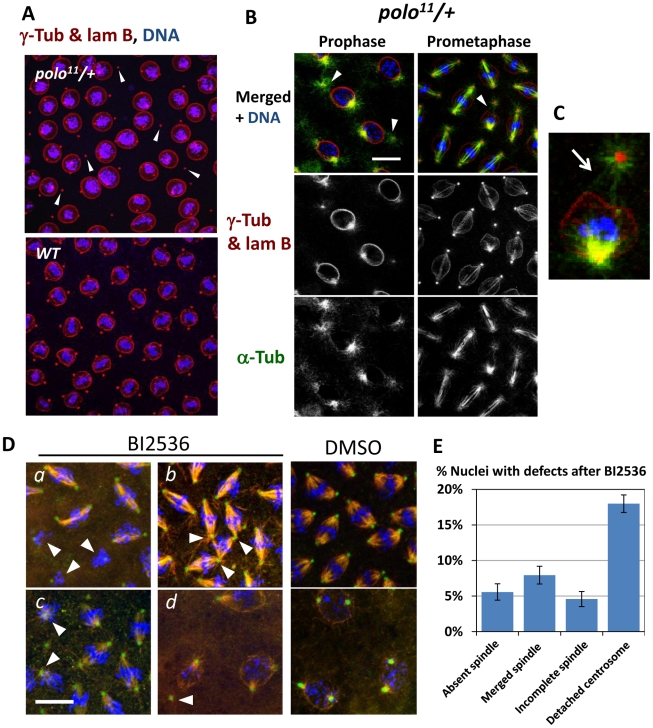
Figure 1
Figure 1. The Polo kinase is required for proper centrosome attachment to nuclei in syncytial embryos.
A, B. Centrosome detachments observed in prophase in embryos from polo11/+ mothers (arrowheads). B. Embryos from polo11/+ mothers. Left: detachments in prophase; Right: example of a detachment that persists in prometaphase. C. Enlargement from the prometaphase image in B. Arrow: MTs from the detached centrosome fail to penetrate the nuclear envelope. D. Chemical inhibition of Polo results in centrosome detachments and spindle defects consistent with known Polo functions: a: absent spindles; b: fused spindles; c: incomplete spindles; d: detached centrosomes. Embryos were treated with 1 µM BI2536 for 30 min to inhibit Polo. Red: α-Tubulin; Green: γ-Tubulin, Blue: DNA. E. Quantification of the observed defects. N = 19 embryos; Error bars: S.E.M. The frequency of all scored defects in control embryos (DMSO only) was less than 1% (N = 8). Scale bars: 10 µm.
Figure 2
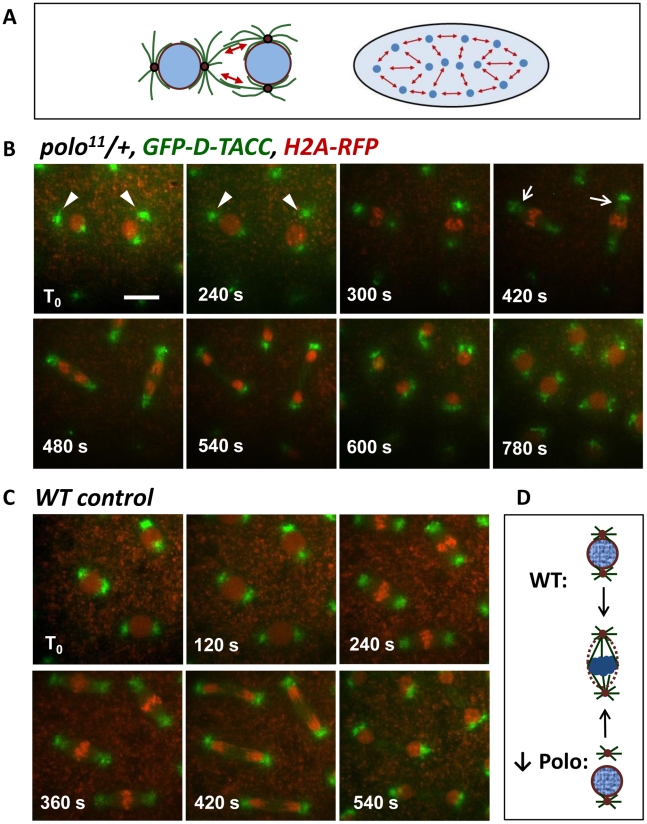
Figure 2. Detached centrosomes from nuclei can be recaptured by the mitotic spindles.
A. During syncytial divisions, nuclei are linked by anti-parallel astral MTs (left), which push nuclei apart (red arrows) and towards the cortex (right). B. Time-lapse imaging of embryos from polo11/+ mothers and expressing GFP-D-TACC to mark centrosomes and spindles and H2A-RFP to mark the chromatin. At T0, detached centrosomes (arrowheads) are clearly away from the nuclei. At 420 s, detached centrosomes are recaptured (arrows) and nuclear division is completed normally. Scale bar: 10 µm. C. Time-lapse imaging of a WT embryo as a control. D. Schematic illustration of a nuclear division in an embryo with reduced Polo levels, vs a normal, WT embryo. Centrosome detachment in the Polo-compromised embryo is only transient.
Figure 3
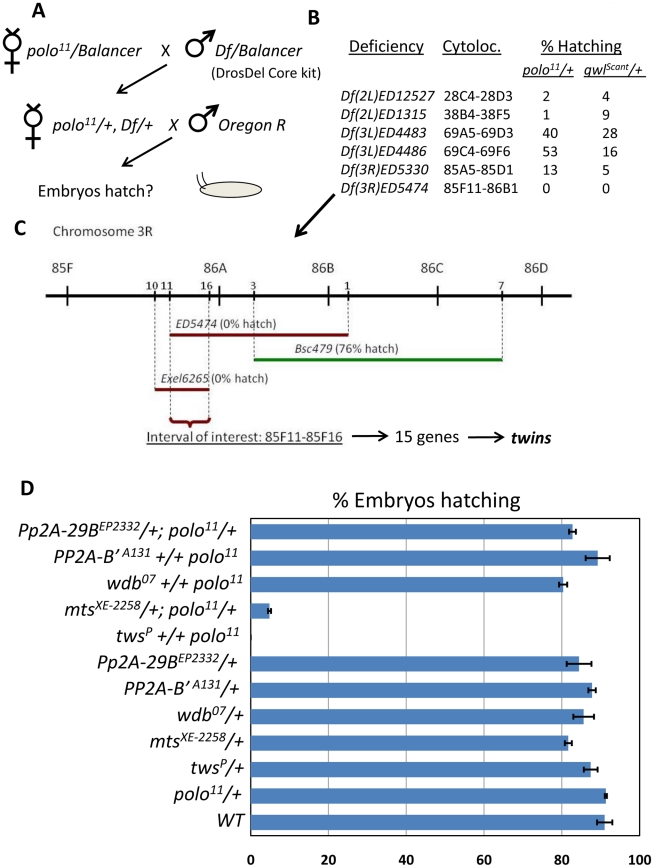
Figure 3. A screen for genes functioning with polo identifies the PP2A subunit genes twins and microtubule star.
A. Genetic scheme of the screen. Deficiencies of the DrosDel Core kit were combined with one allele of polo11. Doubly heterozygous females were taken and their embryos were tested for the ability to hatch. A similar screen was performed with gwlScant instead of polo11. B. Deficiencies obtained that yielded less than 50% embryo hatching in the screen when combined with polo11 or gwlScant. For each deficiency, the cytolocation and the percentages of embryos hatching obtained in the screen are indicated. C. Identification of twins (tws) as a genetic interactor. Testing deficiencies overlapping with Df(3R)ED5474 for their effect on embryo hatching when introduced in the maternal polo11/+ background allowed to restrict the interval of interest to 15 genes which included twins. D. polo genetically interacts specifically with tws and mts. Percentage of embryos hatching for the indicated maternal genotypes. N = 4; error bars: S.E.M.).
Figure 4
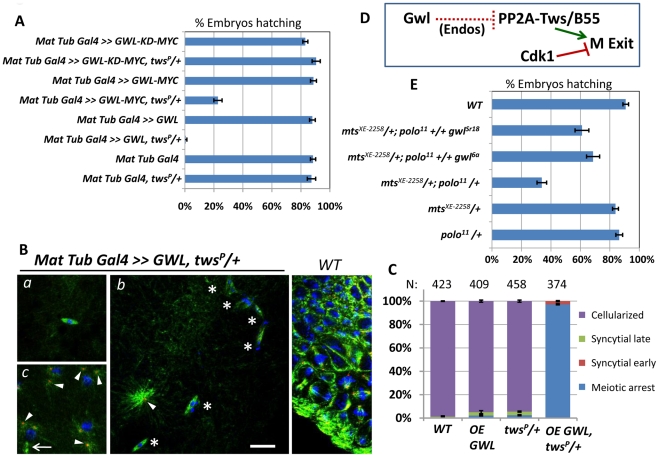
Figure 4. Greatwall antagonizes PP2A-Tws in meiosis and mitosis.
A. Overexpression of Gwl in the embryo with reduced dosage of Tws leads to a failure to hatch. This effect is dependent on the kinase activity of Gwl (KD: Kinase-dead). Results shown for the transgenic genotypes combine values obtained for 2 independent transgenic lines. N = 5; Error bars: S.E.M. B. Examples of embryos between 4 to 6 hrs post-laying. WT embryos are cellularized by that time (right). a: Most embryos overexpressing Gwl and with reduced Tws fail to exit metaphase of meiosis I, where a single acentrosomal meiotic spindle is observed. b: Some embryos attempt mitotic cycles and are mostly blocked with multiple aberrant structures, containing condensed chromatin and MTs (asterisks). c: mitotic divisions in karyokinesis (rarely seen). Note the presence of a central spindle (arrow). Centrosomes are detached from nuclei (b, c; arrowheads). Scale bar: 10 µm. C. Quantitation of the different stages observed for the indicated genotypes in embryos 4 to 6 hours post-laying. OE GWL: Overexpression of UASp-GWL. The number of eggs/embryos examined is indicated above each column. Error bars: S.E.M. D. Model: Greatwall antagonizes PP2A-Tws to prevent M-phase exit (see text for discussion). E. Halving the amount of Gwl in embryos from mothers heterozygous for both polo11 and mts XE-2258 mutations partially rescues their ability to hatch. N = 4; Error bars: S.E.M.
Figure 5
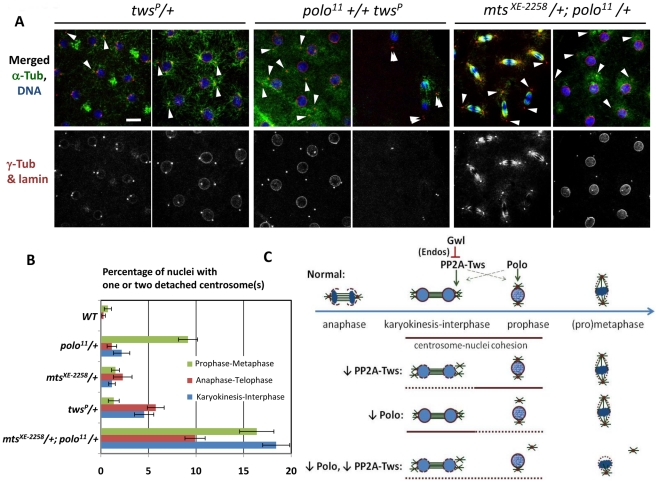
Figure 5. PP2A-Tws collaborates with Polo to promote cell cycle progression and centrosome cohesion to nuclei.
A. Images of embryos from mothers of the indicated genotypes. Left: Reduced levels of Tws lead to centrosome detachments in late M-phase that can persist in interphase. Middle and right: reducing both Polo and Mts or Tws strongly enhances centrosome detachments. Scale bar: 10 µm. B. Quantitation of centrosome detachments at different cell cycle stages for the indicated genotypes. Between 5 and 18 embryos were scored for each category. Error bars: S.E.M. C. Model: Polo and PP2A-Tws collaborate to ensure centrosome attachment during the syncytial cell cycles. See text for details.

Comment in

References

    1. Morgan DO. London: New Science Press; 2007. The Cell Cycle: Principles of Control.297
    1. Archambault V, Glover DM. Polo-like kinases: conservation and divergence in their functions and regulation. Nat Rev Mol Cell Biol. 2009;10:265–275. - PubMed
    1. Carmena M, Ruchaud S, Earnshaw WC. Making the Auroras glow: regulation of Aurora A and B kinase function by interacting proteins. Curr Opin Cell Biol. 2009;21:796–805. - PMC - PubMed
    1. Bloom J, Cross FR. Multiple levels of cyclin specificity in cell-cycle control. Nat Rev Mol Cell Biol. 2007;8:149–160. - PubMed
    1. Trinkle-Mulcahy L, Lamond AI. Mitotic phosphatases: no longer silent partners. Curr Opin Cell Biol. 2006;18:623–631. - PubMed

Publication types

MeSH terms

Substances

LinkOut - more resources