Do defense styles of ego relate to volumes of orbito-frontal cortex in patients with obsessive-compulsive disorder?
- PMID: 21852988
- PMCID: PMC3149106
- DOI: 10.4306/pi.2011.8.2.123
Do defense styles of ego relate to volumes of orbito-frontal cortex in patients with obsessive-compulsive disorder?
Abstract
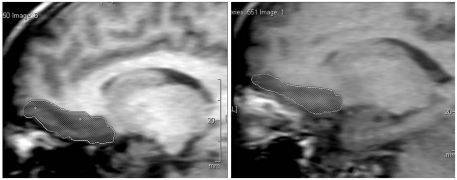
Objective: Although the importance of orbito-frontal cortex (OFC) is established in the pathogenesis of obsessive compulsive disorder (OCD), no study have evaluated its relation to the traditional psychodynamic perspective. In the present study, we aimed to evaluate the relationship between the defense styles consisting of mature, immature and neurotic defenses and OFC volumes of patients with OCD.
Methods: Subjects were selected among those of our previous study, and so eighteen patients with OCD and same number of healthy controls were took into the study. The patients and controls had underwent magnetic resonance imaging (MRI). In addition, the Defense Style Questionnaire-40 was administered to obtain defense styles of patients and controls.
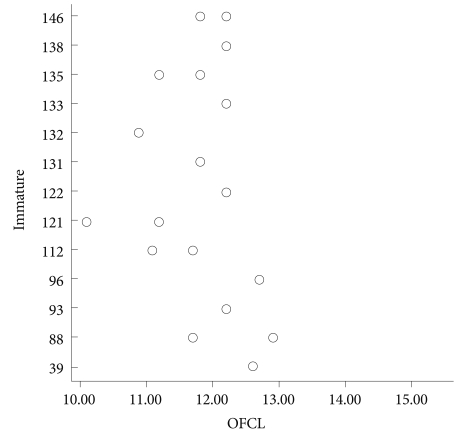
Results: No significant relationship was found between the right OFC volumes of both the patient and control groups and their scores of mature, neurotic, or immature defense mechanisms. As for the left OFC volumes, the only significant relationship for the scores of immature defense mechanism was found in the patient group.
Conclusion: The results of the present study indicated that there was no significant relationship between OFC volumes of the patient group and their scores of mature, neurotic, or immature defense mechanisms, except a significant relation with the scores of immature defense mechanisms.
Keywords: Defense syles; MRI; OCD; OFC.
Figures
References
-
- Stein DJ, Goodman WK, Rauch SL. The cognitive-affective neuroscience of obsessive-compulsive disorder. Curr Psychiatry Rep. 2000;2:341–346. - PubMed
-
- Insel TR. Toward a neuroanatomy of obsessive-compulsive disorder. Arch Gen Psychiatry. 1992;49:739–744. - PubMed
-
- Scarone S, Colombo C, Livian S, Abbruzzese M, Ronchi P, Locatelli M, et al. Increased right caudate nucleus size in obsessive-compulsive disorder: detection with magnetic resonance imaging. Psychiatry Res. 1992;45:115–121. - PubMed
-
- Robinson D, Wu H, Munne RA, Ashtari M, Alvir JM, Lerner G, et al. Reduced caudate nucleus volume in obsessive-compulsive disorder. Arch Gen Psychiatry. 1995;52:393–398. - PubMed
-
- Szeszko PR, Robinson D, Alvir JM, Bilder RM, Lencz T, Ashtari M, et al. Orbital frontal and amygdala volume reductions in obsessive-compulsive disorder. Arch Gen Psychiatry. 1999;56:913–919. - PubMed
LinkOut - more resources
Full Text Sources