. 2011;6(8):e23256.
doi: 10.1371/journal.pone.0023256. Epub 2011 Aug 10.

BTZO-15, an ARE-activator, ameliorates DSS- and TNBS-induced colitis in rats

Affiliations

BTZO-15, an ARE-activator, ameliorates DSS- and TNBS-induced colitis in rats

Hiroshi Yukitake et al. PLoS One. 2011.

Abstract

Inflammatory bowel disease (IBD) is a group of chronic inflammatory disorders that are primarily represented by ulcerative colitis and Crohn's disease. The etiology of IBD is not well understood; however, oxidative stress is considered a potential etiological and/or triggering factor for IBD. We have recently reported the identification of BTZO-1, an activator of antioxidant response element (ARE)-mediated gene expression, which protects cardiomyocytes from oxidative stress-induced insults. Here we describe the potential of BTZO-15, an active BTZO-1 derivative for ARE-activation with a favorable ADME-Tox profile, for the treatment of IBD. BTZO-15 induced expression of heme oxygenase-1 (HO-1), an ARE-regulated cytoprotective protein, and inhibited NO-induced cell death in IEC-18 cells. Large intestine shortening, rectum weight gain, diarrhea, intestinal bleeding, and an increase in rectal myeloperoxidase (MPO) activity were observed in a dextran sulfate sodium (DSS)-induced colitis rat model. Oral administration of BTZO-15 induced HO-1 expression in the rectum and attenuated DSS-induced changes. Furthermore BTZO-15 reduced the ulcerated area and rectal MPO activity in 2,4,6-trinitrobenzene sulfonic acid (TNBS)-induced colitis rats without affecting rectal TNF-α levels. These results suggest that BTZO-15 is a promising compound for a novel IBD therapeutic drug with ARE activation properties.


Conflict of interest statement

Competing Interests: The authors are/were employees of Takeda Pharmaceutical Company Limited. This does not alter the authors' adherence to all the Plos One policies.

Figures

Figure 1
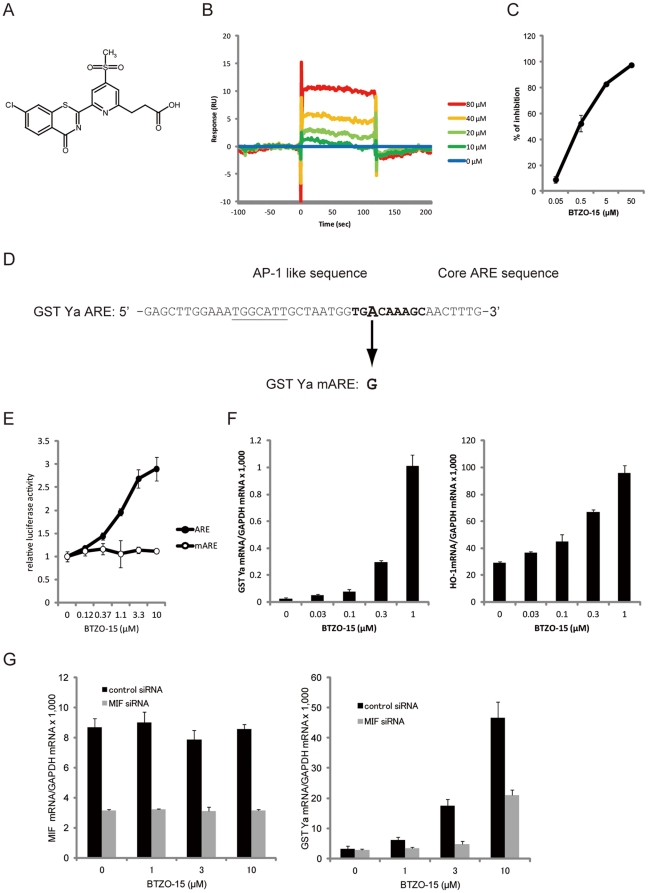
Figure 1. BTZO-15 activates the GST Ya ARE by interacting with MIF.
(A) Chemical structures of BTZO-15. (B) Sensorgram showing binding of BTZO-15 to immobilized hMIF on a CM5 sensor chip using an SPR biosensor. (C) Displacement studies with BTZO-15 by the SPA showing inhibition of BTZO-1 binding to captured rMIF on SPA beads. Results shown are the mean ± SD, n = 3. (D) Nucleotide sequence of the rat GST Ya ARE. The core ARE sequence is indicated by the nucleotides in boldface type. (E) Reporter gene assays showing the effect of BTZO-15 on ARE activity. H9c2 cells transiently transfected with either pGL3-ARE-Luc or pGL3-mARE-Luc reporter plasmids were treated with the indicated concentrations of BTZO-15 for 24 h and luciferase activities were measured. Results shown are the mean ± SD, n = 3. (F) BTZO-15 induced ARE-regulated cytoprotective proteins in H9c2 cells. The cells were treated with the indicated concentrations of BTZO-15 for 6 h (HO-1) or 21 h (GST Ya). HO-1 mRNA levels were measured by real-time PCR and normalized by GAPDH mRNA. Results shown are the mean ± SD, n = 3. (G) Effects of reducing the cellular MIF protein level on BTZO-15-induced GST Ya and HO-1 gene expression in H9c2 cells. H9c2 cells transfected with control siRNA (control siRNA) or siRNAs directed against rMIF (MIF siRNA) were treated with 3 µM BTZO-15 with or without 0.8 µM rMIF for 24 h. Messenger RNA levels of MIF, GST Ya, and HO-1 were measured by real-time PCR. MIF protein level in cell lysates was measured by ELISA.
Figure 2
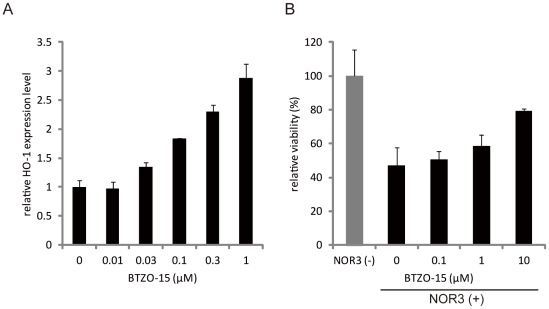
Figure 2. BTZO-15 increases HO-1 mRNA levels and suppresses NO-induced cell death in IEC-18 cells.
(A) Real-time PCR expression analysis showing the effects of BTZO-15 on the induction of HO-1 mRNA in IEC-18 cells. The cells were treated with the indicated concentrations of BTZO-15 for 24 h. HO-1 mRNA levels were measured by real-time PCR and normalized by GAPDH mRNA. Results shown are the mean ± SD, n = 3. (B) Cell death inhibitory activity of BTZO-15 in IEC-18 cells. The cells were cultured in the presence of either vehicle or the indicated concentrations of BTZO-15 in serum free medium for 1 h. The cells were then treated with 130 µM NOR3 and cultured for 24 h. Cell viability was determined using the WST-8 cell respiratory assay. The experimental value for cell death inhibitory activities is expressed as relative viability and is the mean ± SD, n = 3.
Figure 3
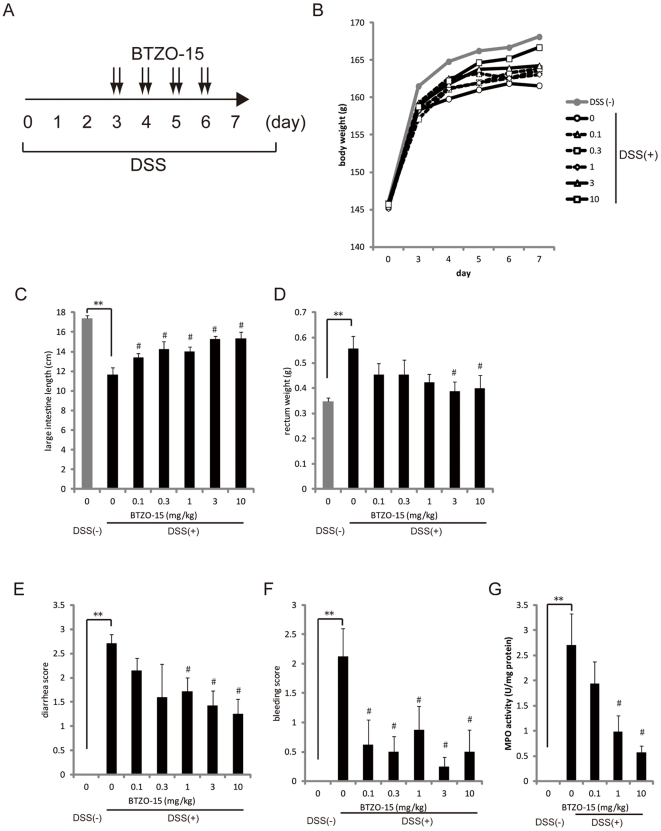
Figure 3. BTZO-15 ameliorates DSS-induced colitis in rats.
Colitis was induced in male F344/Du rats by daily treatment with 2.3% DSS solution in drinking water for 7 days. BTZO-15 was orally administered to rats at the indicated doses of 0.1, 0.3, 1, 3, and 10 mg/kg (b.i.d.) for 4 days from experimental day 3 to 6 (A). Body weight (B) was measured every day. At experimental day 7, the rats were sacrificed, and large intestine length (C), rectum weight (D), diarrhea score (E), bleeding score (F), and MPO activity (G) underwent a double blind evaluation. All data except body weight shown are mean ± S.E.M. Body weight data shown are means, n = 8. ** P≤0.01: compared the DSS (−) vehicle control group with DSS (+) vehicle control group using Student's t test, and # P≤0.025: compared the DSS (+) vehicle control group with DSS (+) + BTZO-15 treated groups by one-tailed Williams's test (C and D). **P≤0.01: compared the DSS (−) vehicle control group with DSS (+) vehicle control group using Wilcoxon test, and # P≤0.025: compared the DSS (+) vehicle control group with DSS (+) + BTZO-15 treated groups by one-tailed Shirley-Williams test (E and F). ** P≤0.01: compared the DSS (−) vehicle control group with DSS (+) vehicle control group with Aspin-Welch test, and # P≤0.025: compared the DSS (+) vehicle control group with DSS (+) + BTZO-15 treated groups with one-tailed Williams's test (G).
Figure 4
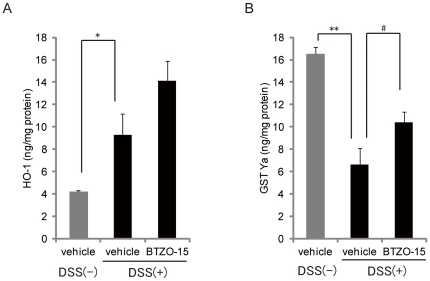
Figure 4. BTZO-15 induces HO-1 and GST Ya protein expression in the rectum of rats with DSS-induced colitis.
Colitis was induced in rats by daily treatment with 2.3% DSS solution in drinking water for 7 days. During this period, the rats were orally administered BTZO-15 (3 mg/kg, b.i.d.) or vehicle (0.5% MC). Rectal HO-1 (A) and GST-Ya (B) protein expression was assessed after excision and homogenization in PBS supplemented with 0.1% NP-40. The amount of GST Ya and HO-1 protein was quantified using ELISA. Results shown are the mean ± S.E.M, n = 8. * P≤0.05: compared the DSS (−) vehicle control group with DSS (+) vehicle control group using Aspin-Welch test. # P≤0.05: compared the DSS (+) vehicle control group with DSS (+) + BTZO-15 treated groups with Student's t test.
Figure 5
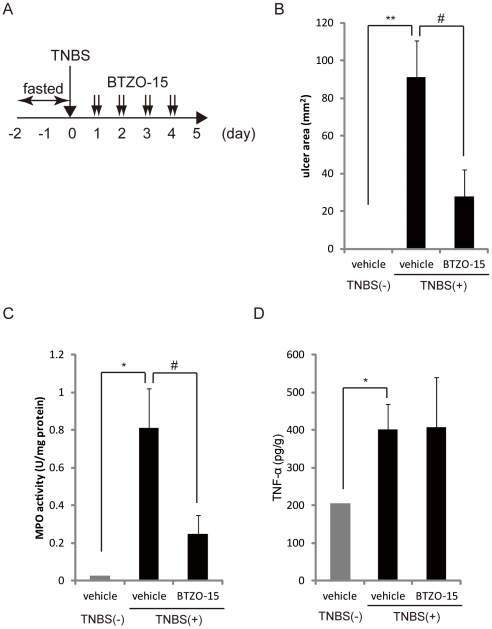
Figure 5. BTZO-15 ameliorates TNBS-induced colitis in rats.
Colitis was induced in male F344/Du rats by topical intracolonic application of a TNBS solution. BTZO-15 was orally administered to rats at the indicated doses of 10 mg/kg (b.i.d.) for 4 days from experimental day 1 to 4 (A). The efficacy of BTZO-15 was evaluated using the size of the rectal ulcer (B), MPO activity (C), and TNF-α level in rectum. Results shown are the mean ± S.E.M. TNBS-treated group, n = 6; TNBS untreated group, n = 2. ** P≤0.01: compared the DSS (−) vehicle control group with DSS (+) vehicle control group by Aspin-Welch test, and # P≤0.05 compared the DSS (+) vehicle control group with DSS (+) + BTZO-15 treated groups with Student's t test (B). * P≤0.05: compared the DSS (−) vehicle control group with DSS (+) vehicle control group using Aspin-Welch test, and # P≤0.05 compared the DSS (+) vehicle control group with DSS (+) + BTZO-15 treated groups by Aspin-Welch test (C and D).

References

    1. Sands BE. Inflammatory bowel disease: past, present, and future. J Gastroenterol. 2007;42:16–25. - PMC - PubMed
    1. Rosenberg LN, Peppercorn MA. Efficacy and safety of drugs for ulcerative colitis. Expert Opin Drug Saf. 2010;9:573–592. - PubMed
    1. Vijayan V, Mueller S, Baumgart-Vogt E, Immenschuh S. Heme oxygenase-1 as a therapeutic target in inflammatory disorders of the gastrointestinal tract. World J Gastroenterol. 2010;16:3112–3119. - PMC - PubMed
    1. Damiani CR, Benetton CA, Stoffel C, Bardini KC, Cardoso VH, et al. Oxidative stress and metabolism in animal model of colitis induced by dextran sulfate sodium. J Gastroenterol Hepatol. 2007;22:1846–1851. - PubMed
    1. Dryden GW, Jr, Deaciuc I, Arteel G, McClain CJ. Clinical implications of oxidative stress and antioxidant therapy. Curr Gastroenterol Rep. 2005;7:308–316. - PubMed

Publication types

MeSH terms