Review
. 2012 Jan-Feb;4(1):1-14.
doi: 10.1002/wsbm.158. Epub 2011 Aug 18.

Integrative physical oncology

Affiliations
Review

Integrative physical oncology

Haralampos Hatzikirou et al. Wiley Interdiscip Rev Syst Biol Med. 2012 Jan-Feb.

Abstract

Cancer is arguably the ultimate complex biological system. Solid tumors are microstructured soft matter that evolves as a consequence of spatio-temporal events at the intracellular (e.g., signaling pathways, macromolecular trafficking), intercellular (e.g., cell-cell adhesion/communication), and tissue (e.g., cell-extracellular matrix interactions, mechanical forces) scales. To gain insight, tumor and developmental biologists have gathered a wealth of molecular, cellular, and genetic data, including immunohistochemical measurements of cell type-specific division and death rates, lineage tracing, and gain-of-function/loss-of-function mutational analyses. These data are empirically extrapolated to a diagnosis/prognosis of tissue-scale behavior, e.g., for clinical decision. Integrative physical oncology (IPO) is the science that develops physically consistent mathematical approaches to address the significant challenge of bridging the nano (nm)-micro (µm) to macro (mm, cm) scales with respect to tumor development and progression. In the current literature, such approaches are referred to as multiscale modeling. In the present article, we attempt to assess recent modeling approaches on each separate scale and critically evaluate the current 'hybrid-multiscale' models used to investigate tumor growth in the context of brain and breast cancers. Finally, we provide our perspective on the further development and the impact of IPO.


Figures

Fig. 1
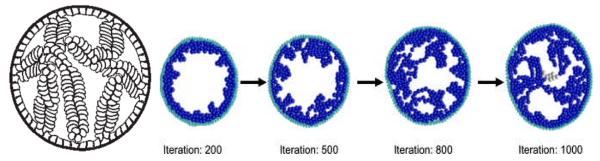
Fig. 1. Mathematical modeling of complex DCIS microstructures
(Left) An immersed boundary model produced micropapillary-like DCIS structures when cell polarization was assumed. Reproduced by permission from (45). (Right) An agent-based model predicted that polarized DCIS cells form micropapillary structures (iterations 200 and 500) that merge into cribriform -like structures (iterations 800 and onward). Reproduced by permission from (46).
Fig. 2
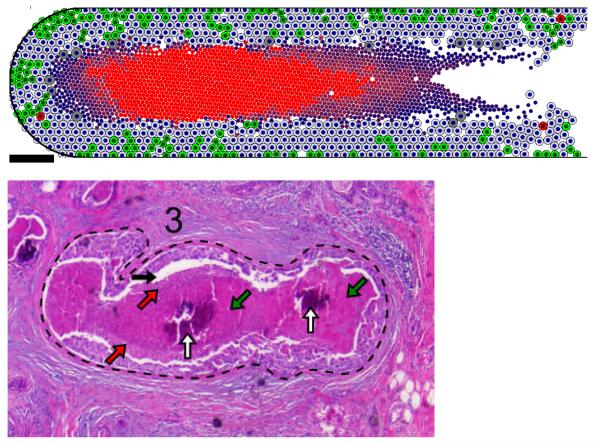
Fig. 2. Patient-calibrated DCIS simulation
(Top): After calibration to patient immunohistochemistry and morphometric measurements, an agent model correctly reproduced the solid-type DCIS microstructure: an 80 μm viable rim with most frequent proliferation (green cells) on the outermost edge and apoptosis (red cells) throughout, a mechanical separation at the perinecrotic boundary, and an “age-structured” necrotic core with increasing pyknosis (nuclear degradation) and calcification (progression indicated by the shade of red) towards the duct center. The bright red central region is a radiologically detectable casting-type microcalcification. (Bottom): These features are seen in patient hematoxylin and eosin stained histopathology, including the mechanical gap (black arrows; increased by tissue dehydration), increasing pyknosis towards the duct center (red arrows show more intact nuclei; green arrows show largely degraded nuclei), and central calcium phosphate microcalcifications (white arrows). Adapted with permission from (36).
Fig. 3
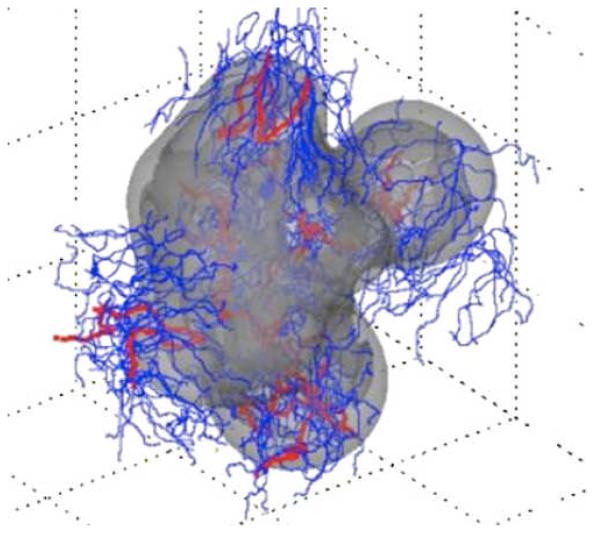
Fig. 3. 3D computer model predicts gross morphologic features of a growing glioblastoma
Viable (light gray) and necrotic (dark gray) tissue regions and vasculature (mature blood-conducting vessels in red; new non-conducting vessels in blue) are shown. The simulations reveal that the morphology is affected by neovascularization, vasculature maturation, and vessel cooption. Adapted with permission from (67).
Fig. 4
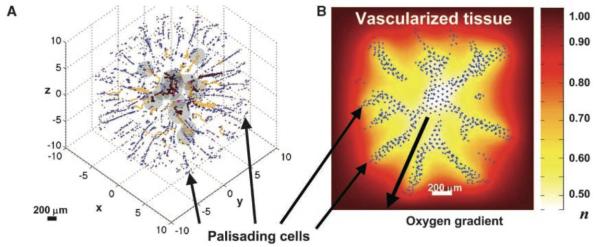
Fig. 4. Individual (discrete) palisading glial cells invasion into vascularized tissue
(A) Computer simulation from a hybrid-multiscale model showing palisading cells escaping from the perinecrotic region (dark gray) by up-regulating motility and down-regulating adhesion and proliferation. This phenotypic change is driven by hypoxia as the selective evolutionary force (see discussion section). Cell migration occurs via chemotaxis and haptotaxis in response to gradients of oxygen and ECM concentration, respectively. Brown: conducting vessels; yellow: non-conducting. (B) Background shows distribution of oxygen concentration (n=1 in vascularized tissue and n<1 in the tumor white/yellow perinecrotic region). Adapted with permission from (71).
Figure 5
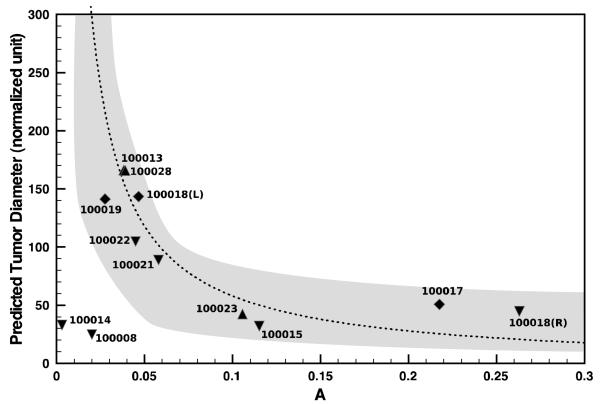
Figure 5. Validation of model predictions against pathology-determined DCIS tumor sizes
Surgical tumor size vs. parameter A that is related to the ratio of tumor apoptotic and mitotic indices in the breast ducts. The dotted curve represents the theoretical predictions by a continuum model. Symbols are DCIS tumor size measurements from individual patient histopathology and are sub-classified by their grade. The shaded region indicates the standard deviation in the measurement of A in individual duct. Reproduced from (35) with permission.

References

    1. Kleihues P, Burger PC, Scheithauer BW. The new WHO classification of brain tumours. Brain Pathol. 1993;3(3):255–68. - PubMed
    1. Cunliffe CH, Fischer I, Parag Y, Fowkes ME. State-of-the-art pathology: new WHO classification, implications, and new developments. Neuroimaging Clin N Am. 2010;20(3):259–71. - PubMed
    1. Diab SG, Clark GM, Osborne CK, Libby A, Allred DC, Elledge RM. Tumor Characteristics and Clinical Outcome of Tubular and Mucinous Breast Carcinomas. Journal of Clinical Oncology. 1999;17(5):1442–8. - PubMed
    1. O’Brien KM, Cole SR, Tse C-K, Perou CM, Carey LA, Foulkes WD, et al. Intrinsic breast tumor subtypes, race, and long-term survival in the Carolina breast cancer study. Clinical Cancer Research. 2010;16(24):6100–10. - PMC - PubMed
    1. Prat A, Parker J, Karginova O, Fan C, Livasy C, Herschkowitz J, et al. Phenotypic and molecular characterization of the claudin-low intrinsic subtype of breast cancer. Breast Cancer Research. 2010;12(5):R68. - PMC - PubMed

Publication types