. 2011 Aug 19;43(4):599-612.
doi: 10.1016/j.molcel.2011.05.036.

Ube2w and ataxin-3 coordinately regulate the ubiquitin ligase CHIP

Affiliations

Ube2w and ataxin-3 coordinately regulate the ubiquitin ligase CHIP

K Matthew Scaglione et al. Mol Cell. .

Abstract

The mechanisms by which ubiquitin ligases are regulated remain poorly understood. Here we describe a series of molecular events that coordinately regulate CHIP, a neuroprotective E3 implicated in protein quality control. Through their opposing activities, the initiator E2, Ube2w, and the specialized deubiquitinating enzyme (DUB), ataxin-3, participate in initiating, regulating, and terminating the CHIP ubiquitination cycle. Monoubiquitination of CHIP by Ube2w stabilizes the interaction between CHIP and ataxin-3, which through its DUB activity limits the length of chains attached to CHIP substrates. Upon completion of substrate ubiquitination, ataxin-3 deubiquitinates CHIP, effectively terminating the reaction. Our results suggest that functional pairing of E3s with ataxin-3 or similar DUBs represents an important point of regulation in ubiquitin-dependent protein quality control. In addition, the results shed light on disease pathogenesis in SCA3, a neurodegenerative disorder caused by polyglutamine expansion in ataxin-3.


Figures

Figure 1
Figure 1. Ube2w monoubiquitinates CHIP
(A) CHIP is mono-ubiquitinated in cells. FlagCHIP and HAUb were expressed in 293 cells and immunoprecipitated using anti-FLAG resin under stringent conditions. Cells expressing only HAUb were used as a negative control. (B) MG132 treatment increases the levels of Ub-CHIP. HEK293 cells were transfected with CHIP for 24 hours prior to addition of 30µM MG132 for either 1, 3, or 6 hours. Shown is a representative blot (n=3). (C) Thermal stress increases the levels of Ub-CHIP. HEK293 cells were transfected with CHIP for 24 hours prior to transfer of the cells to 41°C for either 1, 2, or 3 hours. Shown is a representative blot (n=3). (D) Ube2w rapidly and quantitatively monoubiquitinates CHIP. Ubiquitination reactions were performed for the indicated times with each E2 found to ubiquitinate CHIP (see figure S1). Assays were repeated three times with nearly identical results. (E) RNAi knockdown of Ube2w levels decreases ubiquitination of CHIP. HEK293 cells were transfected with FlagCHIP and shRNA vector targeting Ube2w or scrambled sequence (as negative control), then analyzed by western blot and quantified (n=3, *p =0.036). Error bars indicate Standard Error of the Mean (SEM). (F) Coexpression of Ube2w increases ubiquitination of CHIP in vivo. COS-7 cells were transfected with FlagCHIP and either Ube2w or Skp1 (as negative control) then analyzed by western blot and quantified by densitometry (n=3, **p = 0.0033). Error bars indicate SEM.
Figure 2
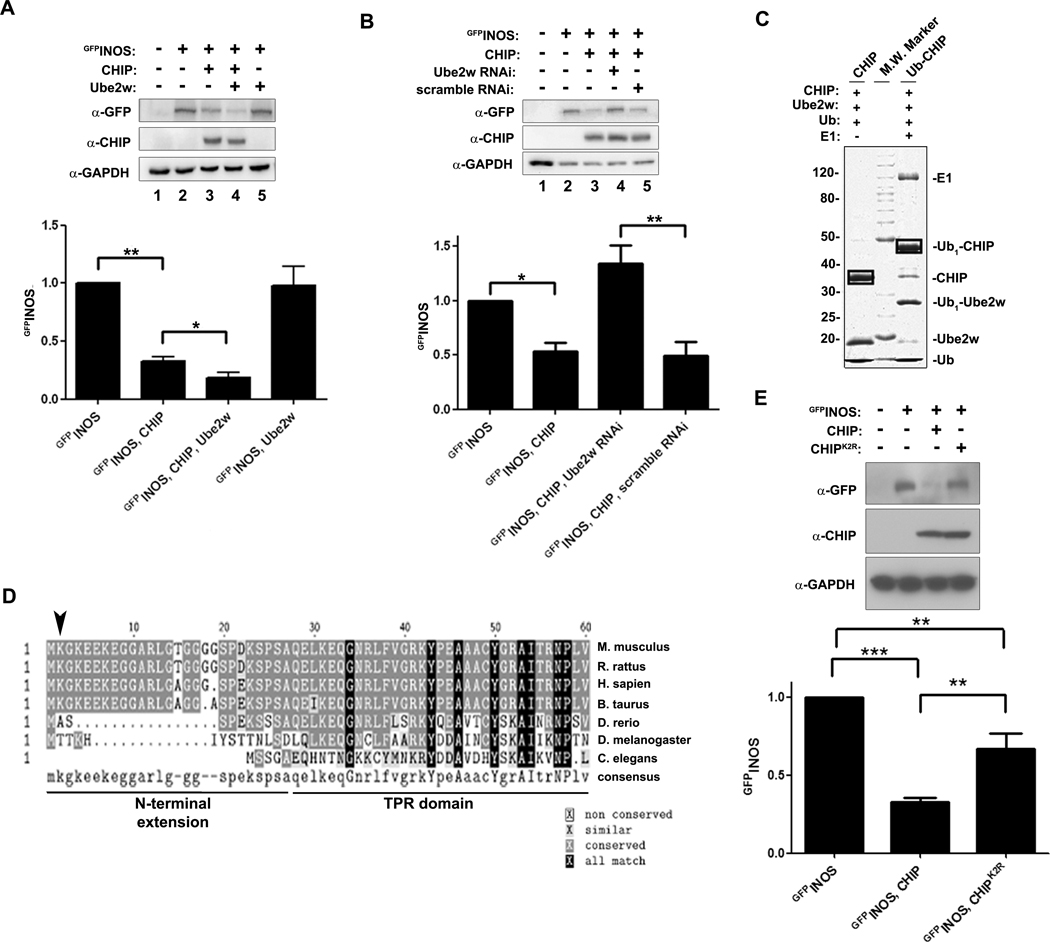
Figure 2. Ubiquitination of CHIP by Ube2w regulates CHIP function
(A) Ube2w enhances CHIP’s ability to reduce cellular levels of a known CHIP substrate, INOS. Combinations of GFPINOS, CHIP and Ube2w were expressed in COS-7 cells by transfection. Coexpression of Ube2w enhances CHIP-mediated reduction of steady state levels of GFPINOS, whereas expression of Ube2w alone has no effect (n=3, *p < 0.05, **p < 0.005). Error bars indicate SEM. (B) RNAi knockdown of Ube2w increases levels of GFPINOS even when CHIP is overexpressed. HEK293 cells were transfected with combinations of GFPINOS, CHIP and vectors expressing shRNA against Ube2w or scrambled shRNA (n=3, *p < 0.05, **p < 0.005). Error bars indicate SEM. (C) In vitro ubiquitination of CHIP by Ube2w generates a single band corresponding to monoubiquitinated CHIP, which is absent in a control reaction lacking E1. Mass spectrometry identified K2 as the sole modified lysine on Ub-CHIP (see Fig S2). (D) The ubiquitinated lysine on CHIP, K2, is conserved in mammals but is absent in zebrafish and invertebrate species. The N-terminal sequences of CHIP orthologues were aligned using CLUSTAL-W (biology workbench); arrowhead indicates K2. (E) K2 is important for CHIP function in vivo. HEK293 cells were transfected to express GFPINOS alone or together with CHIP or CHIPK2R. Coexpressed CHIPK2R is less effective than wild type CHIP in decreasing steady state levels of GFPINOS (n=4, **p value <0.005, ***p value < 0.0005). Error bars indicate SEM.
Figure 3
Figure 3. Ubiquitination of CHIP enhances its interaction with the DUB ataxin-3
(A) CHIP and ataxin-3 interact in vivo. HEK293 cells co-transfected with FLAG-tagged ataxin-3 and untagged CHIP constructs were lysed 48 hours after transfection, and immunoprecipitated with anti-FLAG beads. (B) Mono-ubiquitination of CHIP stabilizes the interaction between CHIP and two unrelated UIM proteins, S5a and ataxin-3. Pull-downs of recombinant S5a or ataxin-3 were performed using empty beads, CHIP beads or Ub-CHIP beads, then analyzed by western blot. (C, D) Octet RED quantitative binding analyses of the interaction of ataxin-3 with CHIP (C) or Ub-CHIP (D). Biotinylated CHIP or Ub-CHIP was immobilized to streptavidin coated sensors and association and dissociation of ataxin-3 was monitored (KD =2.2 µM for CHIP, and KD =0.12 µM for Ub-CHIP).
Figure 4
Figure 4. Ataxin-3 limits polyubiquitin chain length on CHIP substrates
(A) Ataxin-3 interacts with GFPINOS. HEK293 cells were transfected with GFPINOS alone or with FLAG-tagged ataxin-3 or catalytically inactive C14Aataxin-3. Cells were lysed 48 hours after transfection and FLAG IP was performed. (B) Catalytically inactive ataxin-3 increases steady state levels of GFPINOS. COS-7 cells were transfected to express GFPINOS alone or together with ataxin-3 or C14Aataxin-3 (n=3, *p < 0.05). Error bars indicate SEM. (C) Ataxin-3 trims, but does not fully deubiquitinate, polyubiquitinated HSP90. Ubiquitination of HSP90 was carried out for 1 hour, the reaction stopped with 50mM EDTA, and ataxin-3 then added to the reaction for the indicated times. (D) When present during the ubiquitination reaction, ataxin-3 limits the length of polyubiquitin chains attached to HSP90 by CHIP. HSP90 ubiquitination reactions were performed in the presence or absence of ataxin-3 for the times indicated, with either UbcH5c as the E2 or a mutant form of UbcH5c (UbcH5cS22R) that is deficient in ubiquitin chain extension. (E) Both normal (Q22) and expanded (Q80) ataxin-3 limit polyubiquitin chain length in a manner that requires catalytic activity and ubiquitin chain binding via the UIMs; other tested DUBs had no effect on the length of chains added to substrate. Ubiquitination reactions were performed without DUB or with ataxin-3 (Q22 or Q80), C14Aataxin-3, UIM-mutated UIM1,2,3*ataxin-3, USP5, UCH-L1, or UCH-L3 for the indicated times. (F) Ataxin-3 trims polyubiquitin chains in cells. HEK293 cells were transfected with empty vector, FLAGataxin-3, or FLAGataxin-3C14A. Cells were then lysed and FLAG IP was performed. (G) Longer polyubiquitin chains compete with ataxin-3 binding to Ub-CHIP. Pull-downs of Ub-CHIP (1µm) were performed with ataxin-3 beads or empty beads as indicated, in the absence of ubiquitin or in the presence of 10µM mono-, di-, tri- or hexa-ubiquitin (all K63-linked).
Figure 5
Figure 5. Ataxin-3 deubiquitinates CHIP upon completion of substrate polyubiquitination
(A) Ataxin-3 deubiquitinates Ub-CHIP in vitro. CHIP was monoubiquitinated by Ube2w, and the reaction was stopped with 50mM EDTA. Increasing concentrations of the indicated DUBs were added and loss of Ub-CHIP over time was assessed by western blot. Representative results are shown, with the graph depicting the mean results of two experiments. The dashed line represents extrapolated data for 10µM USP5. (B) Ataxin-3 deubiquitinates Ub-CHIP during ubiquitination reactions. Ubiquitination was carried out in the absence or presence of ataxin-3 as indicated. Ub-CHIP deubiquitination by ataxin-3 correlates temporally with the appearance of ubiquitinated substrate. Polyglutamine expansion has no discernible effect on ataxin-3’s ability to deubiquitinate Ub-CHIP. UbcH5c was employed as the sole E2 in these assays, so that the temporal nature of conjugation and deconjugation of ubiquitin to CHIP could be viewed more precisely. (C) The presence of ubiquitinated substrate enhances deubiquitination of Ub-CHIP byataxin-3. HSP90 ubiquitination reactions were performed in the absence or presence of ataxin-3 and/or UbcH5c for one hour, with increasing amounts of HSP90 (0 to 1µM.) (D) Ubiquitination of substrate markedly facilitates ataxin-3 deubiquitination of Ub-CHIP. CHIP, ataxin-3, and E1mix were incubated for one hour with additional components as indicated. Western blots were performed to assess the ubiquitination state of HSP90 and CHIP. (E) The UIMs of ataxin-3 are essential for deubiquitination of Ub-CHIP. Ubiquitination reactions were performed with ataxin-3, UIM-mutated ataxin-3 (UIM 1,2,3* in which all three UIMs are mutated) or no ataxin-3. (F) Ataxin-3 catalytic activity is required for deubiquitination of Ub-CHIP. Ubiquitination reactions were performed with ataxin-3 or catalytically inactive ataxin-3C14A.
Figure 6
Figure 6. Polyglutamine expansion increases ataxin-3 affinity for CHIP and results in decreased CHIP levels in SCA3 mice
(A) Quantitative binding analysis between CHIP or Ub-CHIP and normal or expanded ataxin-3 (Q22 or Q80). Biotinylated CHIP or Ub-CHIP was immobilized to streptavidin-coated sensors and association and dissociation of ataxin-3 (Q22 or Q80) was monitored (Kd =2.2 µM for Q22 to CHIP, Kd =0.39 µM for Q80 to CHIP, and Kd=0.75 µM for Q80 to Ub-CHIP). (B) CHIP levels are decreased in SCA3 Q84.2 transgenic mouse brain. CHIP levels were assessed in whole brain lysates from 4-month-old nontransgenic or Q84.2 hemizygous transgenic mice. CHIP levels are significantly reduced in Q84.2 mice (n=3, *p = 0.0372). Error bars indicate SEM. (C) Immunohistochemistry reveals decreased brain CHIP levels in Q84.2 mice. Brains from Q84.2 hemizygous mice or nontransgenic littermates were sectioned and immunostained with CHIP antibody. DAB immunohistochemistry was carried out simultaneously and identically on sections from nontransgenic and Q84 mice. (D) CHIP levels are not altered in Atxn3 knockout mice. Whole brain lysates from 2 month old wild-type or Atxn3 knockout mice were analyzed by SDS-PAGE and western blot. Error bars indicate SEM.
Figure 7
Figure 7. Propsed model of the Ube2w/CHIP/ataxin-3 ubiquitination cycle
1. CHIP recruits misfolded proteins via heat shock proteins and directly recruits Ube2w, which in turn monoubiquitinates both CHIP and chaperone-bound substrate. 2. Ubiquitination of CHIP facilitates its interaction with ataxin-3. Ube2w ubiquitinates ataxin-3, which may stimulate ataxin-3’s DUB activity. 3. A second E2 (e.g. UbcH5) is recruited to the complex where it extends the ubiquitin chain on misfolded substrate. 4. Once the ubiquitin chain is 4 ubiquitins or longer, ataxin-3 preferentially binds the polyubiquitinated substrate. 5. When bound to polyubiquitinated substrate, ataxin-3 trims the polyubiquitin chain and/or restricts further chain extension. Upon completion of substrate ubiquitination, ataxin-3 deubiquitinates CHIP, effectively terminating the ubiquitination cycle. 6. Upon completion of CHIP deubiquitination, ataxin-3 may escort the ubiquitinated substrate to its destination, leaving CHIP free to undergo another round of substrate ubiquitination.

References

    1. Arndt V, Dick N, Tawo R, Dreiseidler M, Wenzel D, Hesse M, Furst DO, Saftig P, Saint R, Fleischmann BK, et al. Chaperone-assisted selective autophagy is essential for muscle maintenance. Curr Biol. 2010;20:143–148. - PubMed
    1. Burnett B, Li F, Pittman RN. The polyglutamine neurodegenerative protein ataxin-3 binds polyubiquitylated proteins and has ubiquitin protease activity. Hum Mol Genet. 2003;12:3195–3205. - PubMed
    1. Burnett BG, Pittman RN. The polyglutamine neurodegenerative protein ataxin 3 regulates aggresome formation. Proc Natl Acad Sci U S A. 2005;102:4330–4335. - PMC - PubMed
    1. Christensen DE, Brzovic PS, Klevit RE. E2-BRCA1 RING interactions dictate synthesis of mono- or specific polyubiquitin chain linkages. Nat Struct Mol Biol. 2007;14:941–948. - PubMed
    1. Connell P, Ballinger CA, Jiang J, Wu Y, Thompson LJ, Hohfeld J, Patterson C. The co-chaperone CHIP regulates protein triage decisions mediated by heat-shock proteins. Nat Cell Biol. 2001;3:93–96. - PubMed

Publication types

MeSH terms