


Diet-related telomere shortening and chromosome stability
- PMID: 21857007
- PMCID: PMC3241941
- DOI: 10.1093/mutage/ger056
Diet-related telomere shortening and chromosome stability
Abstract
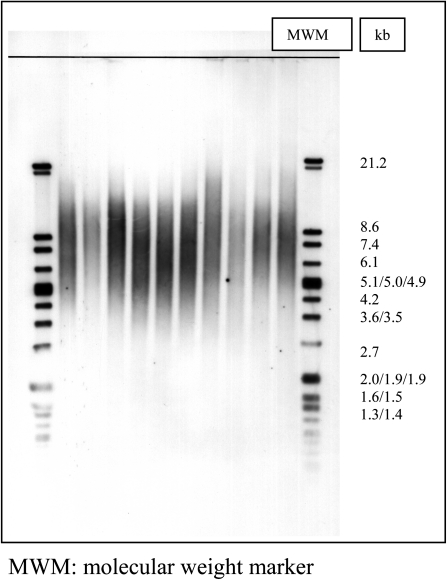
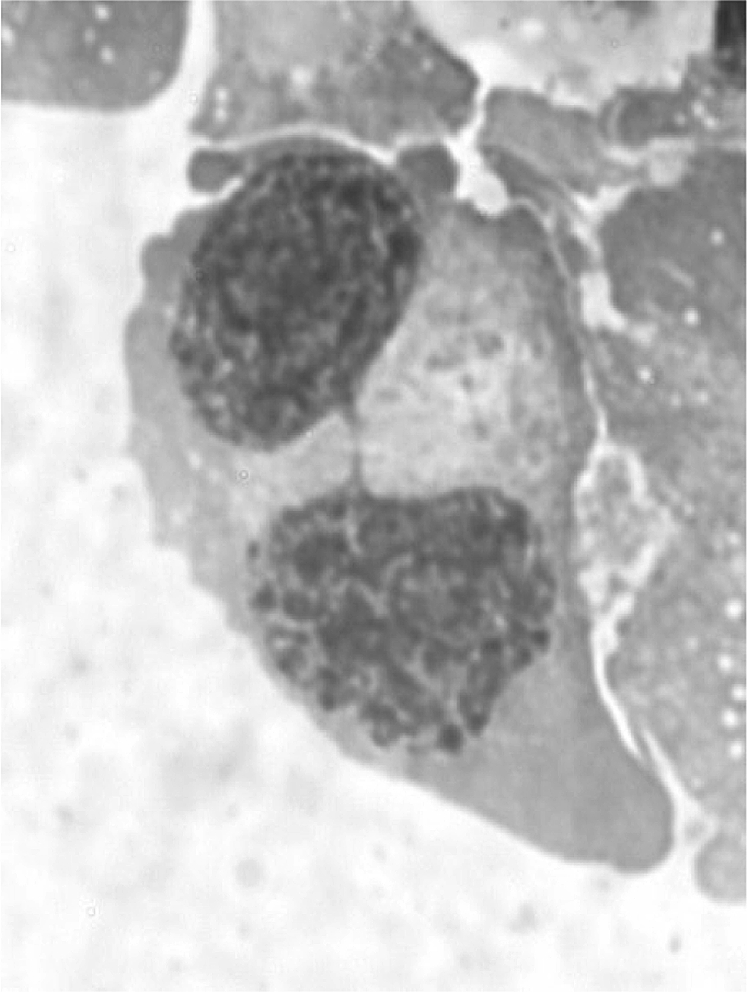
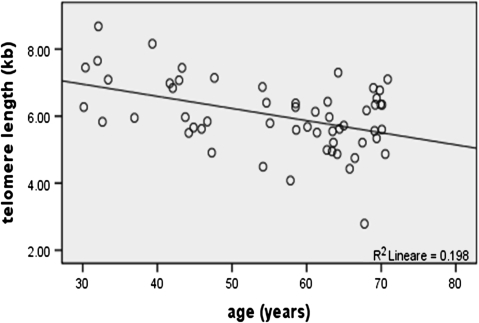
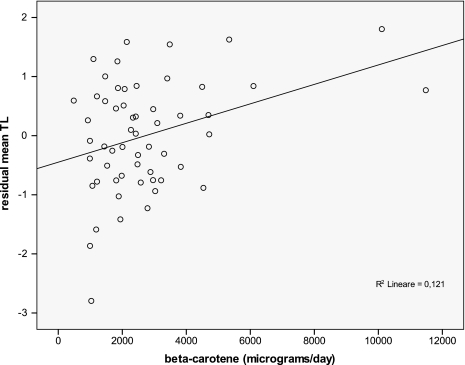
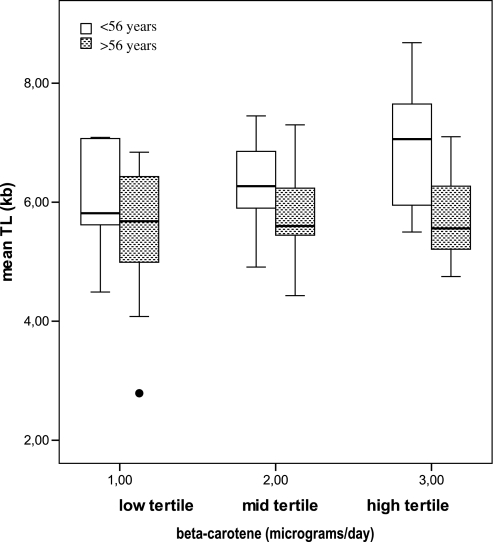
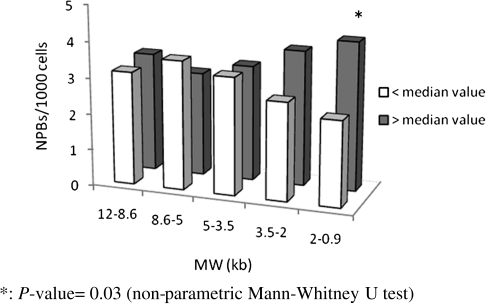
Recent evidences have highlighted an influence of micronutrients in the maintenance of telomere length (TL). In order to explore whether diet-related telomere shortening had any physiological relevance and was accompanied by significant damage in the genome, in the present study, TL was assessed by terminal restriction fragment (TRF) analysis in peripheral blood lymphocytes of 56 healthy subjects for which detailed information on dietary habits was available and data were compared \with the incidence of nucleoplasmic bridges (NPBs), a marker of chromosomal instability related to telomere dysfunction visualised with the cytokinesis-blocked micronucleus assay. To increase the capability to detect even slight impairment of telomere function, the incidence of NPBs was also evaluated on cells exposed in vitro to ionising radiation. Care was taken to control for potential confounding factors that might influence TL, viz. age, hTERT genotype and smoking status. Data showed that higher consumption of vegetables was related with significantly higher mean TL (P = 0.013); in particular, the analysis of the association between micronutrients and mean TL highlighted a significant role of antioxidant intake, especially beta-carotene, on telomere maintenance (P = 0.004). However, the diet-related telomere shortening did not result in associated increased spontaneous or radiation-induced NPBs. The distribution of TRFs was also analysed and a slight prevalence of radiation-induced NPBs (P = 0.03) was observed in subjects with higher amount of very short TRFs (<2 kb). The relative incidence of very short TRFs was positively associate with ageing (P = 0.008) but unrelated to vegetables consumption and daily intake of micronutrients, suggesting that the degree of telomere erosion related with low dietary intake of antioxidants observed in this study was not so extensive to lead to chromosome instability.
Figures
References
-
- Blackburn EH. Structure and function of telomeres. Nature. 1991;350:569573. - PubMed
-
- Palm W, de Lange T. How shelterin protects mammalian telomeres. Annu. Rev. Genet. 2008;42:301–334. - PubMed
-
- Makarov VL, Hirose Y, Langmore JP. Long G tails at both ends of human chromosomes suggest a C strand degradation mechanism for telomere shortening. Cell. 1997;88:657–666. - PubMed
-
- Cech TR. Beginning to understand the end of the chromosome. Cell. 2004;116:273–279. - PubMed
