. 2011 May 1;6(3):359-369.
doi: 10.1586/eem.11.25.

Progesterone receptor action: defining a role in breast cancer

Affiliations

Progesterone receptor action: defining a role in breast cancer

Andrea R Daniel et al. Expert Rev Endocrinol Metab. .

Abstract

The ovarian steroid hormones, estradiol and progesterone, and their nuclear receptors (estrogen receptor [ER] and progesterone receptor [PR]), are involved in breast cancer development. As ER-positive/PR-positive tumors progress, they are likely to become steroid hormone-resistant/independent, yet often retain expression of their steroid receptors. Notably, up to 40% of women with steroid receptor-positive tumors exhibit de novo resistance or eventually fail on estrogen- or ERα-blocking therapies (acquired resistance). Indeed, most of the research on this topic has centered on mechanisms of ER 'escape' from endocrine therapy and the design of better ER-blocking strategies; signaling pathways that mediate endocrine (i.e., anti-estrogen) resistance are also excellent therapeutic targets. However, serious consideration of PR isoforms as important drivers of early breast cancer progression and ER modulators is timely and significant. Indeed, progress has been hindered by ER-centric experimental approaches. This article will focus on defining a role for PR in breast cancer with hopes of providing a refreshing PR-focused perspective.


Figures
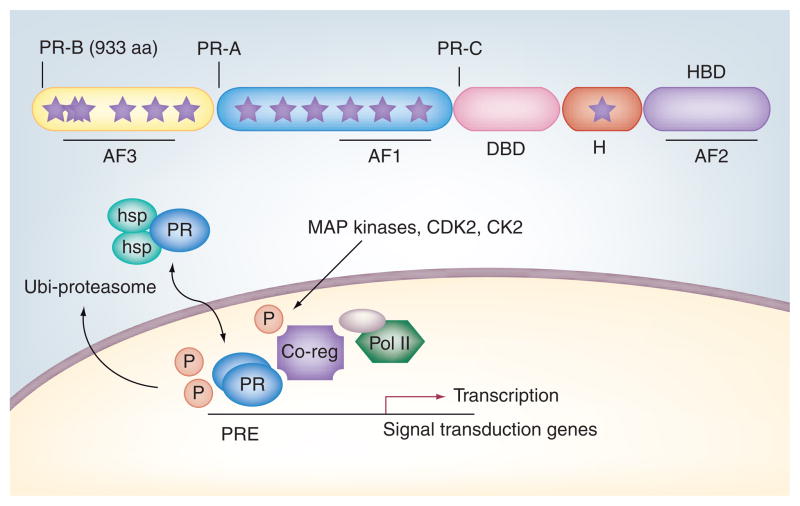
Figure 1
Figure 1. Progesterone receptor isoforms are sensors for growth factor-induced signaling
PR-B and truncated PR-A are substrates for mitogenic protein kinases, including CDK2 (up to eight sites, including Ser400), MAPKs (Ser294 and Ser345) and CK2 (Ser81). Phosphorylated receptors and/or coregulators of transcription (such as steroid receptor coactivators) mediate promoter selection and sensitivity of PR target genes to progesterone and other hormones, including peptide growth factors (EGF, FGF receptor or IGF). Up to 14 sites (stars) in PR-B are phosphorylated either basally and/or in response to hormone action; MAPK- or CDK2-dependent phosphorylation of PR Ser294 facilitates ligand-dependent nuclear export and receptor downregulation via targeting to the ubiquitin–proteasome pathway. AF: Activation function; DBD: DNA-binding domain; H: Hinge; HBD: Hormone-binding domain; hsp: Heat-shock protein; P: Phosphorylation; Pol II: RNA polymerase II; PR: Progesterone receptor; PRE: Progesterone response element.
Figure 2
Figure 2. Progesterone receptor-B, but not progesterone receptor-A, and estrogen receptor-α participate in membrane-tethered protein complexes capable of rapidly activating c-Src and MAPKs
Progesterone/PR and estrogen/ER transactivate EGFR and/or ErbB2; phosphorylated steroid hormone receptors and signaling molecules, including protein kinases and surface receptors, enter the nucleus and participate in transcription complexes at selected gene promoters. E2: Estradiol; EGFR: EGF receptor; ER: Estrogen receptor; P: Phosphorylation; P4: Progesterone; PR: Progesterone receptor; Shc: Src homology domain II containing.
Figure 3
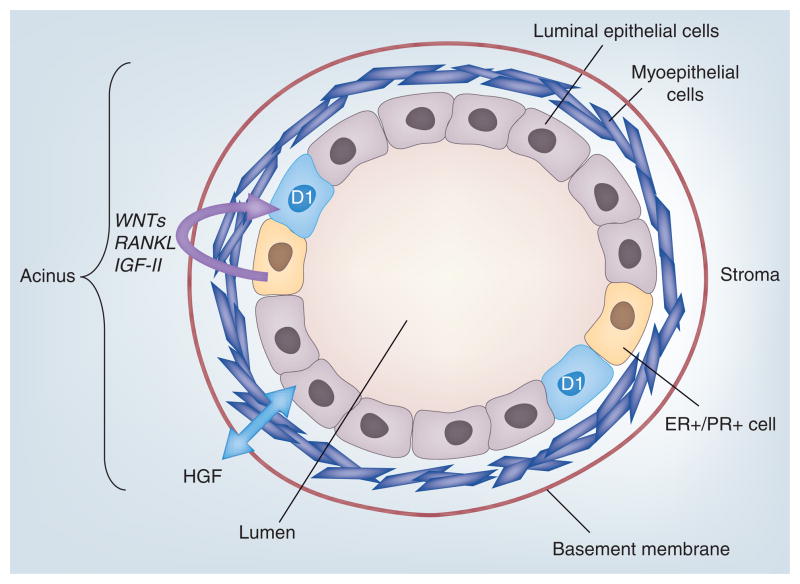
Figure 3. Proliferating cells in the normal (non-pregnant) mammary gland are typically steroid hormone receptor null
ER and PR isoforms are coexpressed in a minority population of mammary epithelial cells that lie adjacent to proliferating (cyclin D1-positive) steroid receptor-negative cells. Progesterone/PR-dependent paracrine factors (WNTs, RANKL and IGF-II) induce neighboring (PR-null) cells to undergo proliferation. An early switch to autocrine signaling mechanisms occurs in the development of ER-positive/PR-positive breast cancers. ER: Estrogen receptor; PR: Progesterone receptor.
Figure 4
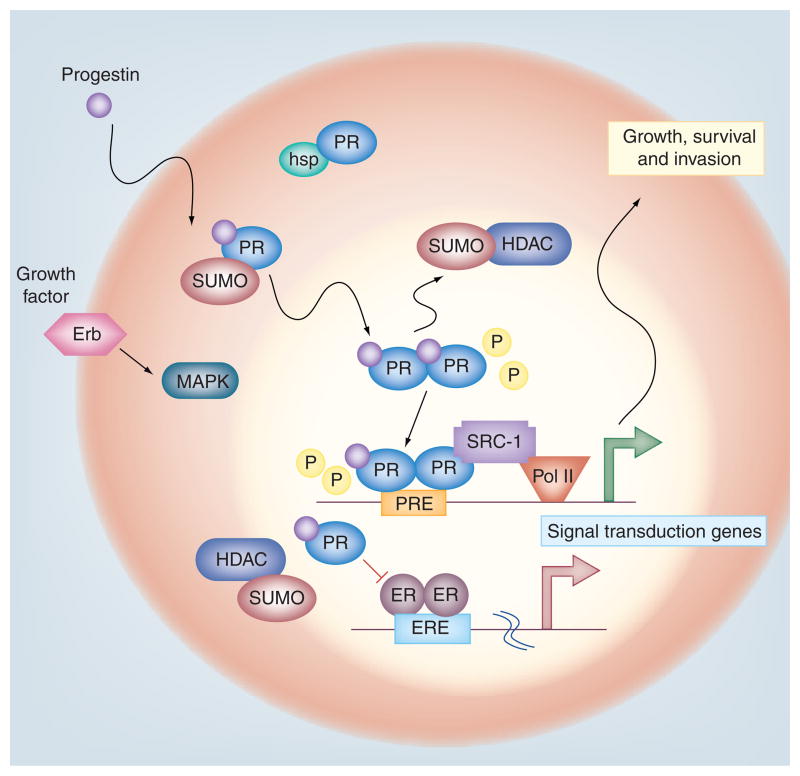
Figure 4. Reversible progesterone receptor Ser388 SUMOylation provides a mechanism for rapid changes in hormone responsiveness according to extracellular cues
PRs are rapidly SUMOylated in response to progesterone binding. SUMOylated PR species are tenfold less active on selected gene promoters and capable of ER transrepression (by unknown mechanisms). Growth factor-induced MAPK activation leading to phosphorylation of PR Ser294 prevents PR Ser388 SUMOylation, thereby lifting SUMO-dependent repression of both PR and ER transcriptional activities. Phosphorylated and deSUMOylated PR-B drives breast cancer cell proliferation and survival. ER: Estrogen receptor; Erb: Erythroblastic leukemia viral oncogene homolog; ERE: Estrogen response element; HDAC: Histone deacetylase; hsp: Heat-shock protein; P: Phosphorylation; Pol II: RNA polymerase II; PR: Progesterone receptor; PRE: Progesterone response element; SRC: Steroid receptor coactivator; SUMO: Small ubiquitin-related modifier.

References

    1. Tsai SY, Carlstedt-Duke J, Weigel NL, et al. Molecular interactions of steroid hormone receptor with its enhancer element: evidence for receptor dimer formation. Cell. 1988;55(2):361–369. - PubMed
    1. Richer JK, Lange CA, Manning NG, et al. Convergence of progesterone with growth factor and cytokine signaling in breast cancer. Progesterone receptors regulate signal transducers and activators of transcription expression and activity. J Biol Chem. 1998;273(47):31317–31326. - PubMed
    1. Owen GI, Richer JK, Tung L, Takimoto G, Horwitz KB. Progesterone regulates transcription of the p21(WAF1) cyclin-dependent kinase inhibitor gene through Sp1 and CBP/p300. J Biol Chem. 1998;273(17):10696–10701. - PubMed
    1. Proietti C, Salatino M, Rosemblit C, et al. Progestins induce transcriptional activation of signal transducer and activator of transcription 3 (Stat3) via a Jak- and Src-dependent mechanism in breast cancer cells. Mol Cell Biol. 2005;25(12):4826–4840. - PMC - PubMed
    1. Tseng L, Tang M, Wang Z, Mazella J. Progesterone receptor (hPR) upregulates the fibronectin promoter activity in human decidual fibroblasts. DNA Cell Biol. 2003;22(10):633–640. - PubMed