. 2011;6(8):e23168.
doi: 10.1371/journal.pone.0023168. Epub 2011 Aug 9.

Comprehensive structural and substrate specificity classification of the Saccharomyces cerevisiae methyltransferome

Affiliations

Comprehensive structural and substrate specificity classification of the Saccharomyces cerevisiae methyltransferome

Tomasz Wlodarski et al. PLoS One. 2011.

Abstract

Methylation is one of the most common chemical modifications of biologically active molecules and it occurs in all life forms. Its functional role is very diverse and involves many essential cellular processes, such as signal transduction, transcriptional control, biosynthesis, and metabolism. Here, we provide further insight into the enzymatic methylation in S. cerevisiae by conducting a comprehensive structural and functional survey of all the methyltransferases encoded in its genome. Using distant homology detection and fold recognition, we found that the S. cerevisiae methyltransferome comprises 86 MTases (53 well-known and 33 putative with unknown substrate specificity). Structural classification of their catalytic domains shows that these enzymes may adopt nine different folds, the most common being the Rossmann-like. We also analyzed the domain architecture of these proteins and identified several new domain contexts. Interestingly, we found that the majority of MTase genes are periodically expressed during yeast metabolic cycle. This finding, together with calculated isoelectric point, fold assignment and cellular localization, was used to develop a novel approach for predicting substrate specificity. Using this approach, we predicted the general substrates for 24 of 33 putative MTases and confirmed these predictions experimentally in both cases tested. Finally, we show that, in S. cerevisiae, methylation is carried out by 34 RNA MTases, 32 protein MTases, eight small molecule MTases, three lipid MTases, and nine MTases with still unknown substrate specificity.


Conflict of interest statement

Competing Interests: The authors have declared that no competing interests exist.

Figures

Figure 1
Figure 1. Comprehensive picture of the S. cerevisiae methyltransferome.
(A) Structural (fold) and substrate specificity classifications. Eighty-six MTases (known MTases with experimentally verified activity and putative MTases identified in previous bioinformatic studies, including one newly detected here) were divided into several groups based on similarity of their structure (within catalytic domain) and substrate. (B) Detailed structural vs. substrate specificity classification.
Figure 2
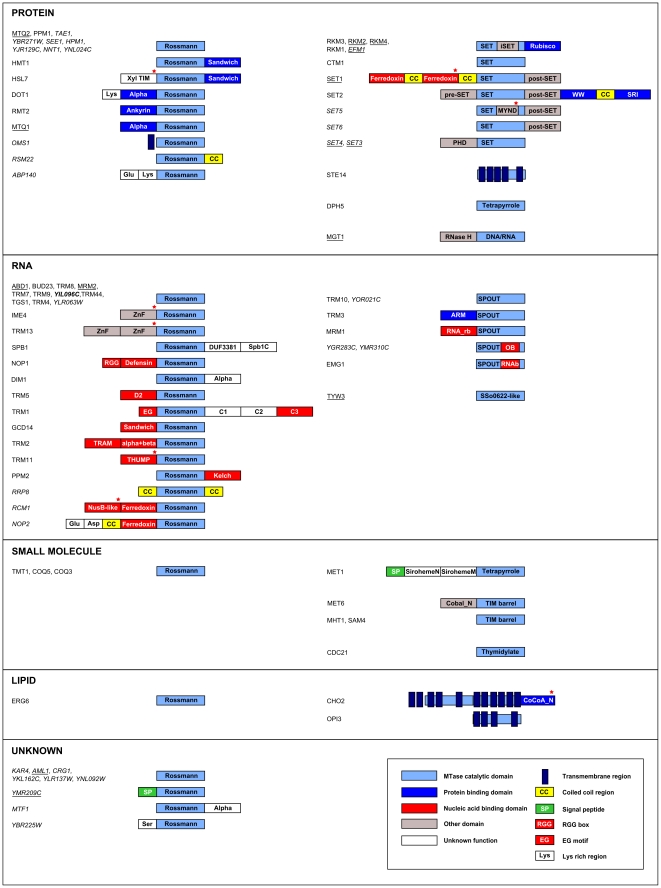
Figure 2. Domain architecture of S. cerevisiae MTases.
The MTases were grouped according to their common substrate specificities (e.g., protein, RNA, small molecule or lipid) and the fold of catalytic domain. Known MTases with experimentally determined substrate specificity are shown in a regular font, putative MTases in italics, and newly detected MTase in bold. Non-periodic MTases are underlined. The new domains identified in this study are marked with a red asterisk. Sandwich, beta sandwich; Xyl TIM, TIM beta/alpha-barrel belonging to the Xylose isomerase-like superfamily; Alpha, α-helical domain; Ankyrin, Ankyrin repeats; ZnF, zinc finger; Spb1C, Spb1 C-terminal domain; Defensin, defensin-like fold; iSET, SET-inserted domain; Rubisco, Rubisco LSMT C-terminal-like domain; SRI, SET2 Rpb1 interacting domain; PHD, PHD zinc finger; DNA/RNA, DNA/RNA-binding 3-helical bundle; RNase H, RNase H-like domain; ARM, ARM repeat; RNA_rb, RNA ribose binding domain; SirohemeN, Siroheme synthase N-terminal domain-like; SirohemeM, Siroheme synthase middle domain-like; Cobal_N, Cobalamin-independent synthase N-terminal domain; CoCoA_N, Calcium binding and coiled-coil domain-like (N-terminal); OB, OB-fold domain; RNAb, RNA binding domain.
Figure 3
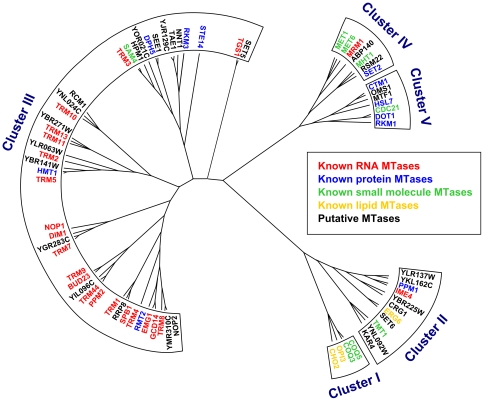
Figure 3. Hierarchical clustering tree for all S. cerevisiae periodic MTases.
Seventy-two periodic MTases were divided into five clusters, each containing MTases with similar expression profiles during the Yeast Metabolic Cycle (YMC). Branch lengths correspond to correlation coefficients of gene expression profiles during the YMC obtained from SCEPTRANS.
Figure 4
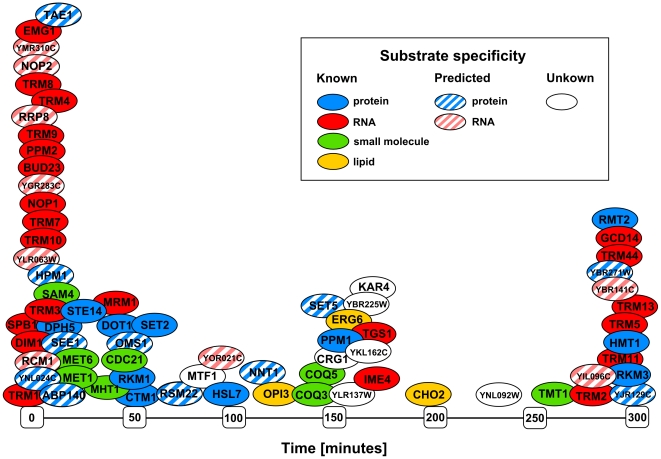
Figure 4. Metabolic cycle-dependent expression of S. cerevisiae periodic MTases.
Each MTase is positioned at its gene expression peak within the YMC (which lasts 300 min).
Figure 5
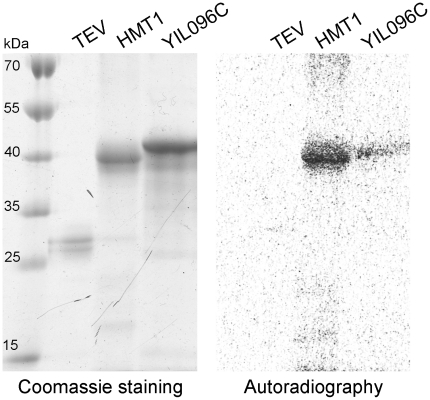
Figure 5. Putative MTase YIL096C binds AdoMet.
Purified YIL096C (with HIStagSUMO), HTM1 and TEV protease were exposed to UV light in the presence of [3H] AdoMet. Both Coomassie stained proteins (left panel) and the autoradiography of crosslink products (right panel) are shown. HMT1 (known MTase) and TEV protease were used as positive and negative controls, respectively.
Figure 6
Figure 6. YBR271W and YLR285W (NNT1) are protein MTases.
Recombinant proteins (MTases) were incubated with native yeast extracts from the respective knockout strains (ΔMTase ext) and [3H] AdoMet (lane 1). Reaction products were resolved on SDS-PAGE gel and exposed to tritium screen. To test the specificity of these reactions, analyzed proteins were also incubated with yeast extract from the wild-type strain (wt ext) and [3H] AdoMet (lane 2). As a control, yeast extracts from knockout and wild-type strains were incubated with [3H] AdoMet only (lanes 3 and 4). HMT1 (a protein MTase) and TRM4 (an RNA MTase) were used as positive and negative controls, respectively.
Figure 7
Figure 7. Localization of MTase genes within the S. cerevisiae genome.
MTases are colored according to their substrate specificity.

References

    1. Chiang PK, Gordon RK, Tal J, Zeng GC, Doctor BP, et al. S-Adenosylmethionine and methylation. Faseb J. 1996;10:471–480. - PubMed
    1. Cheng X, Blumenthal RM. S-Adenosylmethionine-Dependent Methyltransferases: Structures and Functions. Singapore: World Scientific Publishing Company; 1999.
    1. Walsh CT. Posttranslational Modification of Proteins: Expanding Nature's Inventory. Englewood, Colorado: Roberts and Co. Publishers; 2005.
    1. Paik WK, Paik DC, Kim S. Historical review: the field of protein methylation. Trends Biochem Sci. 2007;32:146–152. - PubMed
    1. Jenuwein T, Allis CD. Translating the histone code. Science. 2001;293:1074–1080. - PubMed

Publication types

MeSH terms