. 2011;6(8):e23277.
doi: 10.1371/journal.pone.0023277. Epub 2011 Aug 17.

Predator cat odors activate sexual arousal pathways in brains of Toxoplasma gondii infected rats

Affiliations

Predator cat odors activate sexual arousal pathways in brains of Toxoplasma gondii infected rats

Patrick K House et al. PLoS One. 2011.

Abstract

Cat odors induce rapid, innate and stereotyped defensive behaviors in rats at first exposure, a presumed response to the evolutionary pressures of predation. Bizarrely, rats infected with the brain parasite Toxoplasma gondii approach the cat odors they typically avoid. Since the protozoan Toxoplasma requires the cat to sexually reproduce, this change in host behavior is thought to be a remarkable example of a parasite manipulating a mammalian host for its own benefit. Toxoplasma does not influence host response to non-feline predator odor nor does it alter behavior on olfactory, social, fear or anxiety tests, arguing for specific manipulation in the processing of cat odor. We report that Toxoplasma infection alters neural activity in limbic brain areas necessary for innate defensive behavior in response to cat odor. Moreover, Toxoplasma increases activity in nearby limbic regions of sexual attraction when the rat is exposed to cat urine, compelling evidence that Toxoplasma overwhelms the innate fear response by causing, in its stead, a type of sexual attraction to the normally aversive cat odor.


Conflict of interest statement

Competing Interests: The authors have declared that no competing interests exist.

Figures

Figure 1
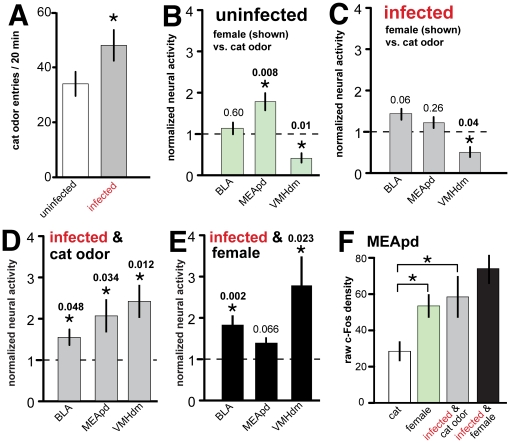
Figure 1. Toxoplasma Infection Alters the Limbic Response in Rats Exposed to Cat Odor.
(A) Toxoplasma infected rats spent more time exploring cat urine than uninfected rats. (B) In uninfected animals, female odor induces relatively greater ‘reproductive’ MEApd activity and relatively diminished ‘defensive’ VMHdm activity, as expected. (C) In infected animals, activity levels in the MEApd are the same, regardless of whether exposed to a ‘reproductive’ or ‘defensive’ odor. (D) Neural activity in infected male rats, normalized to uninfected controls, after exposure to cat urine. Infection increased neural activity in the BLA, MEApd and VMHdm. (E) Neural activity in infected male rats, normalized to uninfected controls, after exposure to an estrous female. Infection again increased neural activity in the BLA and VMHdm, but did not change MEApd levels. (F) Toxoplasma infection increased ‘reproductive’ MEApd neural activity during exposure to cat odor, mimicking neural activity in uninfected animals exposed to a female rat. MEApd, posterodorsal medial amygdala; VMHdm, ventromedial hypothalamus, dorsomedial part; BLA, basolateral amygdala. P values listed where appropriate.
Figure 2
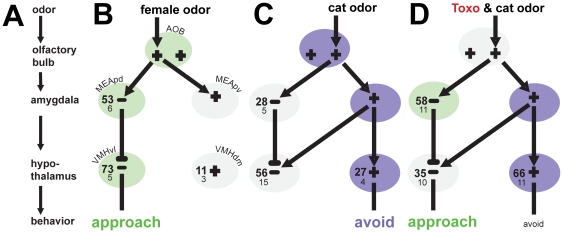
Figure 2. Schematic Model of Toxoplasma Induced Changes to Host Limbic System.
(A) General schematic model of limbic brain activity in a male rat after exposure to an emotionally salient odor. (B) Exposure to an inaccessible estrous female activates the ‘reproductive’ pathway, producing robust MEApd activity and evoking approach behavior. (C) Exposure to cat urine activates the ‘defensive’ pathway, producing robust activation of excitatory (+) VMHdm neurons and evoking defensive, aversion behavior. Excitatory (pointed arrow) projections from the MEApv activate inhibitory (−) VMHvl neurons, countering inhibitory (blunted arrow) projections from the MEApd and suppressing any approach behavior. (D) Proposed model for Toxoplasma rats during exposure to cat urine. Robust MEApd activity biases toward approach behavior. Aversion behavior remains, but is lessened. Raw density of c-Fos (large print) ±SEM (small print) activity is given for each region during relevant odor exposure. Model adapted from Choi 2005. AOB, accessory olfactory bulb; MEA, medial amygdala; VMH, ventromedial hypothalamus.

References

    1. Biron DG, Marché L, Ponton F, Loxdale HD, Galéotti N, et al. Behavioural manipulation in a grasshopper harbouring hairworm: a proteomics approach. Proc Biol Sci. 2005;272:2117–2126. - PMC - PubMed
    1. Libersat F, Delago A, Gal R. Manipulation of host behavior by parasitic insects and insect parasites. Annu Rev Entomol. 2009;54:189–207. - PubMed
    1. Kuris AM, Goddard JHR, Torchin ME, Murphy N, Gurney R, et al. An experimental evaluation of host specificity: the role of encounter and compatibility filters for a rhizocephalan parasite of crabs. Int J Parasitol. 2007;37:539–545. - PubMed
    1. Dubey JP, Lindsay DS, Speer CA. Structures of Toxoplasma gondii tachyzoites, bradyzoites, and sporozoites and biology and development of tissue cysts. Clin Microbiol Rev. 1998;11:267–299. - PMC - PubMed
    1. Berdoy M, Webster JP, Macdonald DW. Fatal attraction in rats infected with Toxoplasma gondii. Proc Biol Sci. 2000;267:1591–1594. - PMC - PubMed

Publication types

MeSH terms

Substances