


Unique changes in mitochondrial genomes associated with reversions of S-type cytoplasmic male sterility in maizemar
- PMID: 21858103
- PMCID: PMC3152571
- DOI: 10.1371/journal.pone.0023405
Unique changes in mitochondrial genomes associated with reversions of S-type cytoplasmic male sterility in maizemar
Abstract
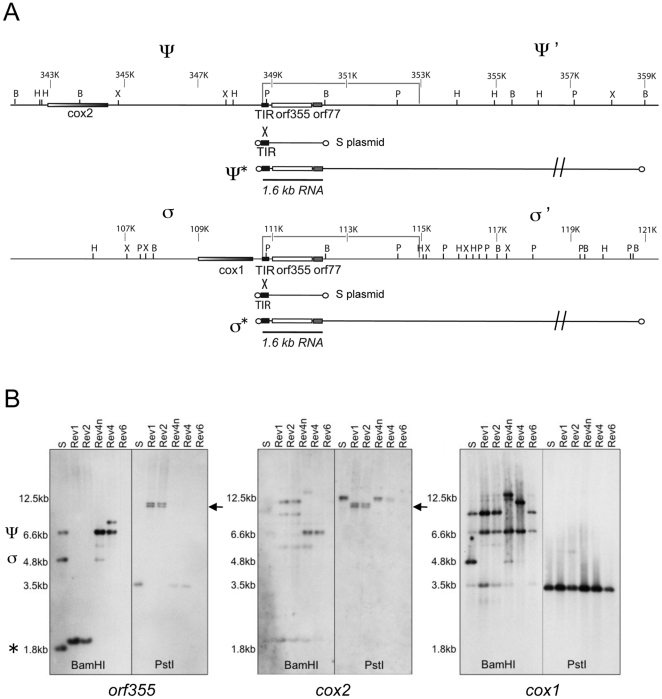
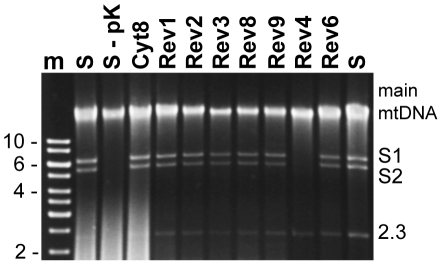
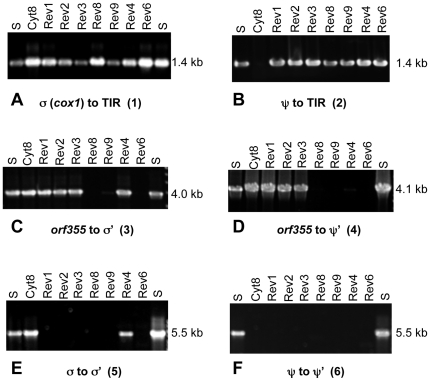
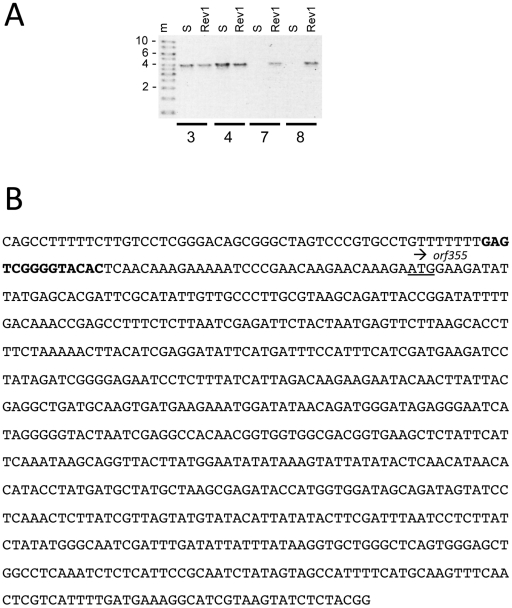
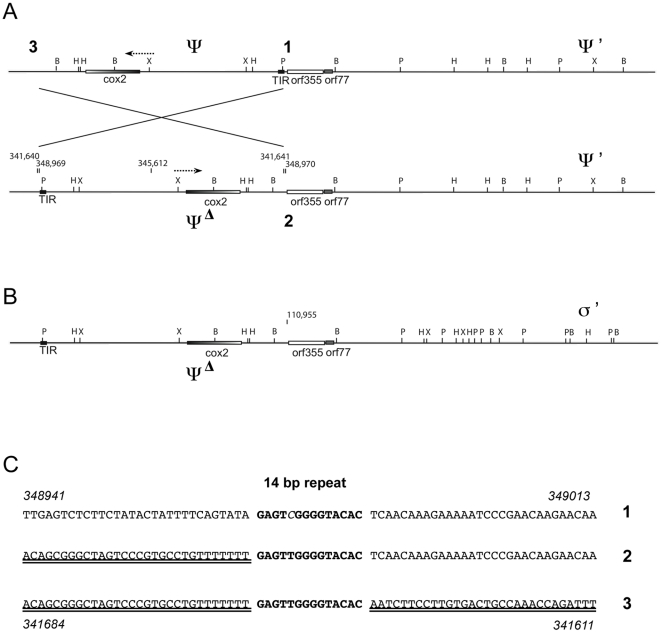
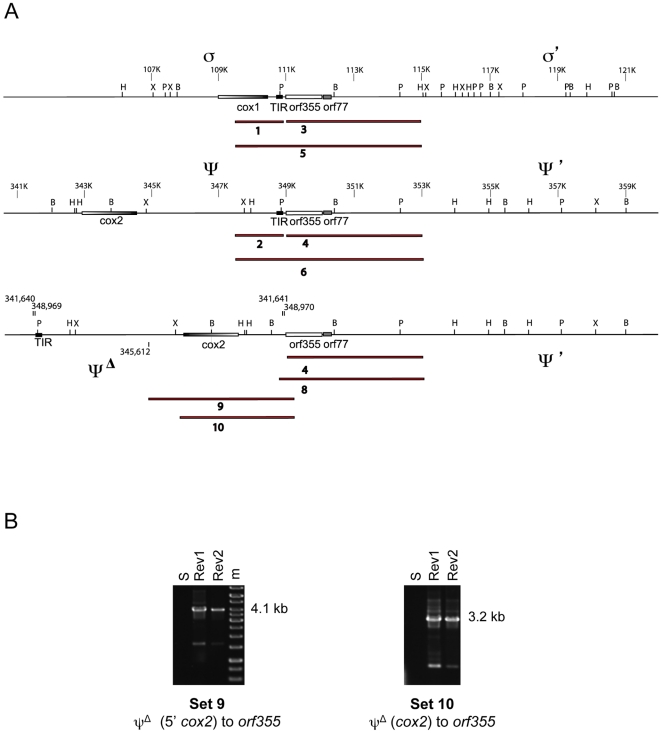
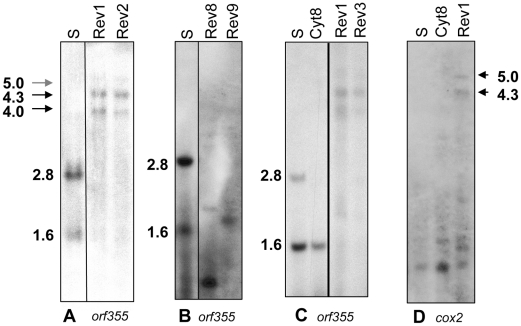
Cytoplasmic male sterility (CMS) in plants is usually associated with the expression of specific chimeric regions within rearranged mitochondrial genomes. Maize CMS-S plants express high amounts of a 1.6-kb mitochondrial RNA during microspore maturation, which is associated with the observed pollen abortion. This transcript carries two chimeric open reading frames, orf355 and orf77, both unique to CMS-S. CMS-S mitochondria also contain free linear DNA plasmids bearing terminal inverted repeats (TIRs). These TIRs recombine with TIR-homologous sequences that precede orf355/orf77 within the main mitochondrial genome to produce linear ends. Transcription of the 1.6-kb RNA is initiated from a promoter within the TIRs only when they are at linear ends. Reversions of CMS-S to fertility occur in certain nuclear backgrounds and are usually associated with loss of the S plasmids and/or the sterility-associated region. We describe an unusual set of independently recovered revertants from a single maternal lineage that retain both the S plasmids and an intact orf355/orf77 region but which do not produce the 1.6-kb RNA. A 7.3-kb inversion resulting from illegitimate recombination between 14-bp microrepeats has separated the genomic TIR sequences from the CMS-associated region. Although RNAs containing orf355/orf77 can still be detected in the revertants, they are not highly expressed during pollen development and they are no longer initiated from the TIR promoter at a protein-stabilized linear end. They appear instead to be co-transcribed with cytochrome oxidase subunit 2. The 7.3-kb inversion was not detected in CMS-S or in other fertile revertants. Therefore, this inversion appears to be a de novo mutation that has continued to sort out within a single maternal lineage, giving rise to fertile progeny in successive generations.
Conflict of interest statement
Figures
References
-
- Fauron C, Casper M, Gao Y, Moore B. The maize mitochondrial genome: dynamic, yet functional. Trends Genet. 1995;11:228–235. - PubMed
-
- Newton KJ, Gabay-Laughnan S, DePaepe R. D.A. Day HA, Millar, Whelan J, editors. Mitochondrial mutations in plants. Plant Mitochondria: From Genome to Function. 2004. pp. 121–142.
-
- Kubo T, Newton KJ. Angiosperm mitochondrial genomes and mutations. Mitochondrion. 2008;8:5–14. - PubMed
-
- Schardl CL, Lonsdale DM, Pring DR, Rose KR. Linearization of maize mitochondrial chromosomes by recombination with linear episomes. Nature. 1984;310:292–296.
Publication types
MeSH terms
Substances
LinkOut - more resources
Full Text Sources
