


Efficient replication of over 180 genetic associations with self-reported medical data
- PMID: 21858135
- PMCID: PMC3157390
- DOI: 10.1371/journal.pone.0023473
Efficient replication of over 180 genetic associations with self-reported medical data
Abstract
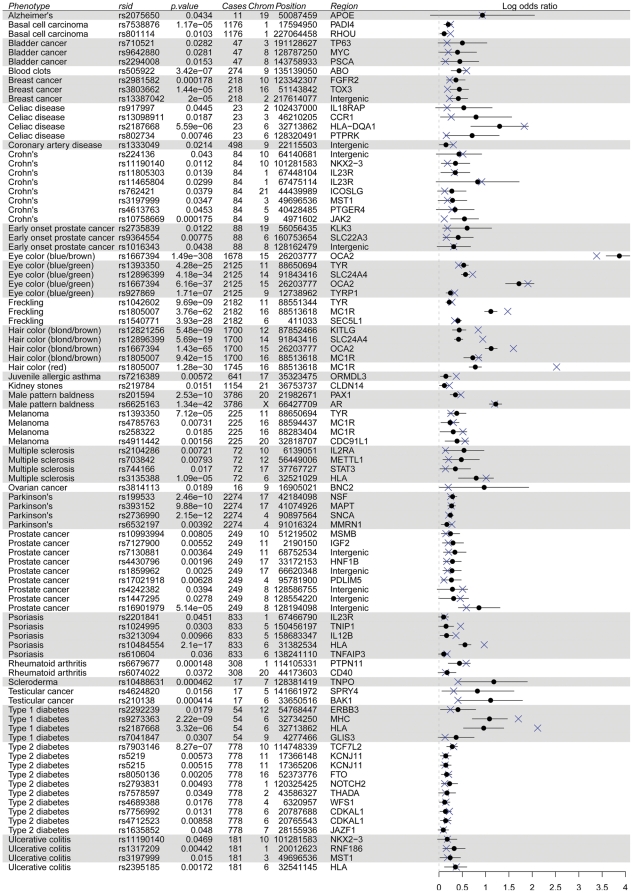
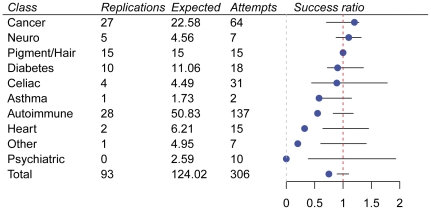
While the cost and speed of generating genomic data have come down dramatically in recent years, the slow pace of collecting medical data for large cohorts continues to hamper genetic research. Here we evaluate a novel online framework for obtaining large amounts of medical information from a recontactable cohort by assessing our ability to replicate genetic associations using these data. Using web-based questionnaires, we gathered self-reported data on 50 medical phenotypes from a generally unselected cohort of over 20,000 genotyped individuals. Of a list of genetic associations curated by NHGRI, we successfully replicated about 75% of the associations that we expected to (based on the number of cases in our cohort and reported odds ratios, and excluding a set of associations with contradictory published evidence). Altogether we replicated over 180 previously reported associations, including many for type 2 diabetes, prostate cancer, cholesterol levels, and multiple sclerosis. We found significant variation across categories of conditions in the percentage of expected associations that we were able to replicate, which may reflect systematic inflation of the effects in some initial reports, or differences across diseases in the likelihood of misdiagnosis or misreport. We also demonstrated that we could improve replication success by taking advantage of our recontactable cohort, offering more in-depth questions to refine self-reported diagnoses. Our data suggest that online collection of self-reported data from a recontactable cohort may be a viable method for both broad and deep phenotyping in large populations.
Conflict of interest statement
Figures
References
-
- Bilder RM, Sabb FW, Cannon TD, London ED, Jentsch JD, et al. Phenomics: the systematic study of phenotypes on a genome-wide scale. Neuroscience. 2009;164:30–42. doi: 10.1016/j.neuroscience.2009.01.027. - DOI - PMC - PubMed
-
- Houle D, Govindaraju DR, Omholt S. Phenomics: the next challenge. Nat Rev Genet. 2010;11:855–866. doi: 10.1038/nrg2897. - DOI - PubMed
-
- Lee K, Sawcer S. Detecting genes in complex disease: does phenotype accuracy limit the horizon? Trends Genet. 2010;26:241–242; author reply 242–243. doi: 10.1016/j.tig.2010.03.003. - DOI - PMC - PubMed
-
- Okura Y, Urban LH, Mahoney DW, Jacobsen SJ, Rodeheffer RJ. Agreement between self-report questionnaires and medical record data was substantial for diabetes, hypertension, myocardial infarction and stroke but not for heart failure. J Clin Epidemiol. 2004;57:1096–1103. doi: 10.1016/j.jclinepi.2004.04.005. - DOI - PubMed
-
- Smith B, Chu LK, Smith TC, Amoroso PJ, Boyko EJ, et al. Challenges of self-reported medical conditions and electronic medical records among members of a large military cohort. BMC Med Res Methodol. 2008;8:37. doi: 10.1186/1471-2288-8-37. - DOI - PMC - PubMed
MeSH terms
LinkOut - more resources
Full Text Sources
Other Literature Sources
